Category Archives: On Writing

Lightning Strike:

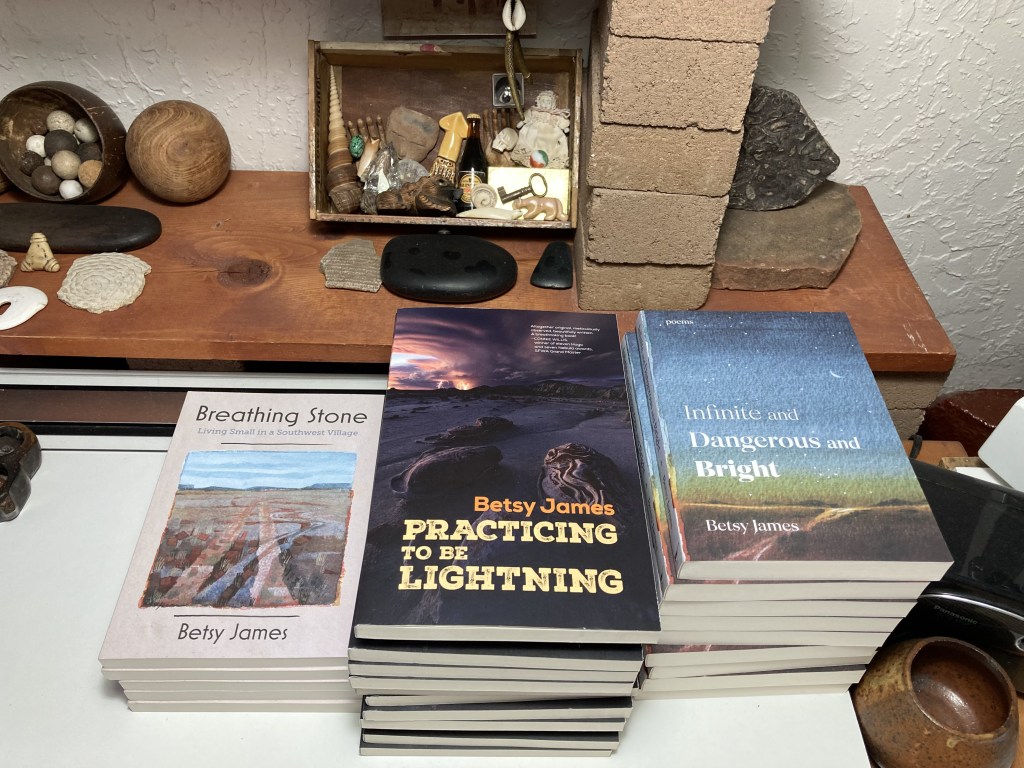
Practicing to Be Lightning

Speculative fiction this time, and a long time coming. I can’t promise never again to release two books in four months–like mesquite bushes, books have deep roots, and the writer can’t always control when the visible part makes it to daylight. But I can tell you it’s been a journey.

For years I’ve been thinking about mining my thirty years of hike notes–about 600 hikes–for the setting for a novel. From the malpaís and beyond, through a portal to another world that is also this world–think Venn diagram–here it is.

About:

For Ben, reality is crumbling …

Pursued by a whistling killer through flash flood, rockfall, and storm, under a sky where even the stars have gone mad, skeptical scientist Ben and intuitive Zuni artist Trace flee across an uncanny desert wasteland, fighting to climb what is surely a mountain—or is it a cloud? 

Ben thinks he’s the rescuer … until he isn’t. Trace has a GPS … kind of. But lovers and nightmares hunt them on the paths of their very neurons. Prisoners of their disastrous pasts, can they escape? Does anyone ever escape?

On an ancient earth where the land itself is alive, Practicing to Be Lightning plunges you into a terrifying quest where the lines between reality and imagination blur, and survival means confronting not just raw nature, but the wilderness of the soul.

And praise:

“A breathtaking book.” —Connie Willis, SFWA Grand Master, winner of eleven Hugo and seven Nebula awards

“A heart-stopping quest through a dangerously beautiful landscape toward a mysterious destination pairs with vivid portrayals of irrational evil and irresistible human kindness.  A fine read.” —Anne Hillerman, author of the best-selling Leaphorn, Chee, Manuelito mysteries

“A good book bridges worlds. A great book drops you into its own. Practicing to Be Lightning is a great book. We can’t help but follow its call into the landscape of the malpaís, all sharp edges and sheer drops, as perilous and beautiful as our inner selves.” —Zach Hively, Reading the West Book Award-winning author of Desert Apocrypha

“In order to understand the truth, you need more than one way of knowing. What Betsy James does here is to meld two ways of thought—science and religion—into a better description of what the world really is.” –Dr. K. Kitts, retired NASA scientist

More in the sidebar … –>

… and an excerpt here.

Bookshop * Barnes & Noble * Amazon

Please choose our indies first.
There’s a Story Here

Below the stone ring of a nineteenth-century Navajo hogan: a piece of sun-purpled glass—pre-1914, when a process was discovered that prevented clear glass from purpling in sunlight—between two snake vertebrae.

Perhaps you’d like to write that one?

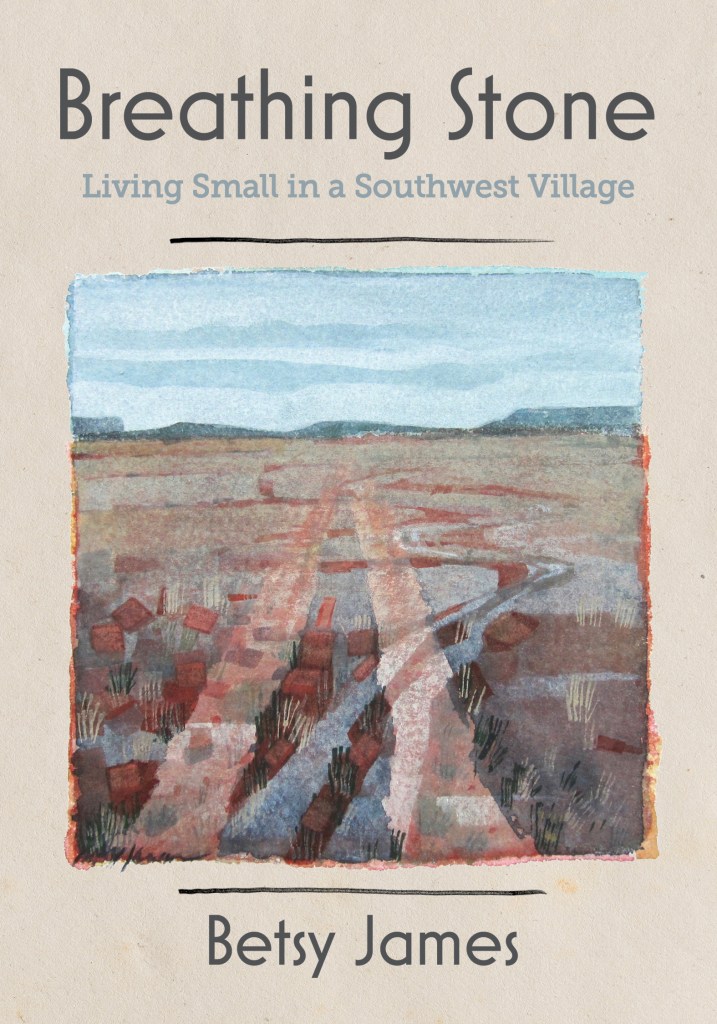
Just Out:

It feels like what it is, a field journal. I’m delighted with it:

https://casaurracapress.com/bookstore/p/breathing-stone

You can order it from your favorite indie bookstore; from Bookshop, the indie alternative to the big A:

https://bookshop.org/p/books/breathing-stone-living-small-in-a-southwest-village-betsy-james/20027660?ean=9781956375152

or from the publisher, single copies okay:

https://casaurracapress.com/bookstore

Many miles of quiet walkabout. Illustrated.

It’s Real

East of the Malpaís: worn yellow sandstone patched with gray lichen, overlooking black lava with gray-green sage and lichen.

When I was small, I dreamed about owning a house carved into a rock. Here it was: a hollowed-out, round cave, just the right size for a child. It was cool inside. The oval doorway framed the extraordinary ordinary lava world outside.

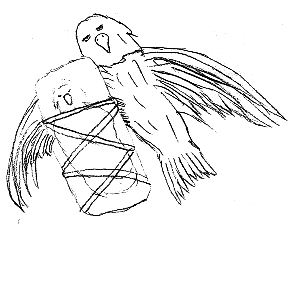
Eagle Mother


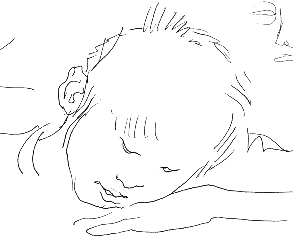
At Zuni Pueblo, a storymaking workshop for 3rd, 4th, 5th graders. Writers can’t be restrained from doodling while they think, so we covered the new library tabletops with yellow butcher paper. When we cleaned up on Friday—the kids long gone—among the smudgy misspellings and graffiti was  this drawing, unsigned.

Her quiet face.

*

The River


Even when I don’t want to write, if I begin, the flow begins: very steady, like blood, or a river.

Year after year I hiked down Frijoles Canyon to the Rio Grande. The river is always there. In different seasons it is different colors—tan in March, emerald in October—and has different water levels, and the sky above changes color and temperature.

But the river itself is always there.

*

Writing Fantasy: Imaginary Slang 2


How do aliens swear?

Not just aliens but all speakers of imaginary languages. Think about it. A polytheist who says “My god!” means something quite different than does a monotheist—and wouldn’t capitalize.

In Listening at the Gate I needed an epithet for use by Nondany, the itinerant master folklore collector. I settled on “By life!” I like it so much I want to get a slang wave going.

Recently  a librarian nailed me with a steel eye and asked whether there was any “bad language” in the novel. I explained that it took place in an imaginary culture, but since all cultures have profanity, I’d had to invent some. She looked baffled. And bought the book.

Why Speculative Fiction?

“If you ask: Why spend time on a writer of escape literature? please consider for a moment the position that the literature of fantasy and science fiction provides more direct functional access to reality than any other modern work of the intellect. When experience is rendered ineffable by a rate of change that undermines the meanings of language, a literature that has evolved to speak out from the middle of the waterfall of ideas can continue to engage and to convey the most important meanings. And this is not a new discovery. The oldest roots and origins of literature, the epics of Gilgamesh and Innana, the Odyssey, the Iliad, all are either fantasy, if you do not believe in the Gods, or science fiction, if you do.”

Margot Adler, Heretic’s Heart: A Journey Through Spirit and Revolution

For more on Speculative Fiction, click here.