In the desert, prehistoric pottery is common. Historic pots, not so much. Maybe don’t let the guys take the good stuff hunting?
Found at the edge of an elk meadow briefly homesteaded in the thirties.
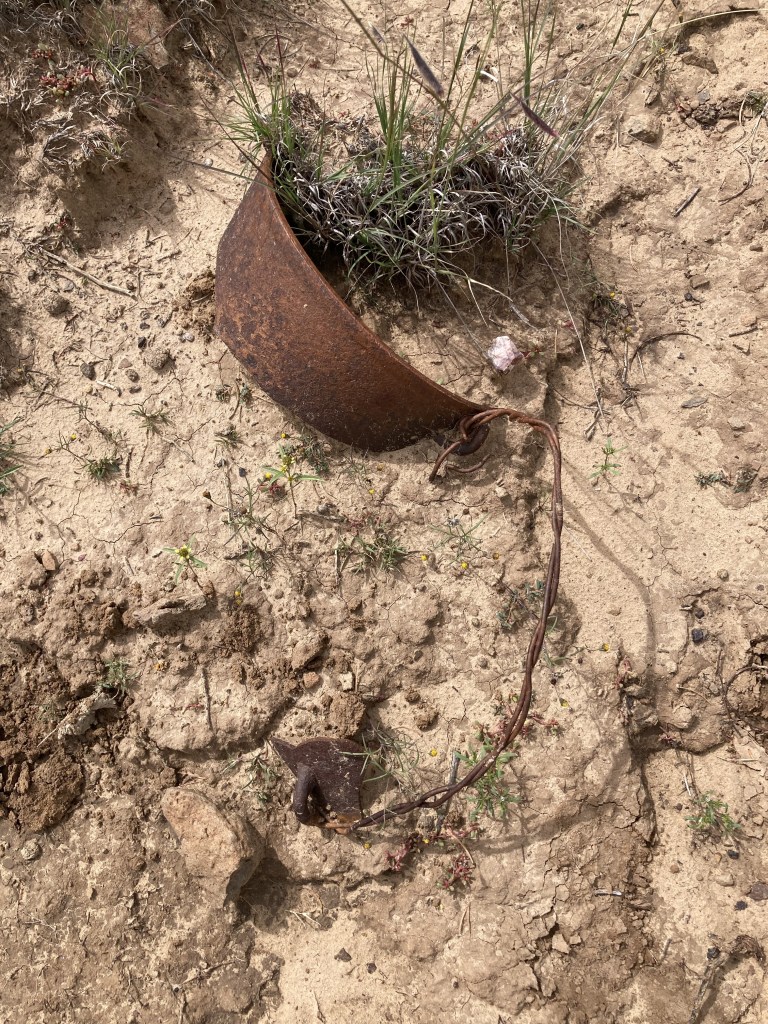

In the desert, prehistoric pottery is common. Historic pots, not so much. Maybe don’t let the guys take the good stuff hunting?
Found at the edge of an elk meadow briefly homesteaded in the thirties.
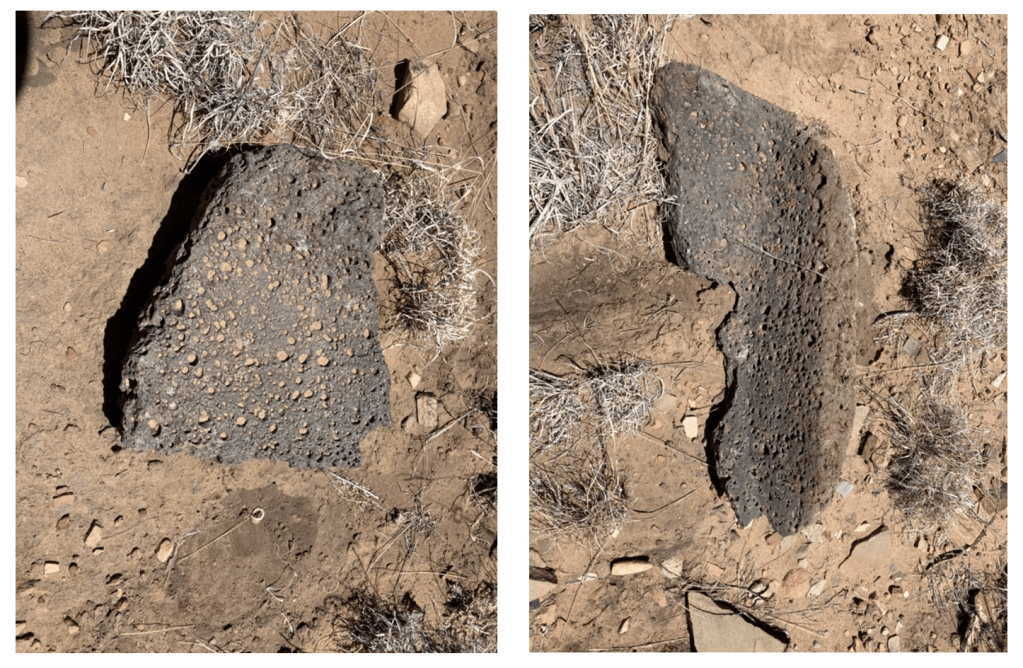
High on the rocky hillside, an Ancestral Puebloan scoria trough metate, smashed.
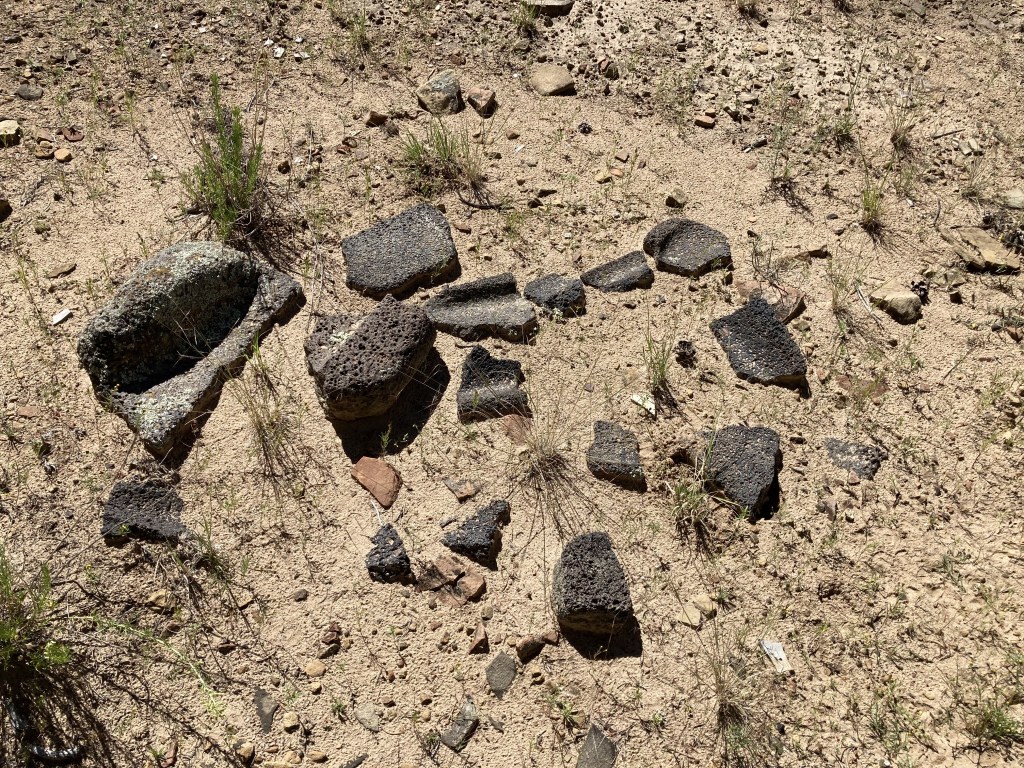
It had been a huge thing, about two feet long by a foot wide. No idea what it must have weighed. It lay downhill from the jumbled stones of a long structure, surrounded by shattered pottery from decades of meals.
Who hauled that thing up the mountain? Who smashed it, and why? Scoria metates are so often found in pieces; were they broken ceremonially at a woman’s death? When a settlement was abandoned? Or is that imagination?
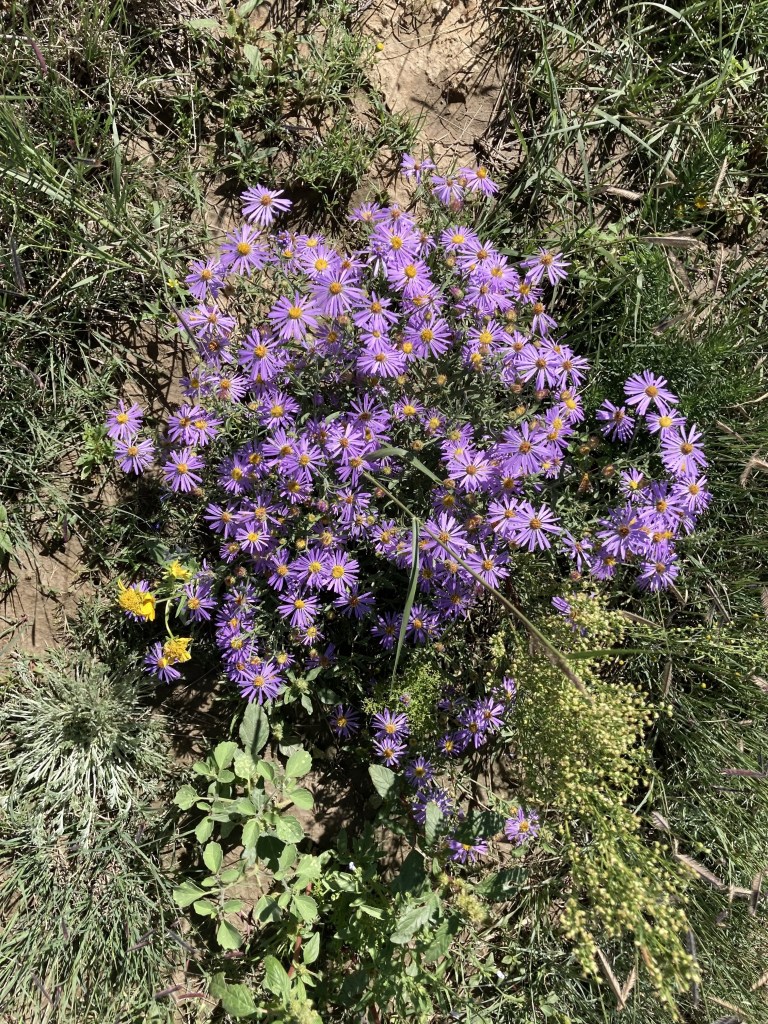
The sand is pecked with raindrops. Fall, rain, and cooler weather, all so welcome, have arrived together. The desert is green, and the asters are in bloom.
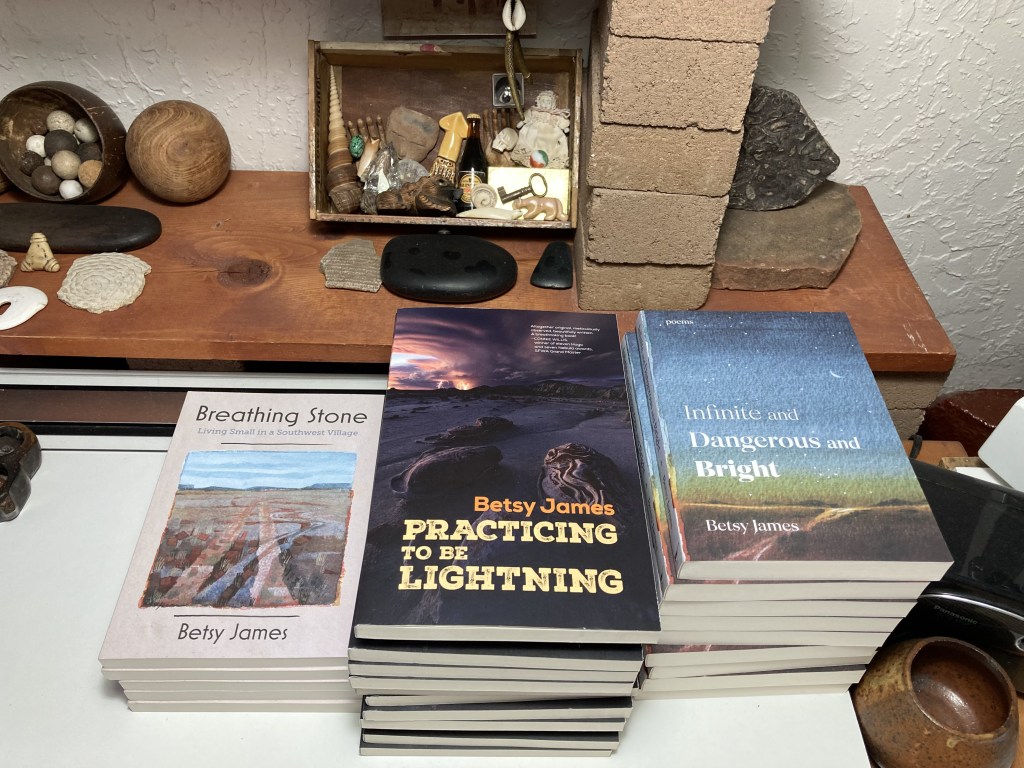
Practicing to Be Lightning
Speculative fiction this time, and a long time coming. I can’t promise never again to release two books in four months–like mesquite bushes, books have deep roots, and the writer can’t always control when the visible part makes it to daylight. But I can tell you it’s been a journey.
For years I’ve been thinking about mining my thirty years of hike notes–about 600 hikes–for the setting for a novel. From the malpaís and beyond, through a portal to another world that is also this world–think Venn diagram–here it is.
About:
For Ben, reality is crumbling …
Pursued by a whistling killer through flash flood, rockfall, and storm, under a sky where even the stars have gone mad, skeptical scientist Ben and intuitive Zuni artist Trace flee across an uncanny desert wasteland, fighting to climb what is surely a mountain—or is it a cloud?
Ben thinks he’s the rescuer … until he isn’t. Trace has a GPS … kind of. But lovers and nightmares hunt them on the paths of their very neurons. Prisoners of their disastrous pasts, can they escape? Does anyone ever escape?
On an ancient earth where the land itself is alive, Practicing to Be Lightning plunges you into a terrifying quest where the lines between reality and imagination blur, and survival means confronting not just raw nature, but the wilderness of the soul.
And praise:
“A breathtaking book.” —Connie Willis, SFWA Grand Master, winner of eleven Hugo and seven Nebula awards
“A heart-stopping quest through a dangerously beautiful landscape toward a mysterious destination pairs with vivid portrayals of irrational evil and irresistible human kindness. A fine read.” —Anne Hillerman, author of the best-selling Leaphorn, Chee, Manuelito mysteries
“A good book bridges worlds. A great book drops you into its own. Practicing to Be Lightning is a great book. We can’t help but follow its call into the landscape of the malpaís, all sharp edges and sheer drops, as perilous and beautiful as our inner selves.” —Zach Hively, Reading the West Book Award-winning author of Desert Apocrypha
“In order to understand the truth, you need more than one way of knowing. What Betsy James does here is to meld two ways of thought—science and religion—into a better description of what the world really is.” –Dr. K. Kitts, retired NASA scientist
More in the sidebar … –>
… and an excerpt here.
Bookshop * Barnes & Noble * Amazon
Please choose our indies first.
… so it’s time to repair the desert gaiters. You think maybe?
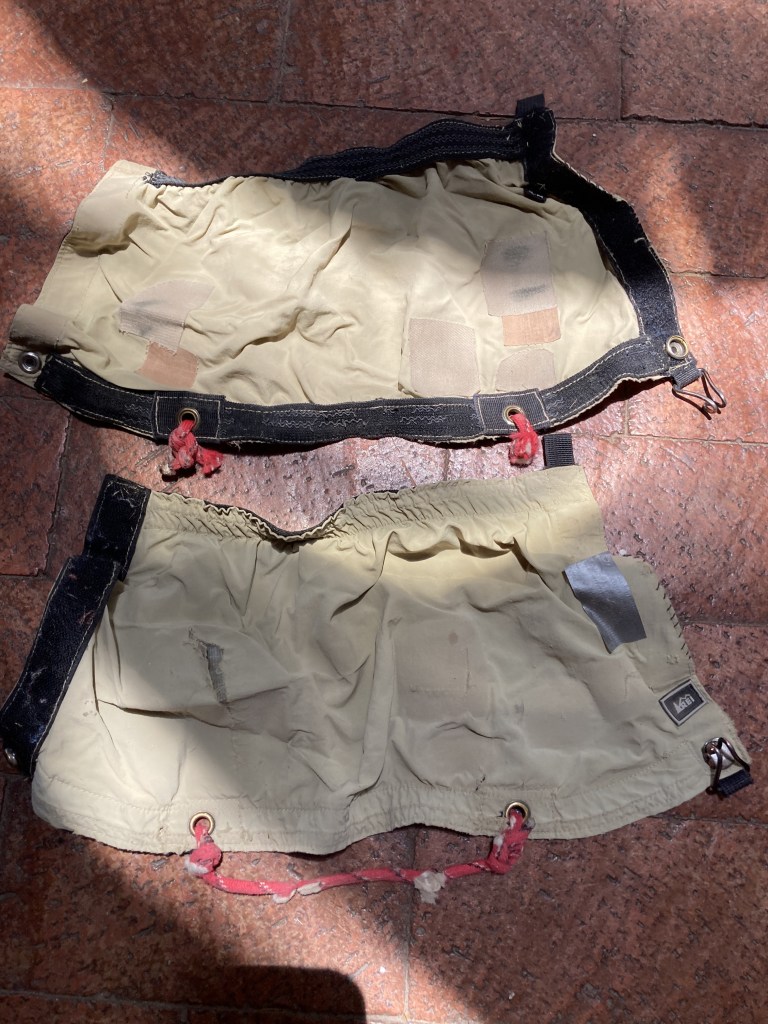
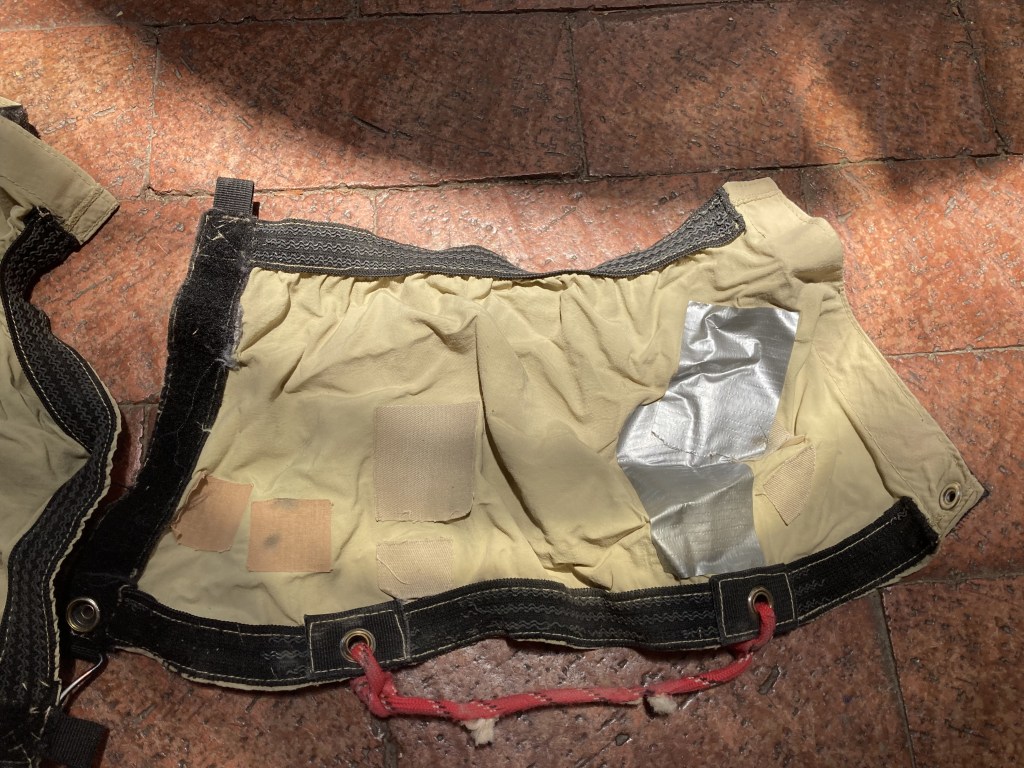
The seamstress said, “You know it’s going to cost you more to repair them than to buy a new pair?”
I know. But in Escalante last spring a young hiker said, “You can’t get that kind any more!” and offered me fifty dollars for them. When I explained that they had thirty-plus years and about seven hundred hikes in them he said reverently, “You’re the real deal.”
Seriously? After that, how could I bear to get new ones?
In Zuni, that’s the plural of “mud.”
We were in Zuni last week. It’s monsoon season. The mud was so plural we’re still knocking it off our boots.
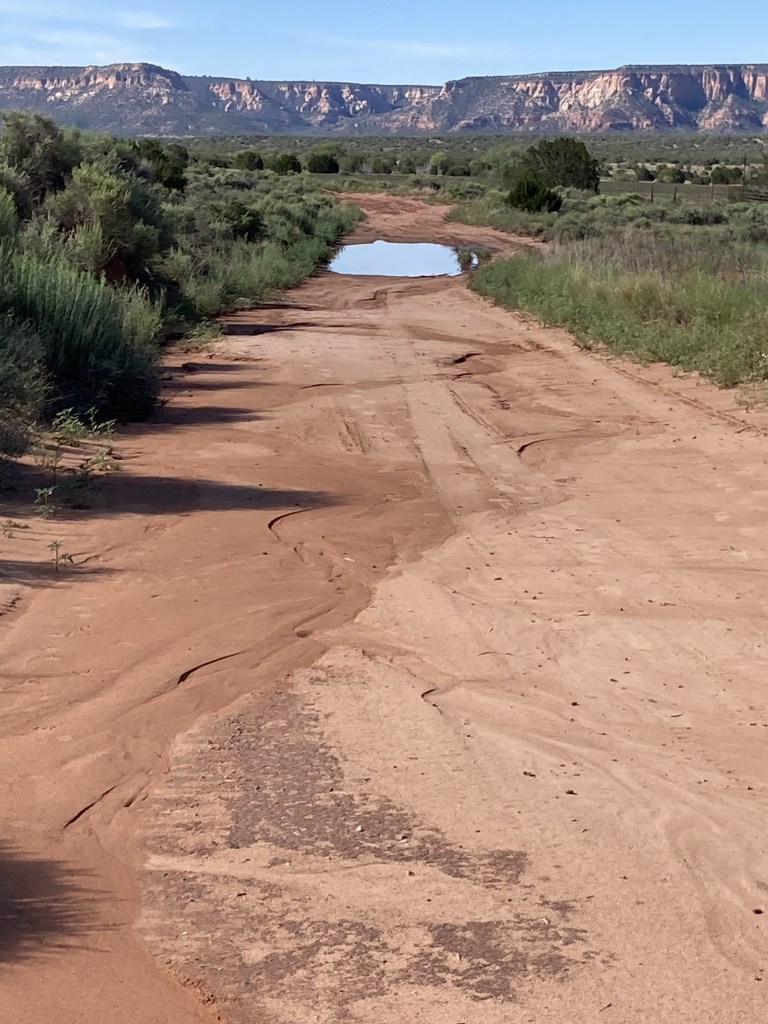
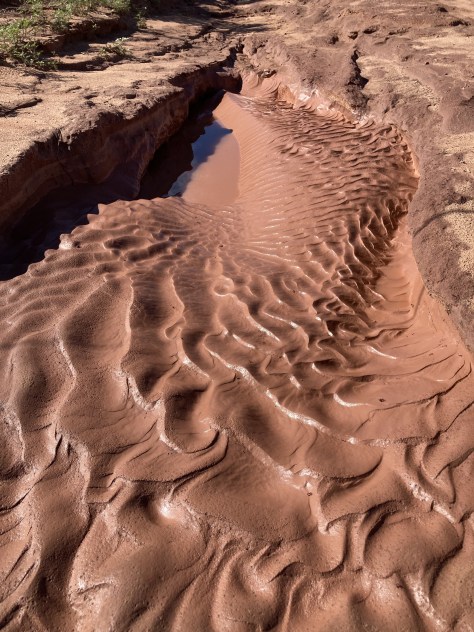
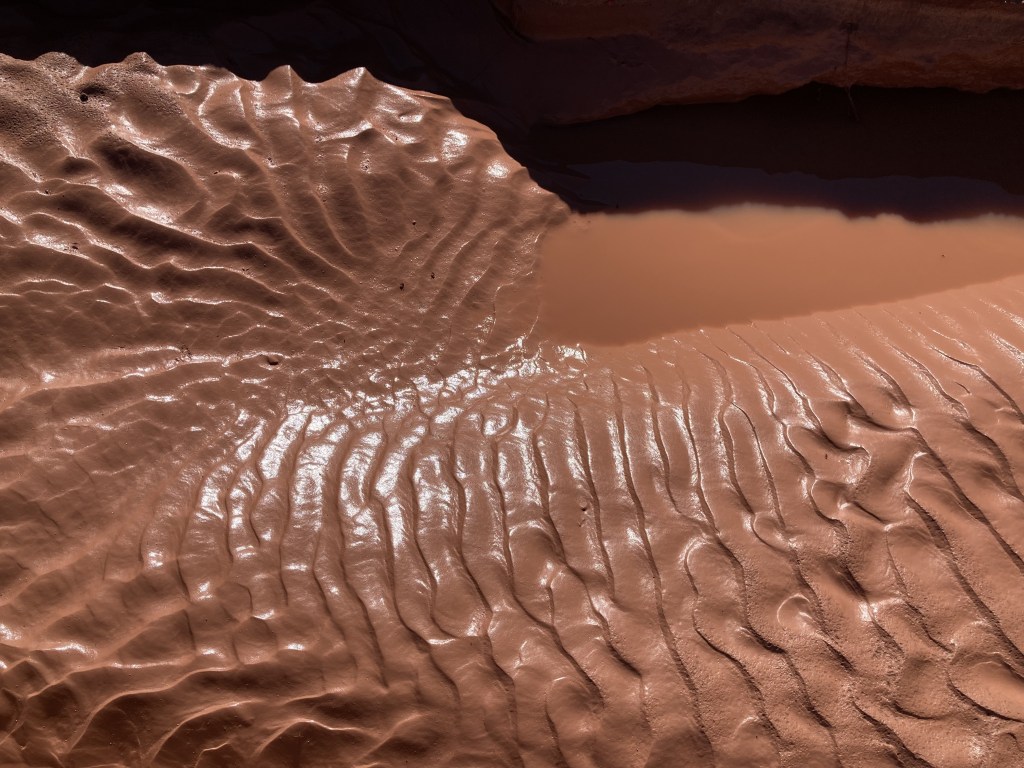
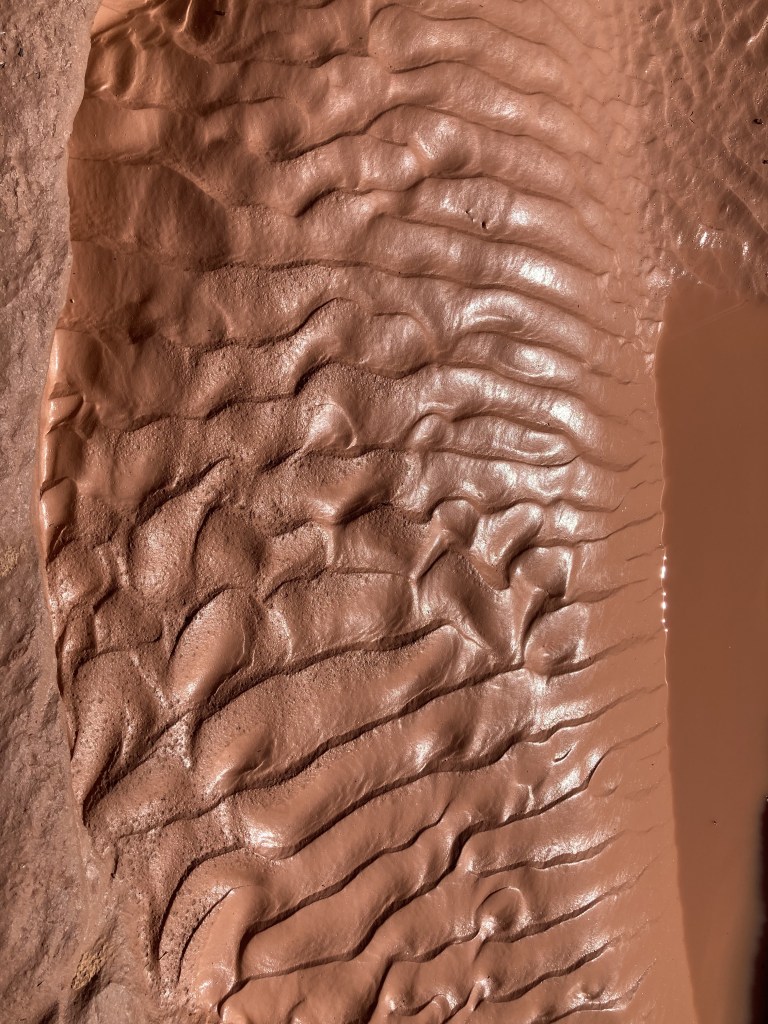
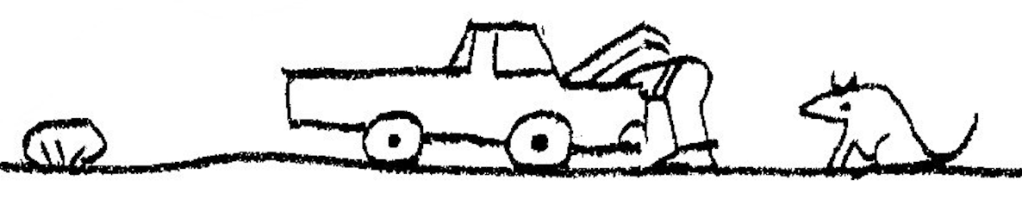
It’s much too hot to hike in the desert. We’re hiding out, like this mouse.
There is a mouse. I promise.
Find the mouse:
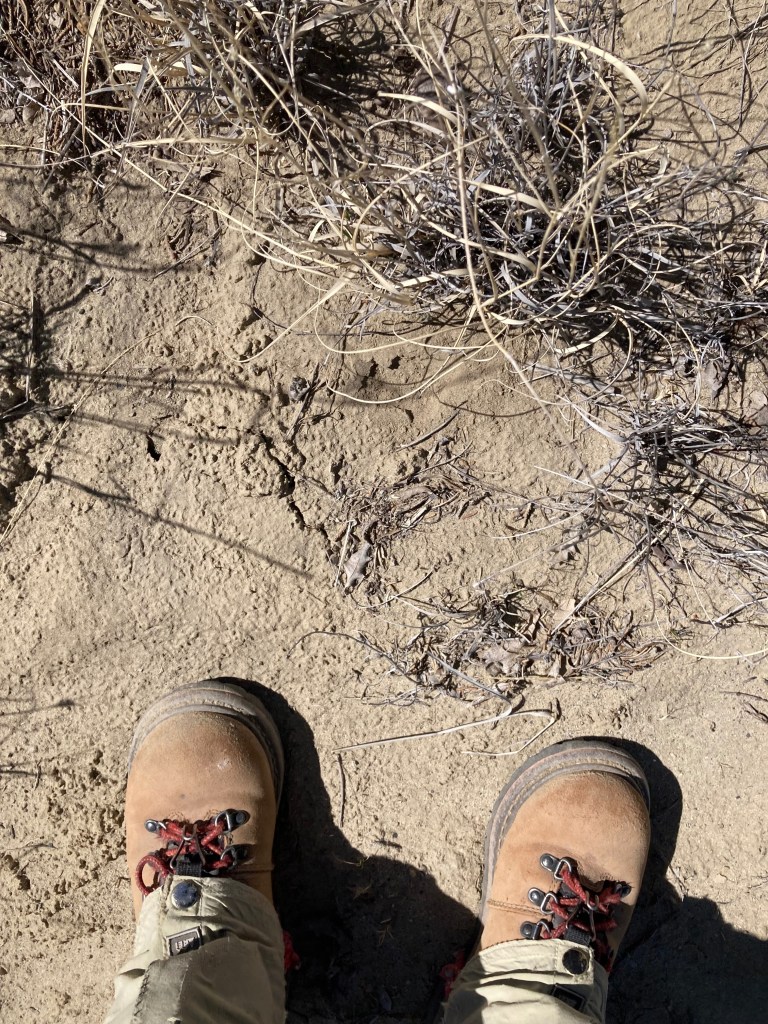
I mean it. There’s a mouse in there.
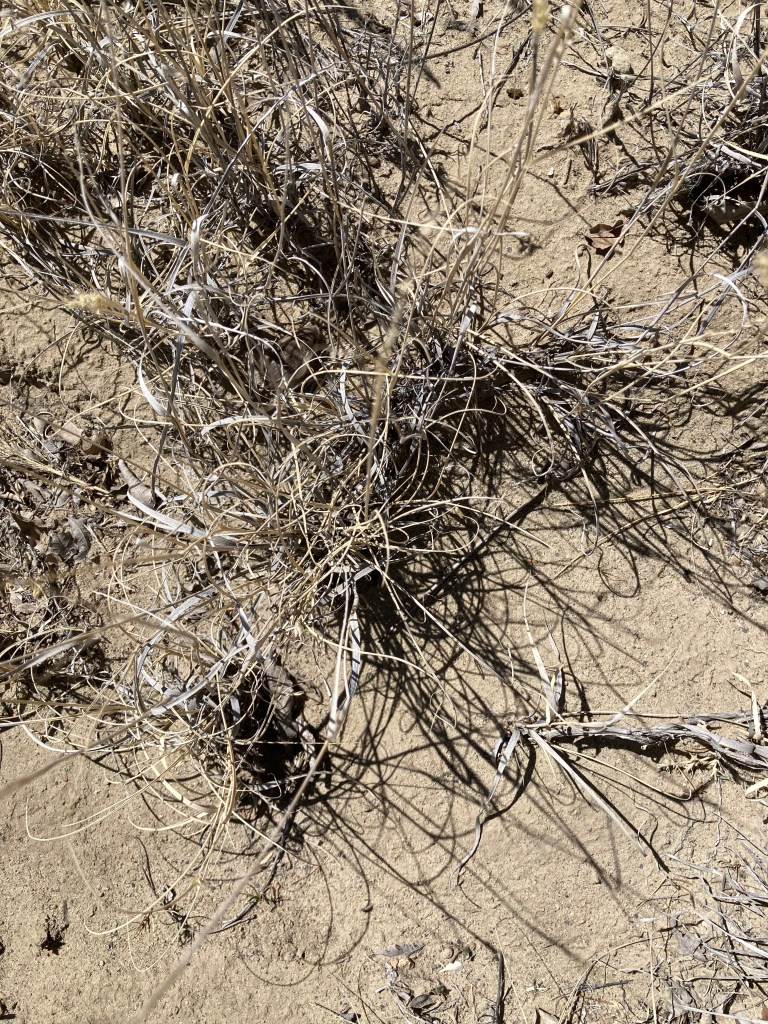
Hint: Look for the invisible but hopeful thought balloon that reads, “You are mistaken. There is no mouse.”
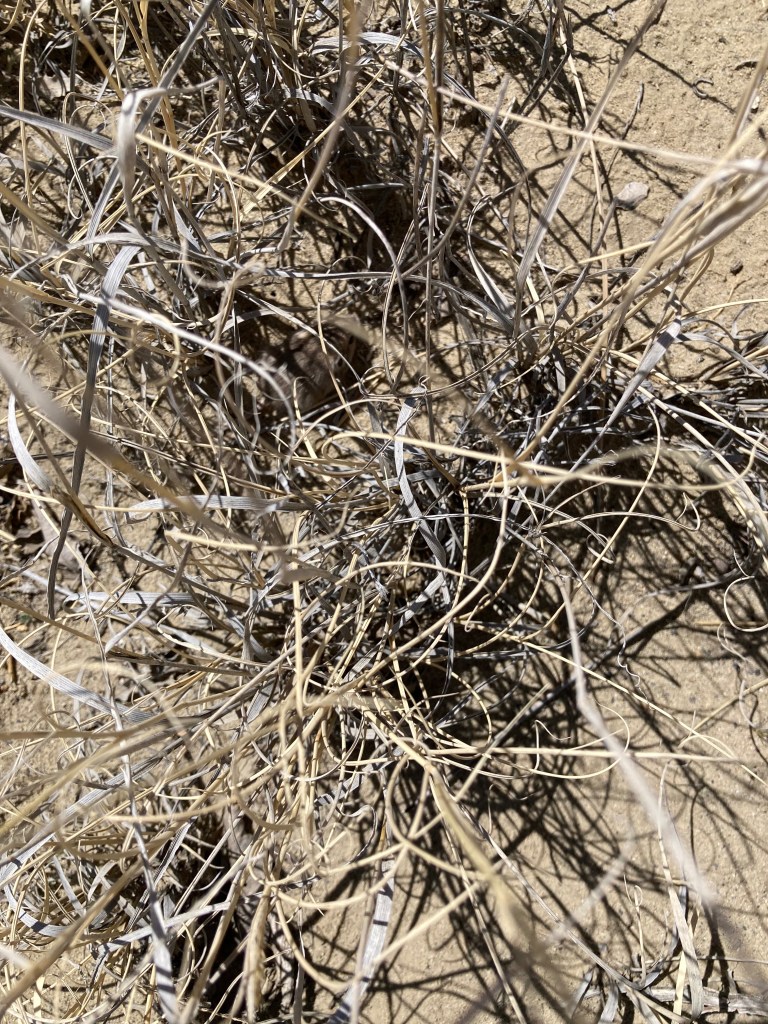
Another hint: The mouse is about the size of a pecan.
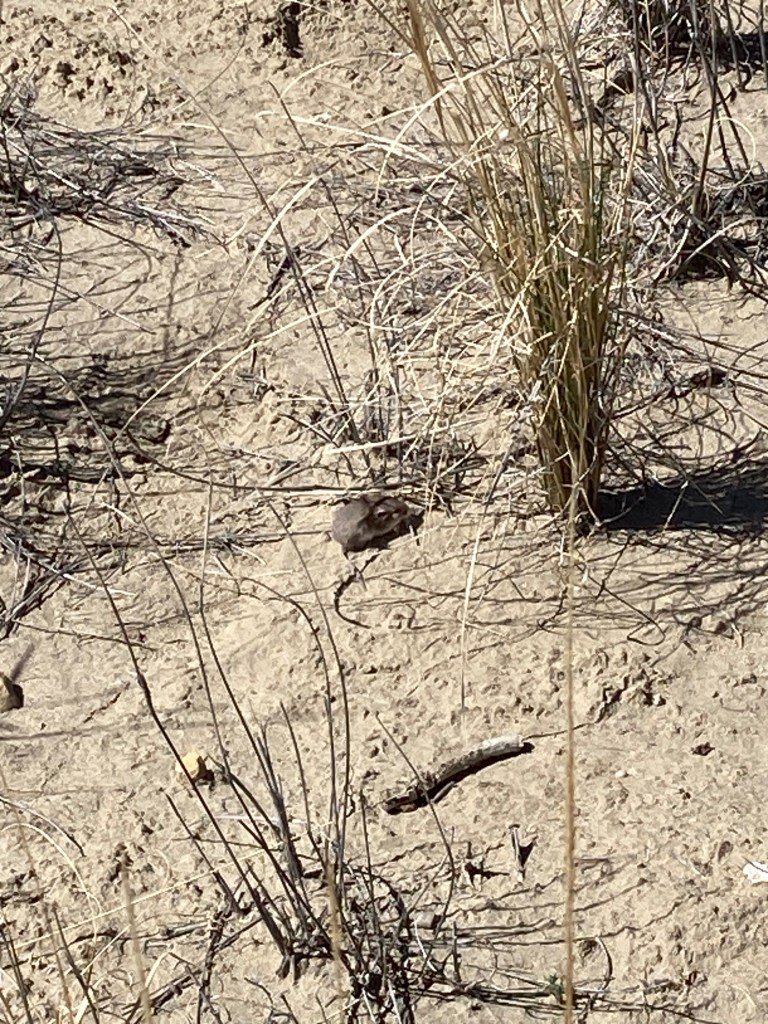
Mouse!

From Infinite and Dangerous and Bright, by Betsy James … with 150 illustrations by the author.
Infinite and Dangerous and Bright is available from:
or Amazon.
On one five mile hike, about twenty metates. Most were the simple Archaic type, but did even the Ancestral Pueblo use that casual style when hunting and traveling light? The materials were always to hand.
Nine of them:
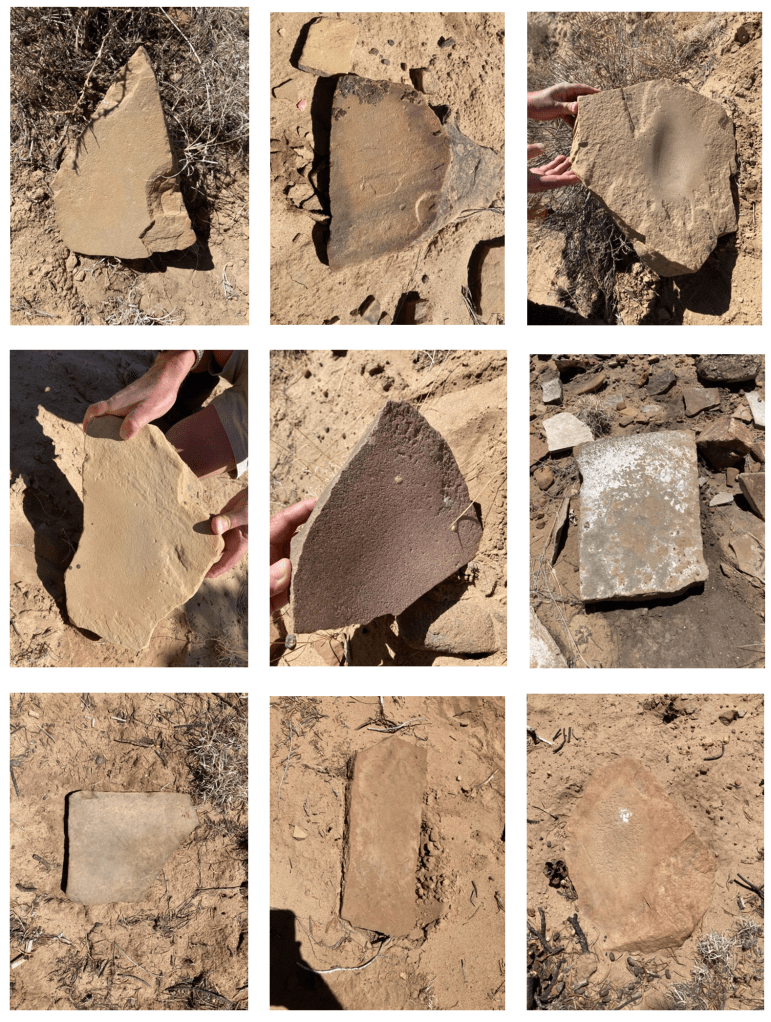
Also one Ancestral Pueblo type, broken. So often metates are broken. Were they perhaps broken ritually to mark some event?
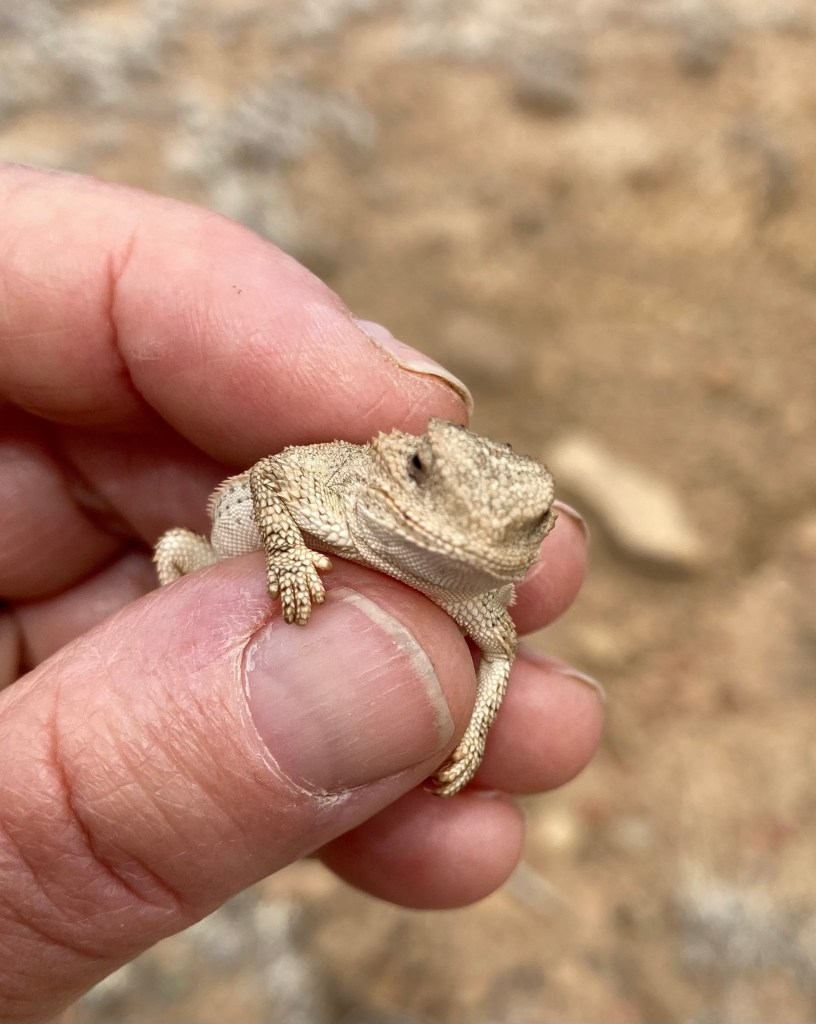
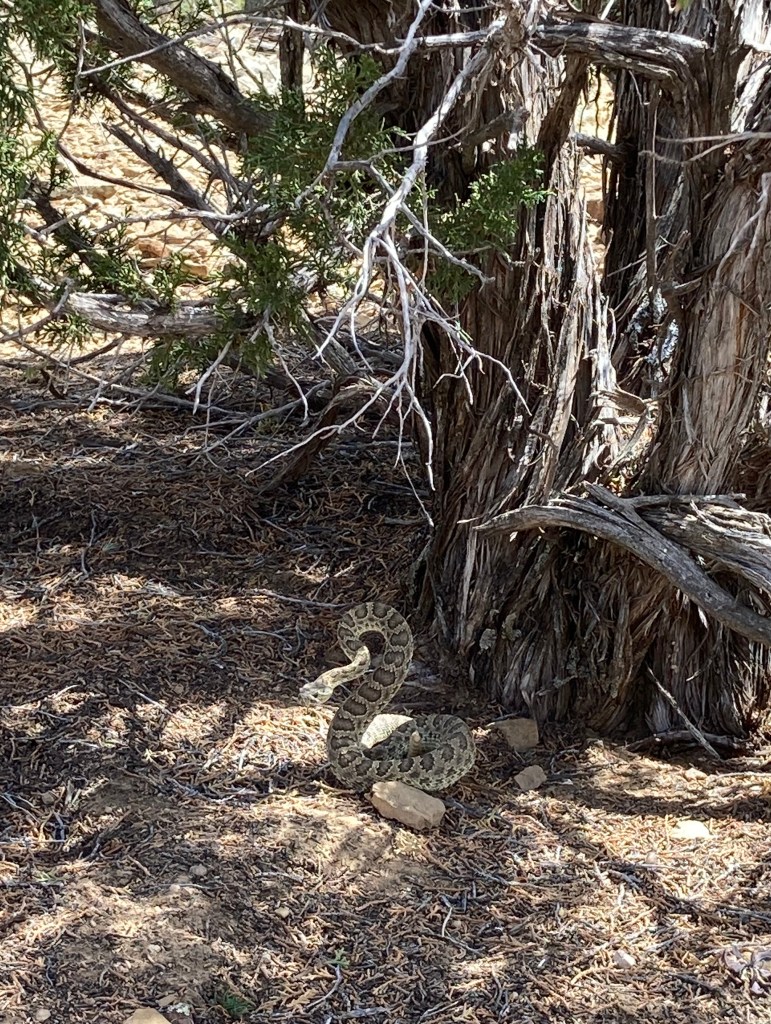
Lately the temperature has been perfectly reptilian.
On a sandy mesa-side, Hosteen Cheii. Proper behavior is to give him water; if you don’t have water, use spit.
And cooling it in the shade of a juniper, a pretty prairie rattler. Proper behavior is to back off in a hurry.
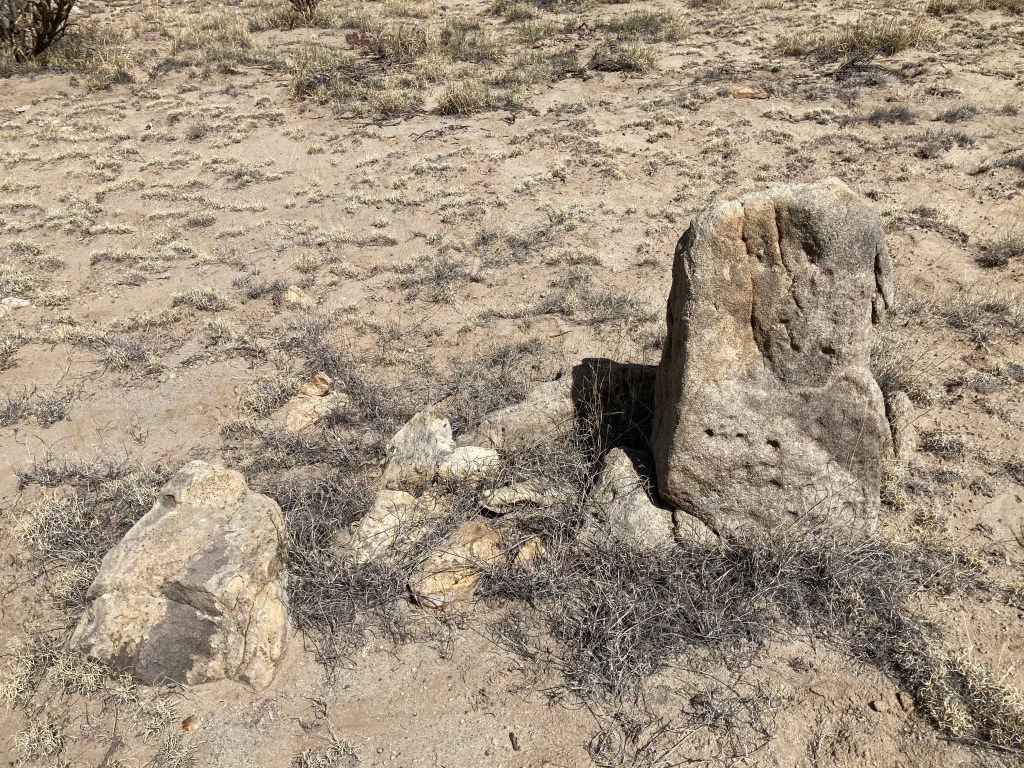
It stands in the middle of one of the linked plazas of a remote, dusty, fallen Pueblo complex that was abandoned, probably because of drought, sometime about 1200 C.E..
It’s not a grave. Ancestral Puebloans didn’t do graves with headstones.
It looks shrine-ish. The unassuming shrines of the Pueblos are often a careful pile of stones.