Below the stone ring of a nineteenth-century Navajo hogan: a piece of sun-purpled glass—pre-1914, when a process was discovered that prevented clear glass from purpling in sunlight—between two snake vertebrae.

Perhaps you’d like to write that one?

Below the stone ring of a nineteenth-century Navajo hogan: a piece of sun-purpled glass—pre-1914, when a process was discovered that prevented clear glass from purpling in sunlight—between two snake vertebrae.
Perhaps you’d like to write that one?
Stone in the outwash of the Morrison Formation…
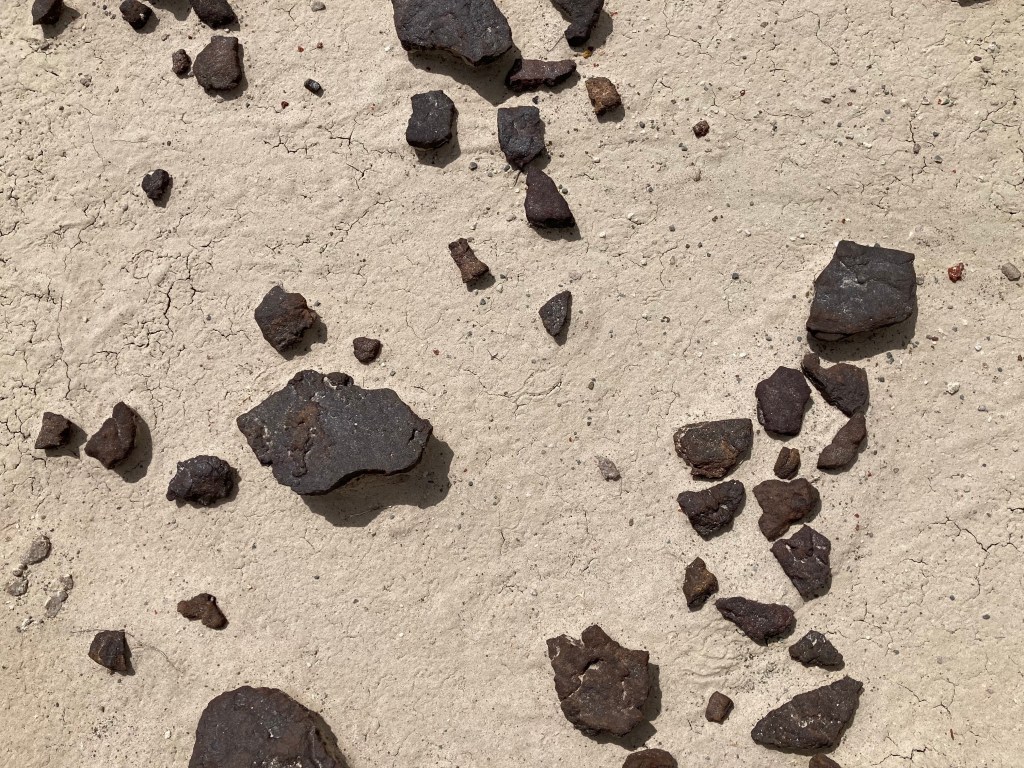
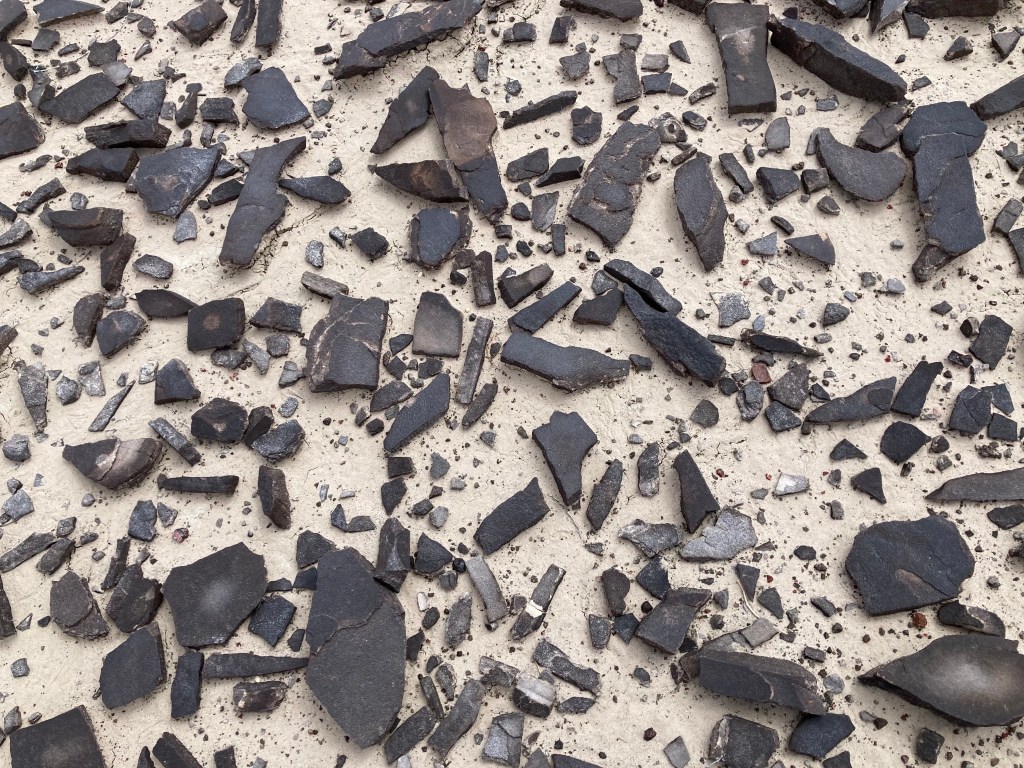
…and, near the stone circle that is all that remains of an early Navajo hogan, a juniper stump, axe-cut a couple of centuries ago and scoured to the ground by wildfire:
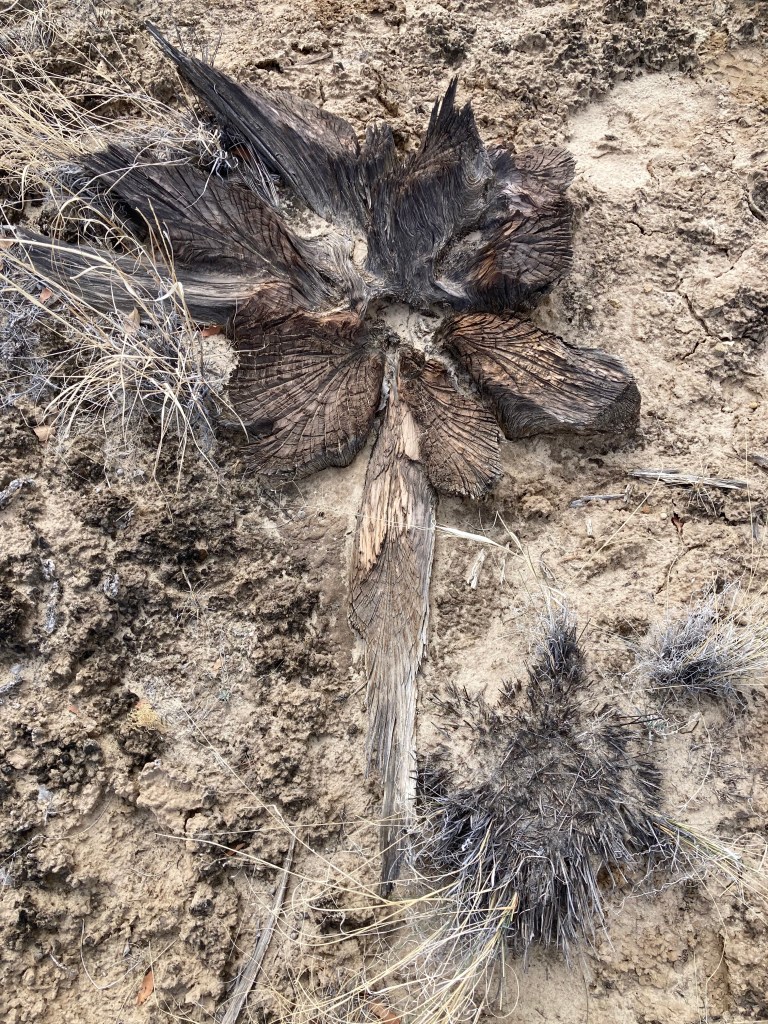
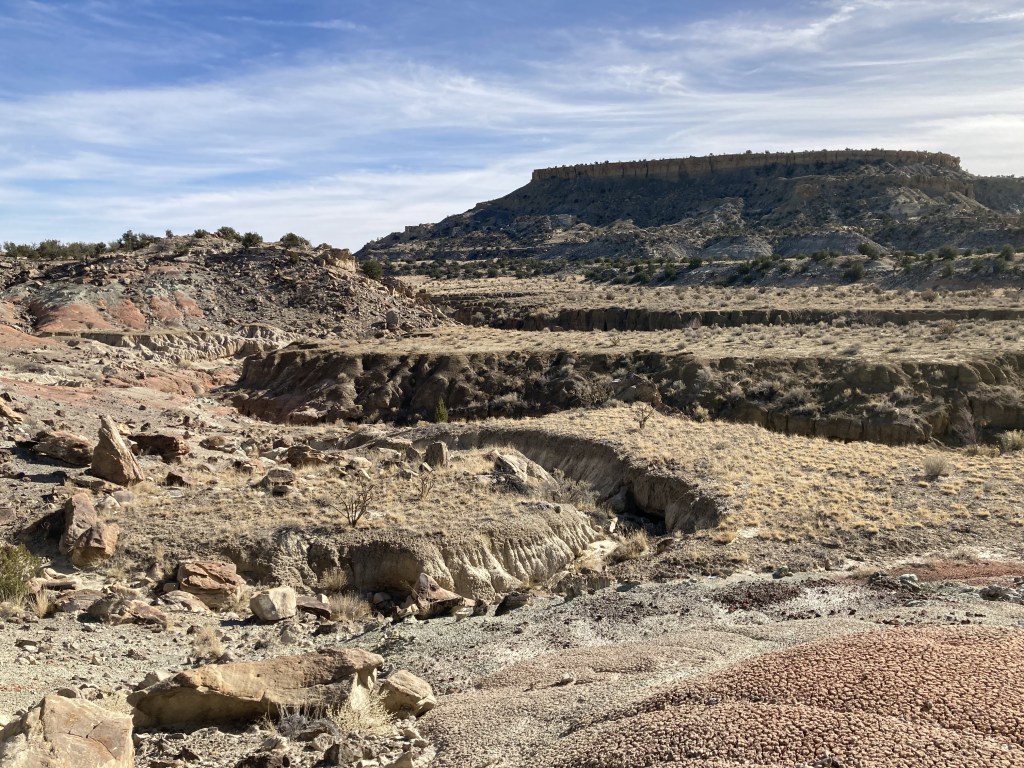
On a ridge above the crumbled, pink-and-black Morrison Formation was a decaying axe-cut juniper stump, signal to watch for the circular stone base of a hogan.
Sure enough:
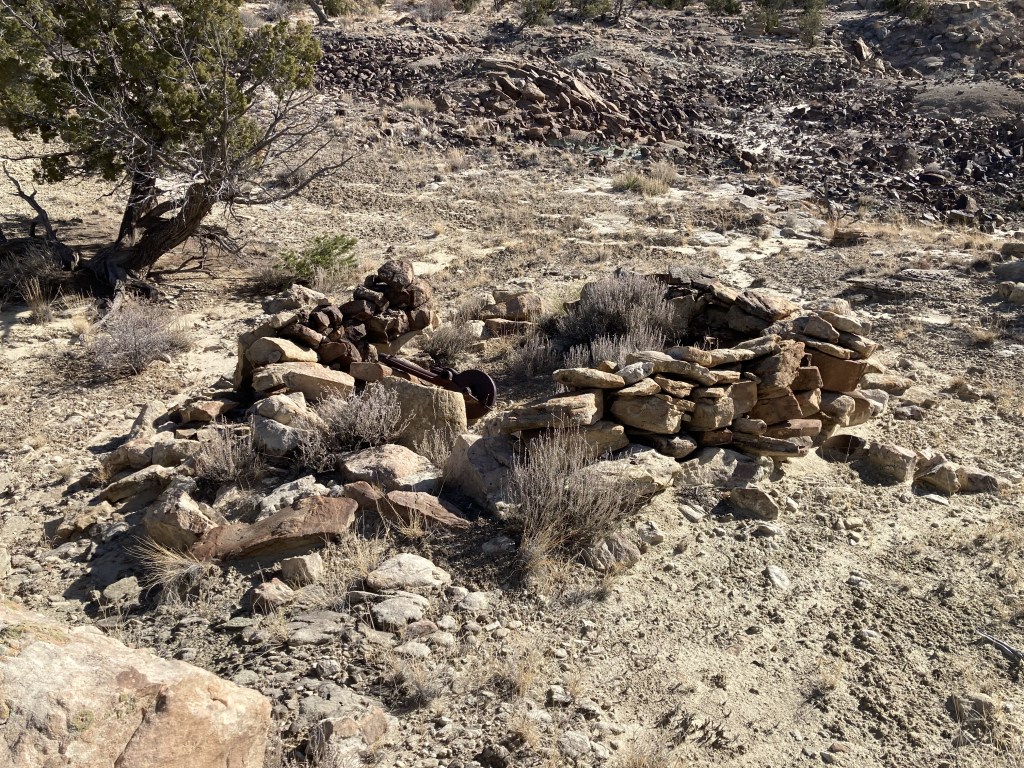
It was probably nineteenth-century, because the juniper cribbing had decayed or been taken for firewood. Into it had been dumped the rusted remains of a McCormick wind pump dating to, say, the ranching thirties:

Outside the circle, laid carefully on a rock–“curated” by some previous visitor–was a 3″ chert hand axe. The Navajo had metal trade axes, so presumably this one was Archaic. Thousands of years older than both hogan and pump.

 WORLD-BUILDING and WILDERNESS: