Tag Archives: hiking in New Mexico

Cliff-hanger

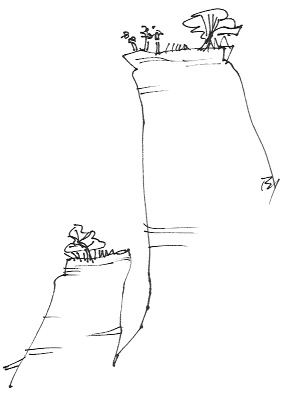
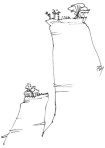
crumbling cliffOn an impossibly narrow peninsula of stone was a hunter’s paradise: it overlooked a game trail that crossed from one watershed to another. A hunter had only to wait.

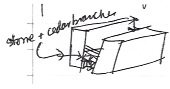
And hunters had waited. On the peninsula was a thousand-year-old Archaic camp, its earth black with twelve to eighteen inches of ashy midden. Eighty feet above the valley floor, craning our necks, we could see that its crumbling north edge was formed of friable Tertiary sediments. The site itself looked “broken in half” like Dun Aengus, the cliff’s-edge fort from the Irish Iron Age, which the Atlantic has half devoured.

Following the game trail, we circled down to the bottom of the cliff. At its base stood an intact chunk of the site. It had slid from the edge where we had leaned and still stood upright, complete with ashes and flakes. On the cliff face rivulets of ashy mud trailed from the broken edge .

Ignorant, we had stood on that undercut, sleazy, brittle cliff’s edge, eighty feet above the valley floor.

Stinky Rattler?

VerticalSnakeDB143Best discovery: the source of that organic-metallic, pungent odor we call “snake smell.”

It has an oiliness, and always seems to occur near strata of barely-altered Cretaceous swamp not compressed enough to be coal. Yet I’ve heard many a desert rat say, “That’s rattler smell.” It has always made me aware of my ankles.

But it’s a plant. Thick, small, dark green leaves in pairs on a red stem. I couldn’t find it in Weeds of the West, but it looks like a vetch.

*

Face Down

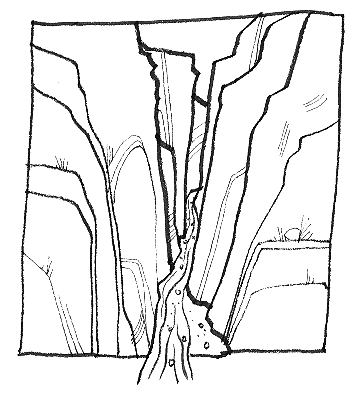
SlotCanyonDB124The day began with mottled clouds that later burned off. No friendly sand to walk in, just acrid mud dust, with now and then a stiff, dried place where a cow had pissed. We hiked down terrifying deep arroyos whose walls, scored by mud-laden runnels, were poised to collapse.

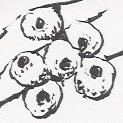
Mudstone concretions: eyeballs and entrails lay in drifts on the yellow-red dirt. We came across two half-buried spheres, both about twelve feet in diameter, like the backs of two huge skulls: Baba Yaga and her daughter.

*

Hogan Rings

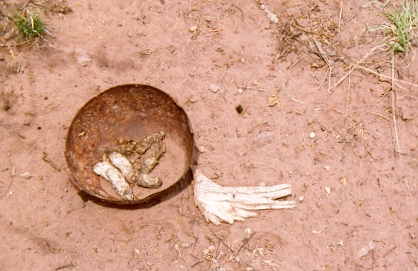
Navajo Slab CorralFrom the mesa edge we saw, on a south-facing bench, two Navajo hogan rings and a stone corral, and climbed down to them.

They were old. No historical pottery scatter at all. One of the rings still carried the juniper cribbing of the roof, though it had fallen. In the desert juniper can endure for hundreds of years.

The hogan’s door did not face east as is traditional, because the ring had been built against a sandstone slab; however, the north wall did appear to have been knocked out, customary ritual to release the spirit of a dead person. 

The corral had been formed ingeniously by piling cedar to wall up the ends of a cleft formed when a fallen slab split in two.

*

Little, Big

Late summer, hiking on the syncline: dozens of millipedes, the color of polished violins, in frantic, foot-waving travel. Next spring we’ll find their husks, curled in tight spirals and weathered white as chalk.

On the road out we were passed by an enormous RV. From a distance its size-to-speed ratio was exactly that of a millipede.

*

Toads

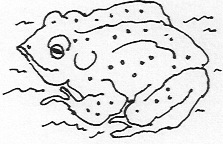
The rains have come, and with them the toads. The pools of the Syncline were full of bright red mud-water, tadpoles and predators. A slim—but no doubt well fed—garter snake with a black head took to the opaque slurry, then poked its head out like a sea serpent.

In a drying pothole were many toadlets so small they looked like insects, not a quarter inch long. They had finished their lightning metamorphosis, but at the bottom of the hole was a gelatinous pudding of polliwogs that hadn’t grown up fast enough. Now and then there was a tiny squirm or shudder from someone in the black mass, a last effort at life.

*

Firewalking

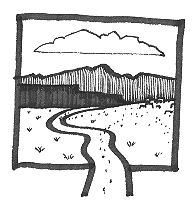
On the McCartys flow, the most recent in the Malpais. Easy walking, the lava ropy and wrinkled as a rucked-up rug, chink, chink of volcanic glass underfoot. I should have worn leather-palmed gloves; I was aware of my bare hands.

Navajo folklore has a story about the flow: the gods threw fire. Because the Navajo are recent arrivals from British Columbia—Athabascan hunter-gatherers who migrated down the east face of the Rockies and got to New Mexico around 1300—it had been suggested that the flow dated to the 1400s. But recent research says it is three thousand years old, so the Navajo myth must have risen from the lava’s burned, cindery look. Three thousand years ago it was the ancestors of the Puebloans who were living here. Surely there were frightened onlookers staring from the sandstone cliffs, watching the quick-running red river torch the junipers to flame.

*