Tag Archives: desert hiking

Face Down

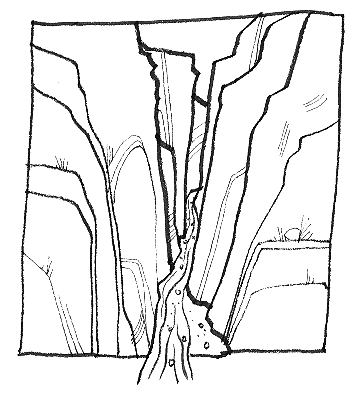
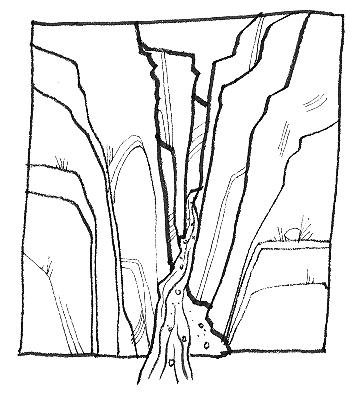
SlotCanyonDB124The day began with mottled clouds that later burned off. No friendly sand to walk in, just acrid mud dust, with now and then a stiff, dried place where a cow had pissed. We hiked down terrifying deep arroyos whose walls, scored by mud-laden runnels, were poised to collapse.

Mudstone concretions: eyeballs and entrails lay in drifts on the yellow-red dirt. We came across two half-buried spheres, both about twelve feet in diameter, like the backs of two huge skulls: Baba Yaga and her daughter.

*

Hogan Rings

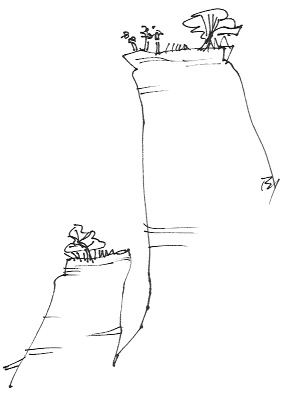
Navajo Slab CorralFrom the mesa edge we saw, on a south-facing bench, two Navajo hogan rings and a stone corral, and climbed down to them.

They were old. No historical pottery scatter at all. One of the rings still carried the juniper cribbing of the roof, though it had fallen. In the desert juniper can endure for hundreds of years.

The hogan’s door did not face east as is traditional, because the ring had been built against a sandstone slab; however, the north wall did appear to have been knocked out, customary ritual to release the spirit of a dead person. 

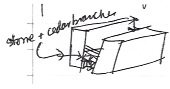
The corral had been formed ingeniously by piling cedar to wall up the ends of a cleft formed when a fallen slab split in two.

*

Firewalking

On the McCartys flow, the most recent in the Malpais. Easy walking, the lava ropy and wrinkled as a rucked-up rug, chink, chink of volcanic glass underfoot. I should have worn leather-palmed gloves; I was aware of my bare hands.

Navajo folklore has a story about the flow: the gods threw fire. Because the Navajo are recent arrivals from British Columbia—Athabascan hunter-gatherers who migrated down the east face of the Rockies and got to New Mexico around 1300—it had been suggested that the flow dated to the 1400s. But recent research says it is three thousand years old, so the Navajo myth must have risen from the lava’s burned, cindery look. Three thousand years ago it was the ancestors of the Puebloans who were living here. Surely there were frightened onlookers staring from the sandstone cliffs, watching the quick-running red river torch the junipers to flame.

*

This Just Out

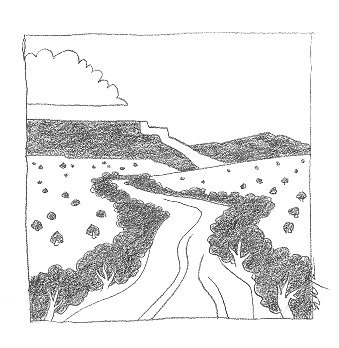
This wide, dry land, faintly green with spring, and nobody as far as the eye can see. Wind roaring up from Ladrón Peak on the south horizon.

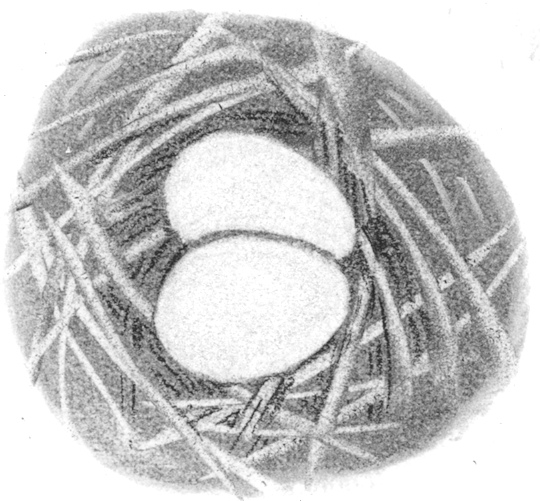
A mourning dove burst whistling from a clump of snakeweed. I thought, Hmm! Sure enough, there was her nest on the stony earth: round, shaped from dry grasses. Two exquisite white eggs in it, the newest things I’ve ever seen.

*

Lost and Found

Bushwhacking in the dense piñon-juniper and oak brush that covered the mesa, on a windy day that obscured all sound. I was newly aware of how one tracks companions by constant, quick glances through the twiggage, near-subliminal glimpses every four to eight seconds: a scrap of color, a blink of movement out of place against the moving background. It’s an almost-unconscious art, and takes practice. First we lost Rob, then Gary, then John.

They all straggled in later at the car, remarking on how, in countryside like this, a group can get separated in less than a minute. Their shouts had been inaudible in the wind.

One Up on Jesus

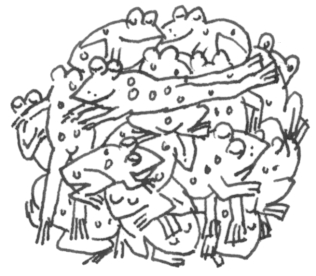
The big stock pond where we parked at the edge of the wilderness was desert-dry. Jan recalled hiking there after the monsoon, when there were so many frogs you could hear them two miles away. He said, “Dug in under that dirt are a hundred thousand frogs, waiting for rain.”

On our way back we crossed the pond’s dry bed, walking on thousands of frogs.

*

Rain Arriving

The most wonderful thing to happen in the hike happened right at the beginning of it.

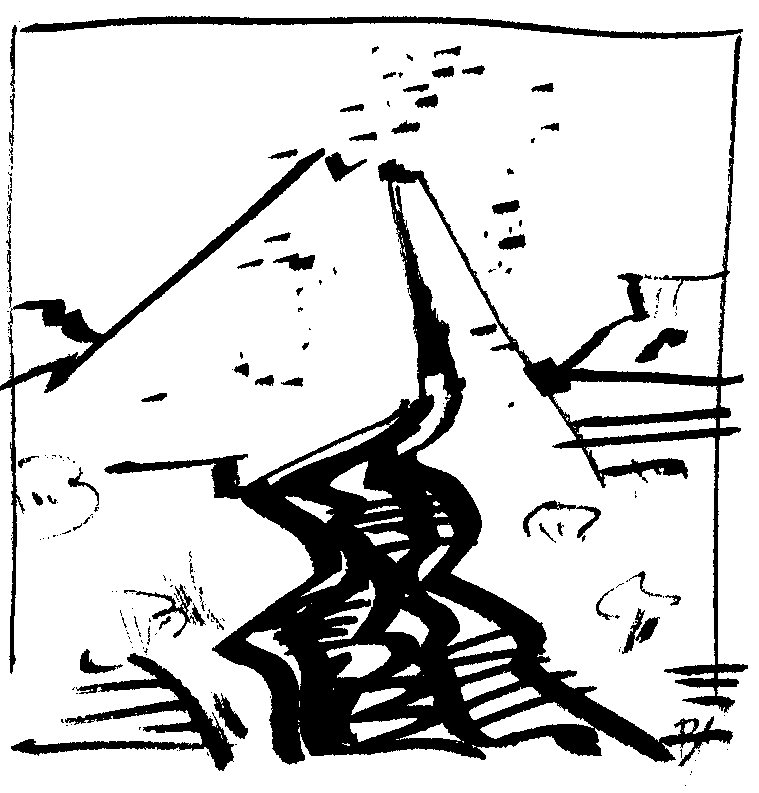
There’d been rain the night before, and the clouds had half withdrawn over the mesas. Arroyos were dry. But as we crossed the first, and just as we crossed, a slow, creamy tongue of water came snaking down it.

It arrived from some far-distant cloudburst, miles away and maybe hours ago. Traveling, say, five inches per second. It was cream-colored and laden with lumps of tan foam, remnants of some fury upstream, now abated.

Best was its sound. As it moved over the dry sand it made a purr, a hiss, filling tiny underground gaps—perhaps animal or insect burrows—from which the air escaped in tiny gurgling fountains. The flow came slowly, slowly over the rippled sand.

When, five or six hours later, we hiked back, it was still running slightly, but the sand was saturated and completely silent.

*

Desert Skinnydipping

The Syncline: The sandstone ponds had had a flashflood through them. In the lower pools the willows were torn and  full of wreckage, but the higher ones were beautiful. We went in naked on the sandy, gravely mud.

Polliwogs and froglets nibbled us. We slid down the algae-coated water chutes of the linked pools; the stream’s steady drip from pool to pool became overflow as our bodies displaced water.

So quiet! Wind in the cottonwoods, sun on the washed stone, warm breeze on bare skin. Absolute peace.

Wood and Stone


Hiking the Piedra Lumbre area of La Leña. A cold, dry day with a storm moving in.

Lots of petrified wood. Not the brilliant agates we see so often but a frail, glittering mudstone that preserves knotholes and wormholes, almost the worm itself.

Fossil tree trunks dissolve into perfect wood chips: the desert floor is littered as though a stone woodcutter had passed, chopping stone trees for a stone fire.

*