…a Giant Sequoia.

…a Giant Sequoia.
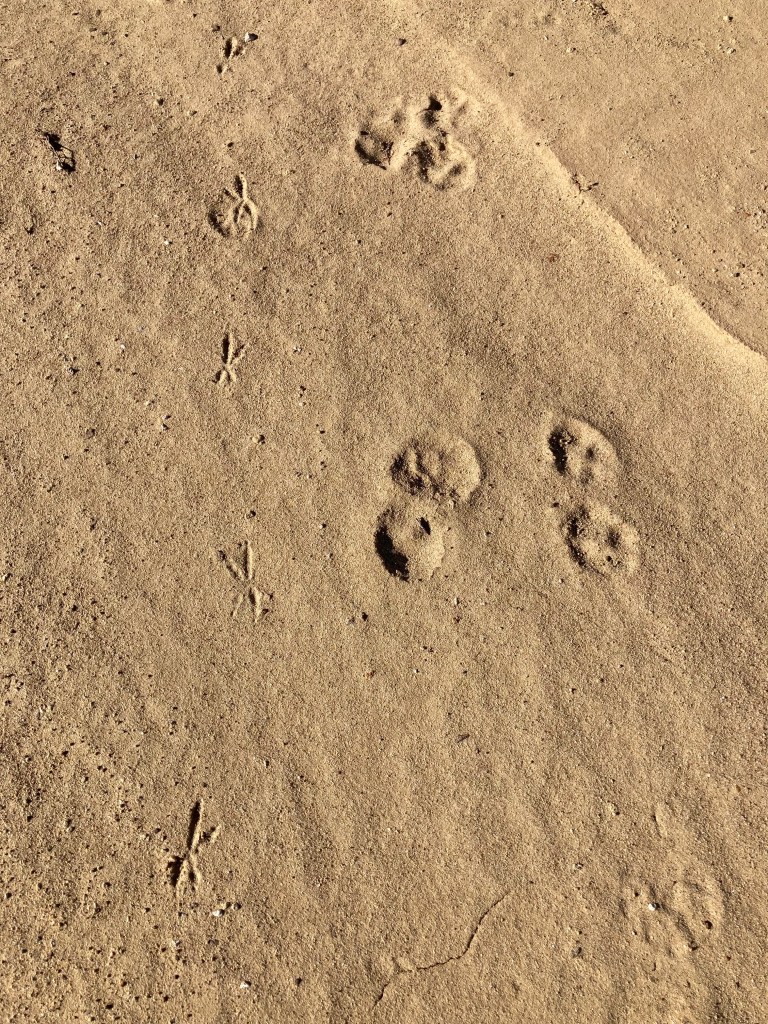
In the sand of an arroyo, roadrunner on the left—all those little Xs—coyote on the right.
See July 5 post. What are they?
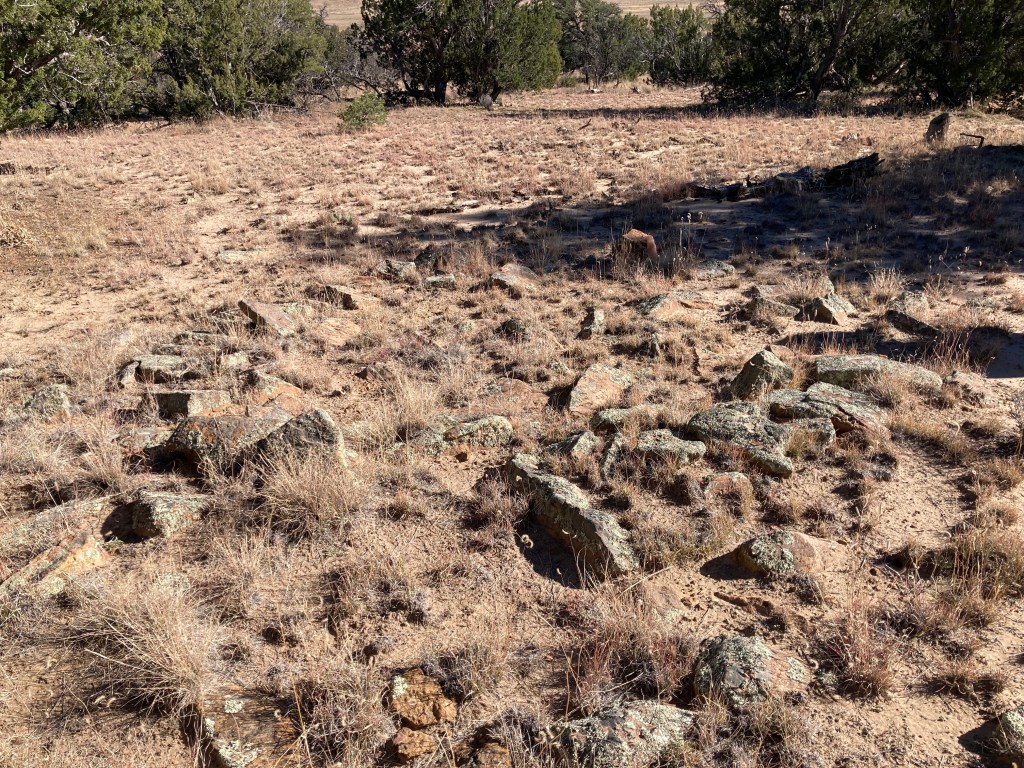
Like the circle in the earlier post, this one was in the wrong place and with the wrong doorway opening to be a hogan ring. Its lichened stones were next to the collapsed foundations of a Puebloan fieldhouse, ca. 1300s (my best guess; post-Chaco). But it didn’t have the sunken center typical of a kiva depression, and seemed too small for that as well.
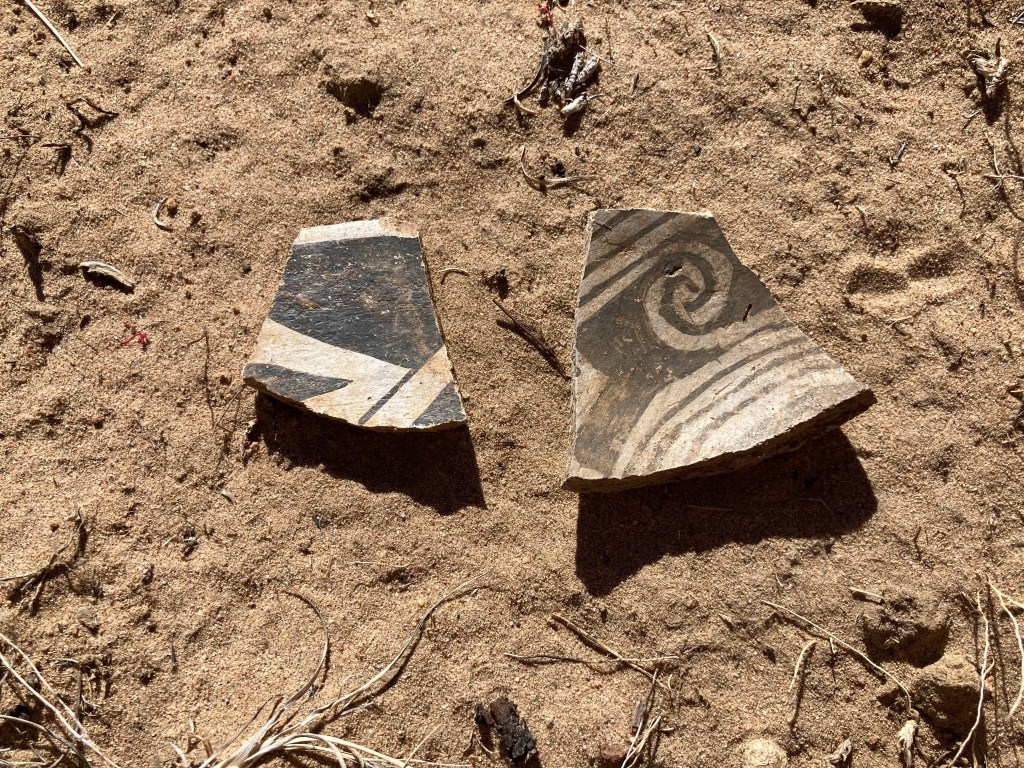
Beautiful potsherds.
Remember to turn potsherds face down again to protect the paint.
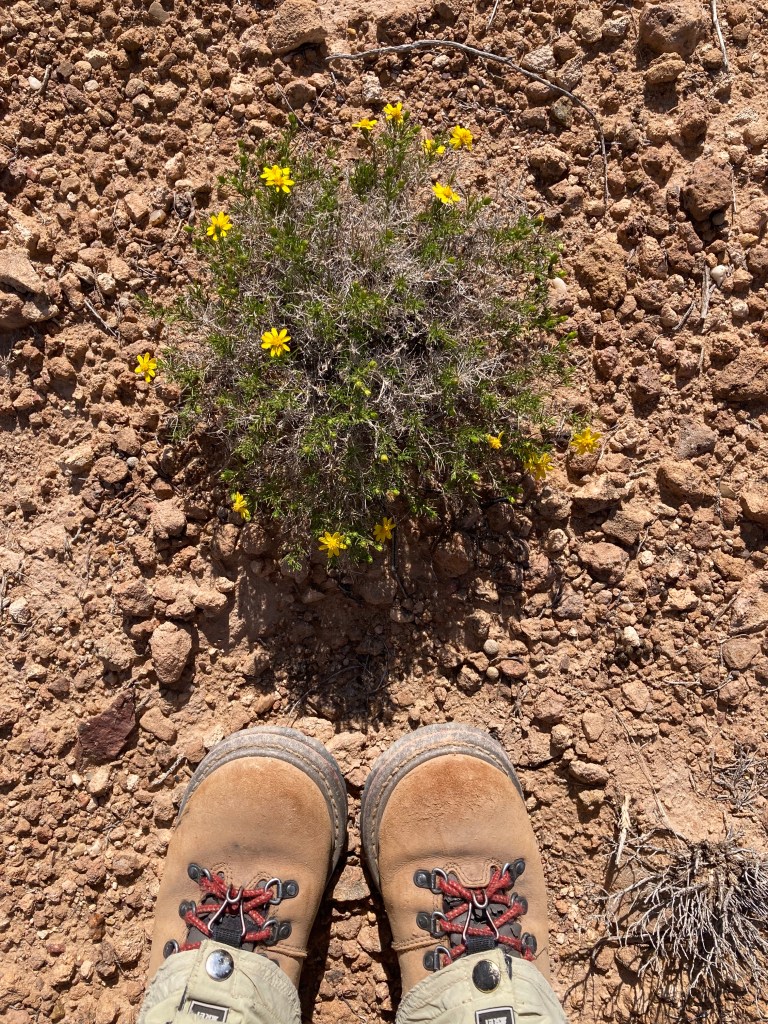
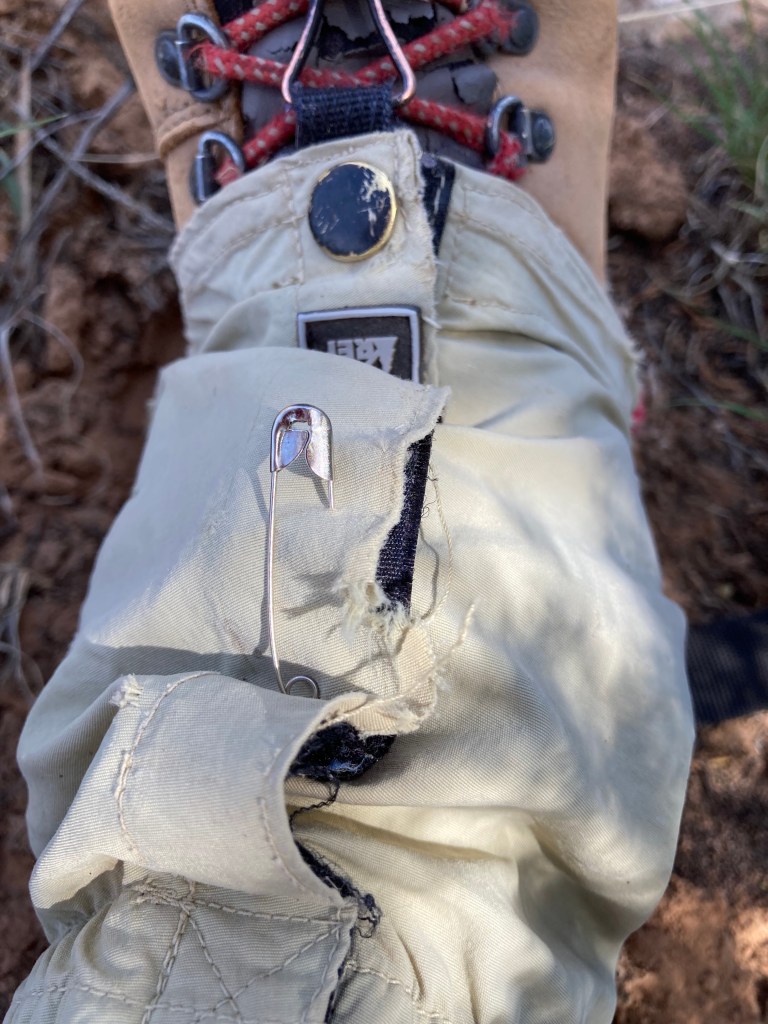
Still too hot for more than a short hike, but there had been rain; there’s hope for a cooler season. The gaiters need mending:
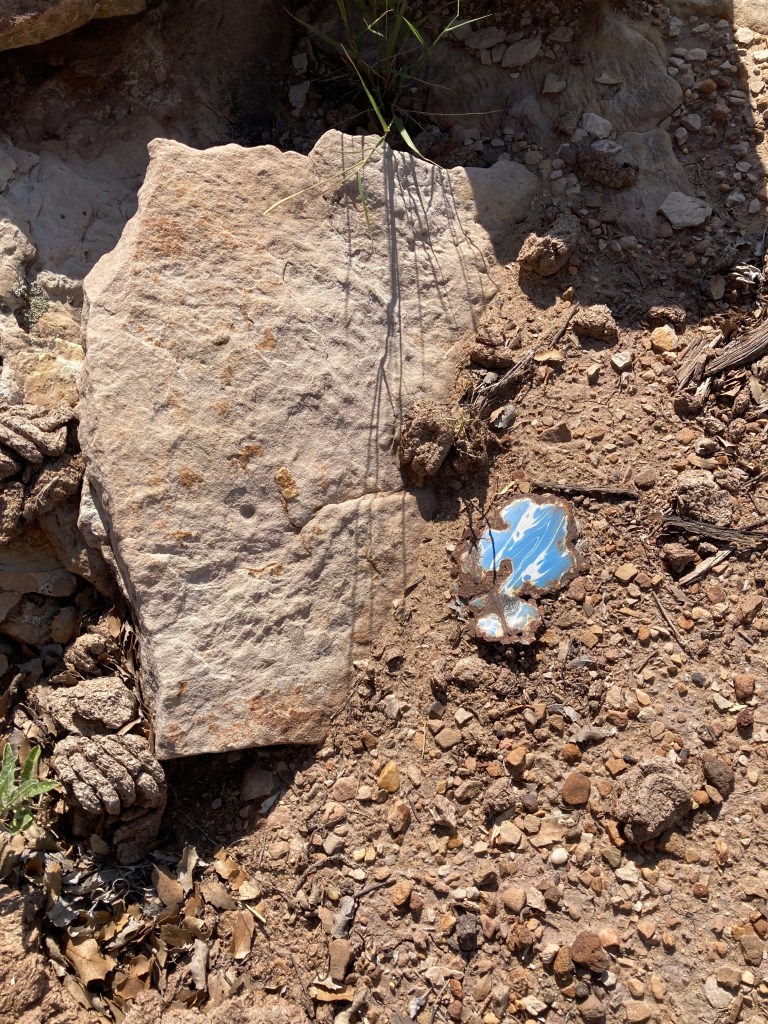
…but—next to the fallen foundation of a Navajo hogan—that old blue enamel coffee pot may be beyond repair.
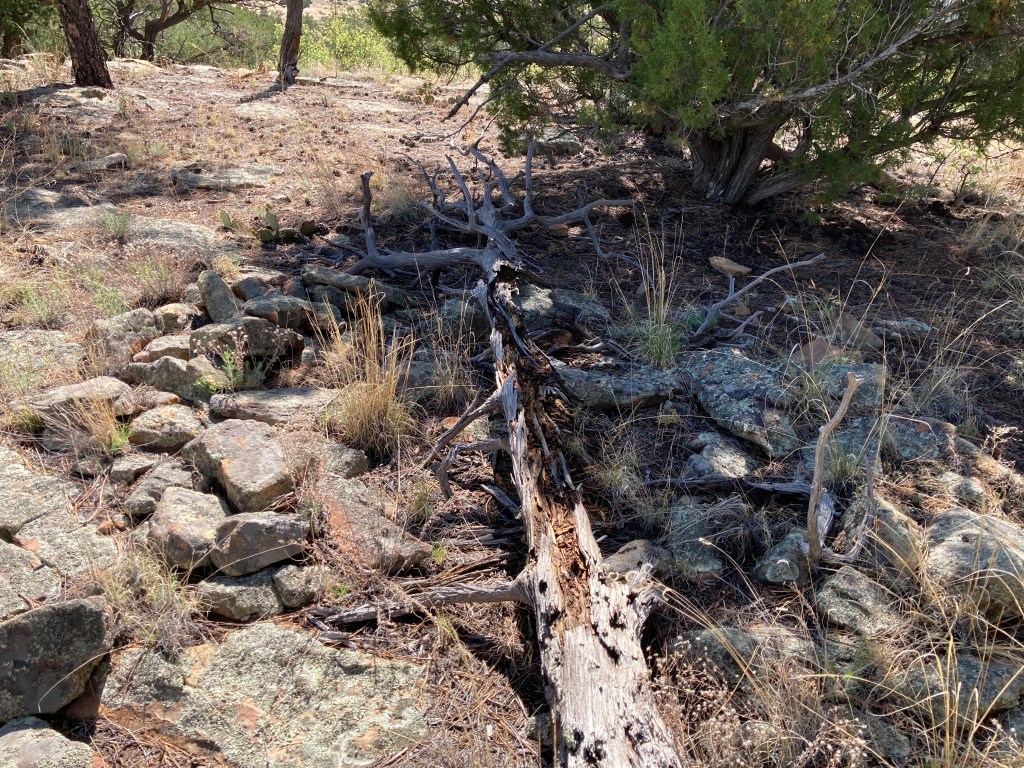
Not Navajo. Often a stone circle is the foundation of a traditional hogan, but this is in the wrong place–over a lava field, no grazing near–and the “doorway” break faces west, not east.
Puebloan? There are tumbled Ancestral Puebloan structures in the neighborhood, but they’re all square-cornered. Nor can it be a kiva, because it was built right on the sandstone slabs.
The fallen ponderosa that divides it neatly in half is old, but thick lichen says the circle is much, much older.
What was it?
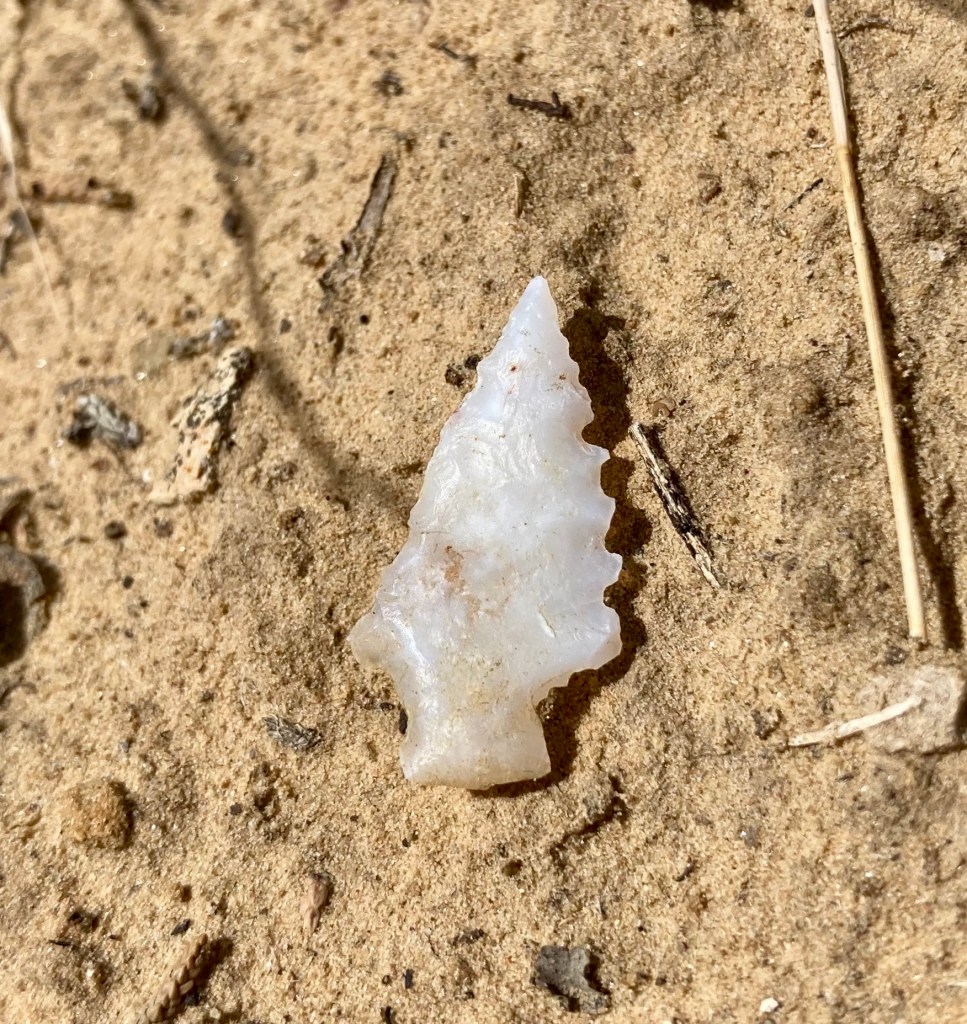
I’m not great at identifying projectile points, but my best guess is that this is an Armijo point (Late Archaic, about 2,000 B.C.) and an atlatl point rather than an arrowhead. It was about an inch long, and, interestingly, had had a “field repair.” The original delicate serration had broken along one edge, spoiling its symmetry, and someone–the original owner? a later finder?– had resharpened the broken side with plain bifacial knapping. Like a slightly tippy Christmas tree, it looks wonky but serviceable.
I’m not great at identifying flowers, either. But the desert was blooming.
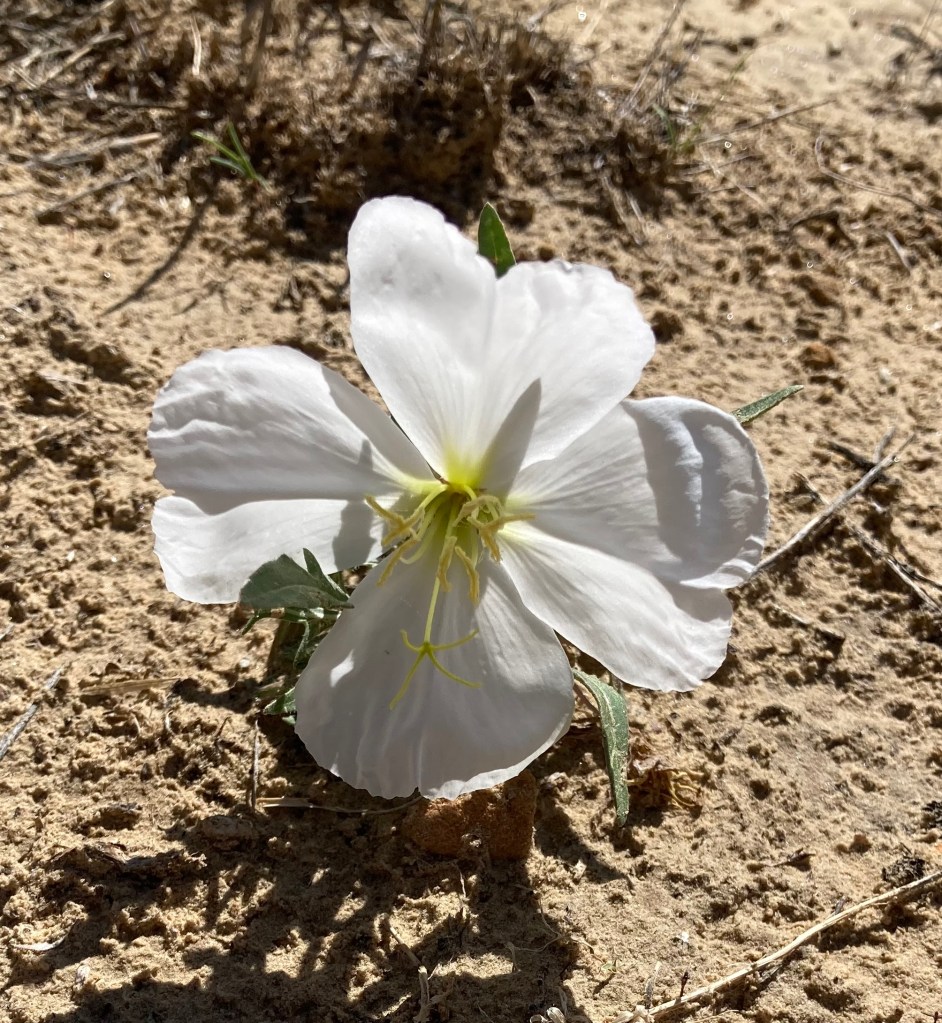
New Mexico has been deep in drought, but about a week ago we had a day of rain. Unusual, because April is wind month; our rains arrive in the summer monsoon.
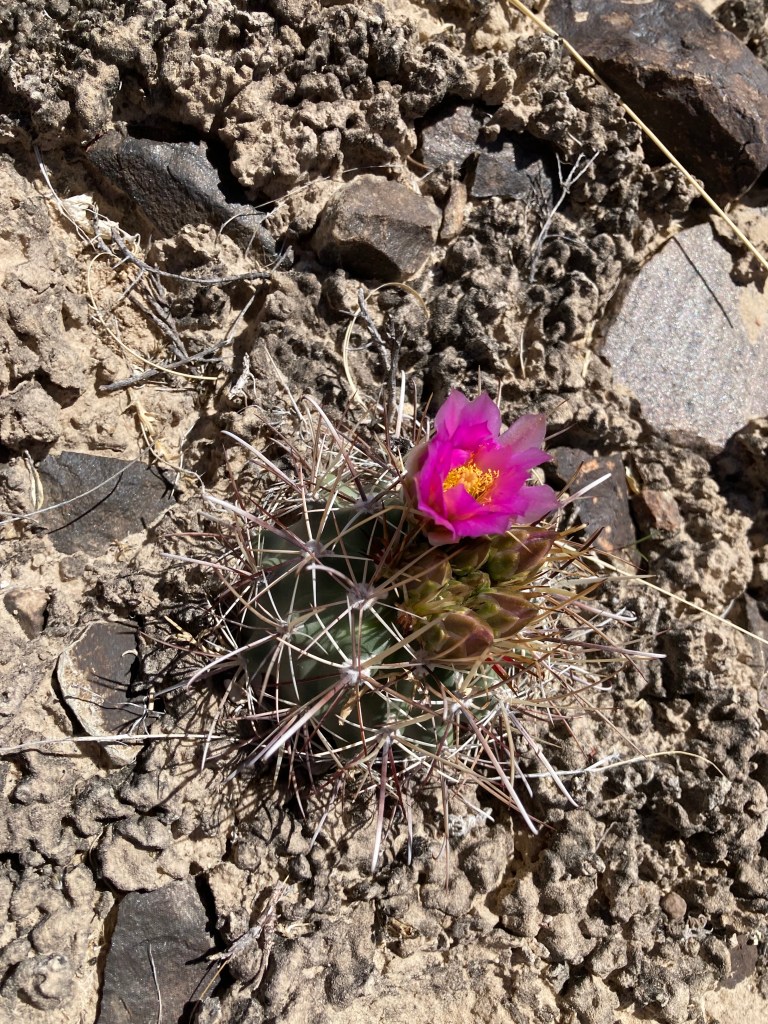
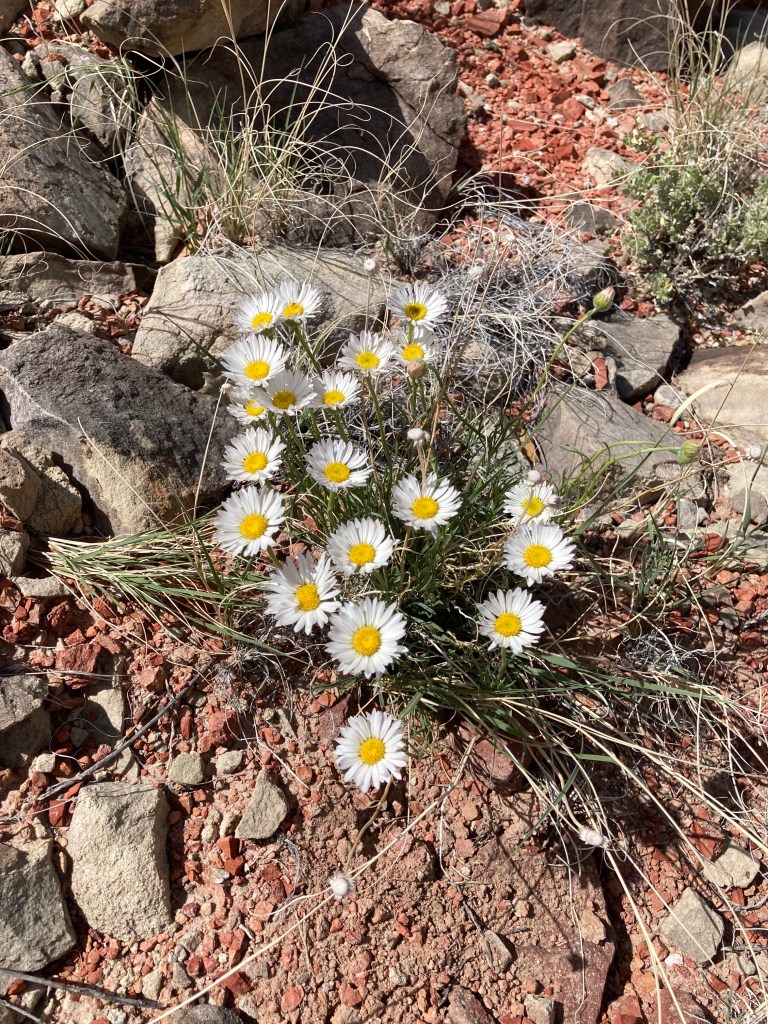
A few flowers are April bloomers regardless. Like this cactus with its incipient blooms, and twenty desert daisies.
We were picking our way down a remote and rocky draw in the Morrison when my companion looked back and said, “What’s that?”

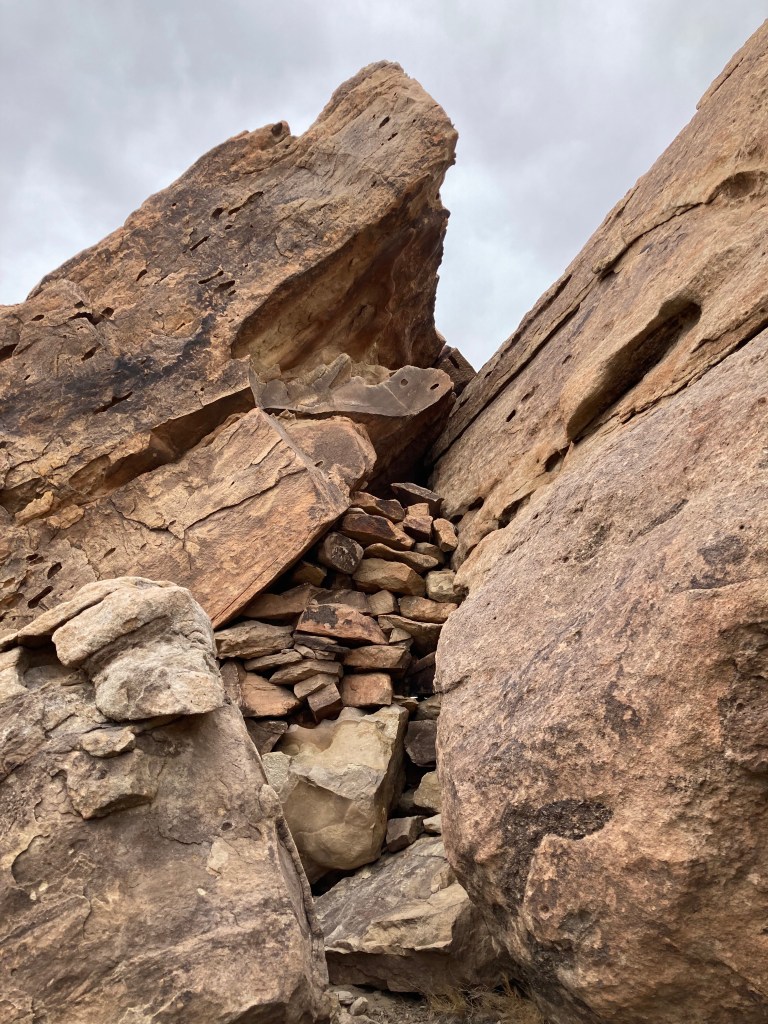
We’re used to finding stone structures—stone is the building material out there—but we’d never seen anything like this. The unstable mudstone cliffs aren’t good for cliff dwellings, nor was this the regular, well-set look of an Ancestral Pueblo house or granary. Just stones, randomly stacked to fill a gap.
We scrambled up the tumbled cliff—always dicey, among the unstable fallen capstones—to see if we could understand what it was. Under the immense sandstone boulders, we found a room.
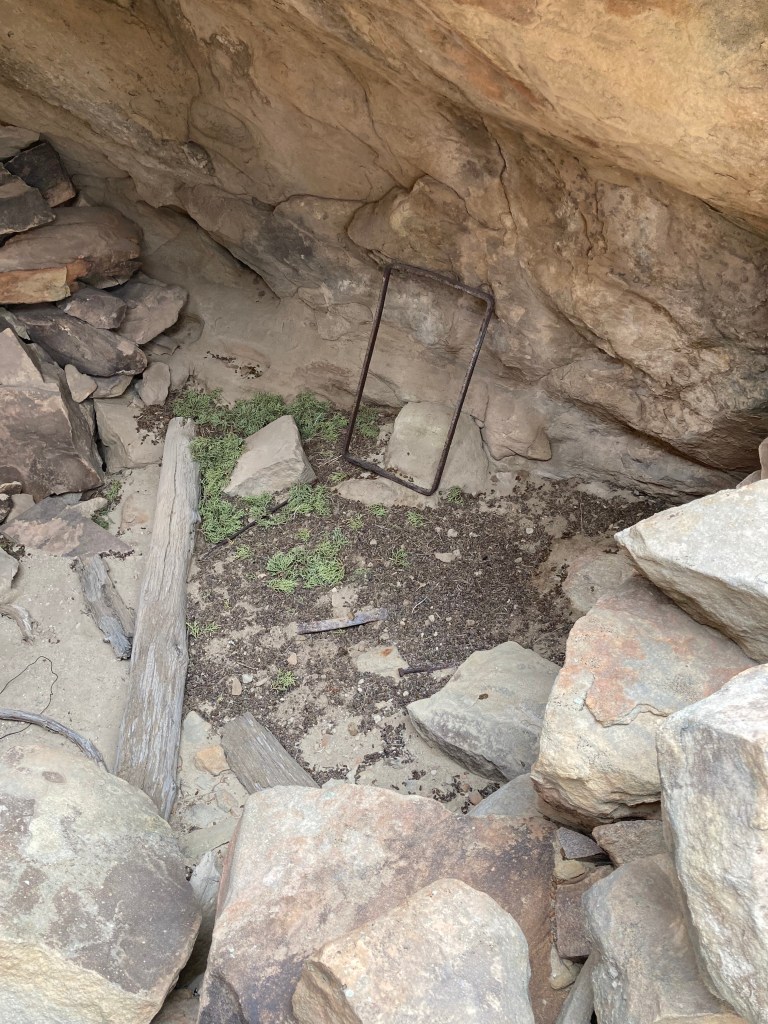
The windward side had that gappy wall, though a sketchy barrier had been built on the open leeward side. Had the floor been built up with imported sand? Had those sawn posts, now fallen, held up a tarp of some sort? What looked like a bed of green juniper was a pack rat nest; the floor was thick with droppings. Among them were bits of rusty iron: a bolt, a rod, a strap from the leaf spring of a buggy or an early auto. What had once been in that metal frame? In the “forecourt” was a rusty bucket.
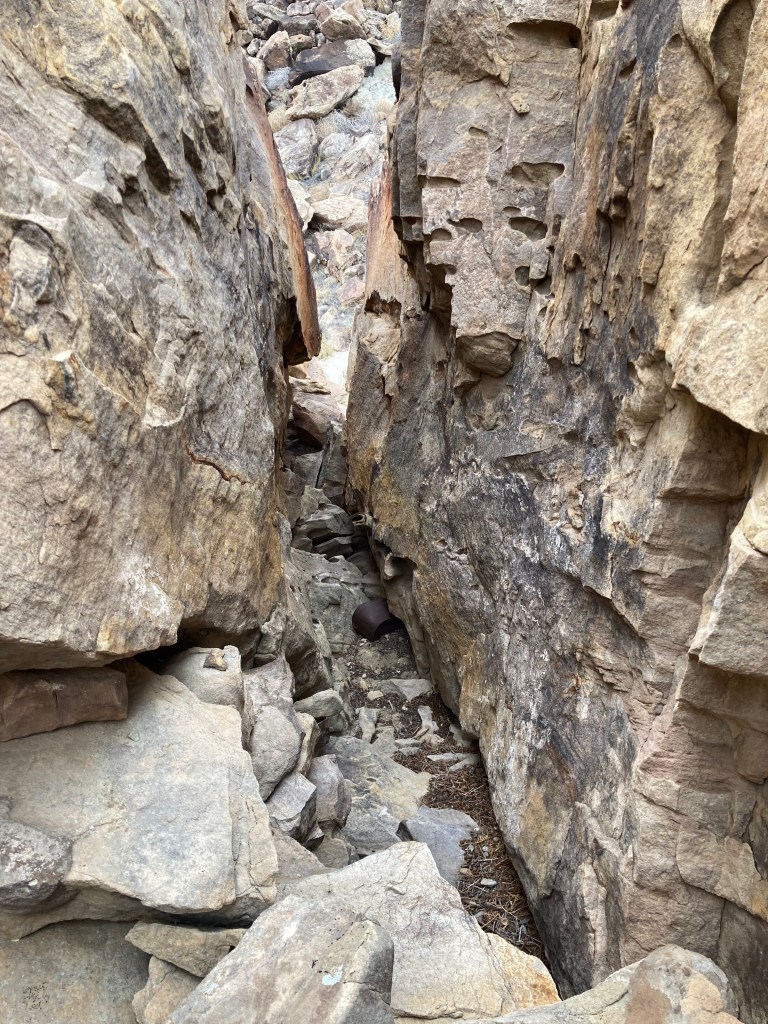
My guess would put the site in the thirties, latest. The ceiling was lightly smoked. Who lived here? Not in winter, certainly, nor during the monsoons. A sheepherder? So remote; were they in hiding? A moonshiner? An outlaw?
A lonely place, under looming stone.
Below the stone ring of a nineteenth-century Navajo hogan: a piece of sun-purpled glass—pre-1914, when a process was discovered that prevented clear glass from purpling in sunlight—between two snake vertebrae.

Perhaps you’d like to write that one?
Stone in the outwash of the Morrison Formation…
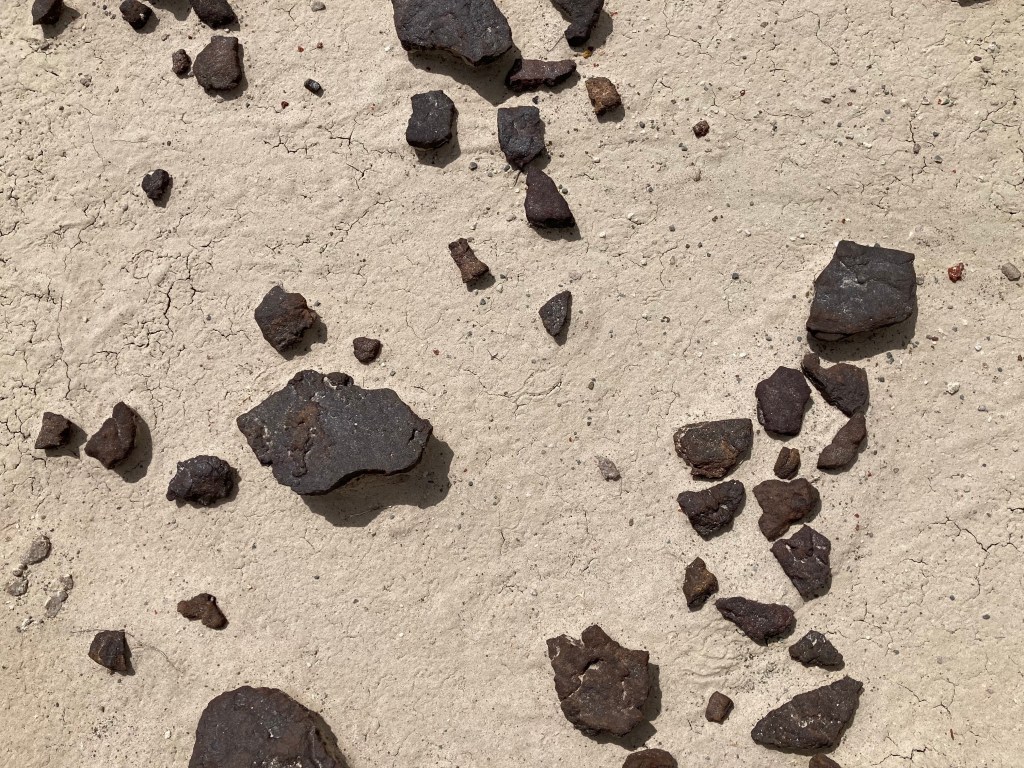
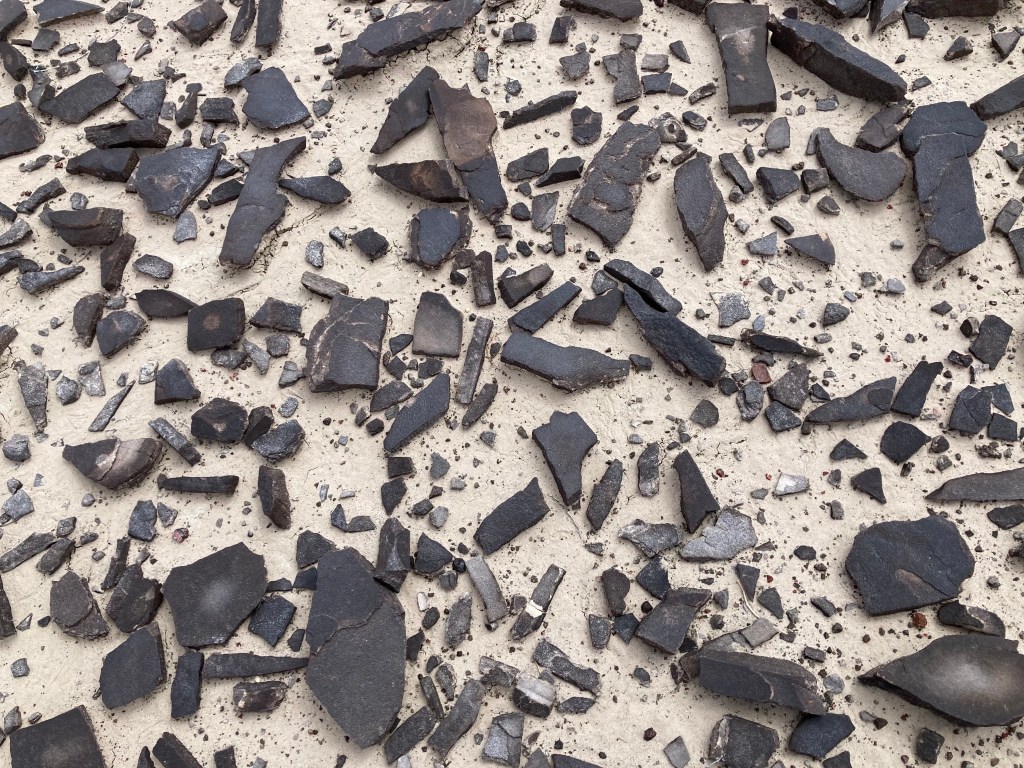
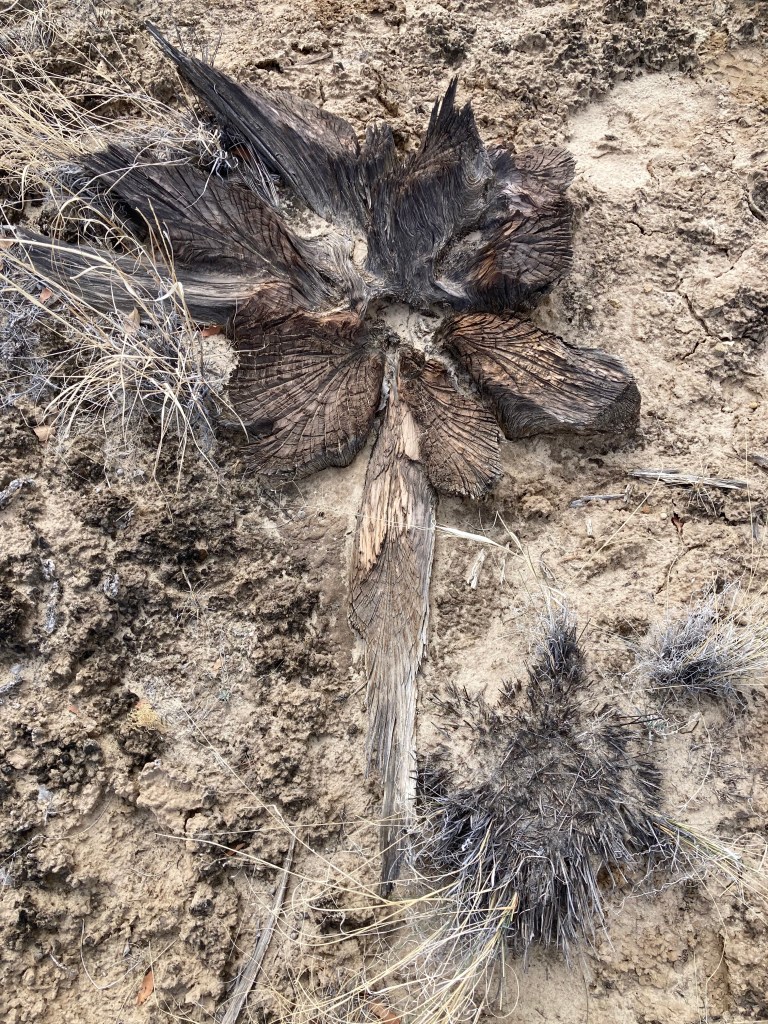
…and, near the stone circle that is all that remains of an early Navajo hogan, a juniper stump, axe-cut a couple of centuries ago and scoured to the ground by wildfire:
 WORLD-BUILDING and WILDERNESS: