Wordless


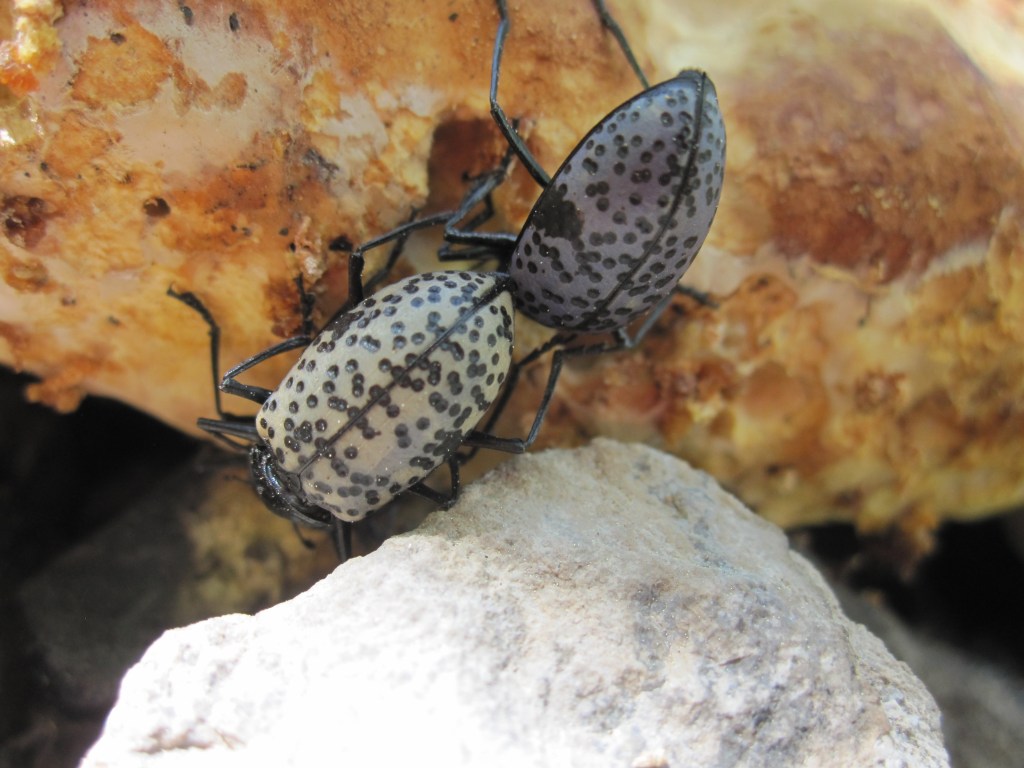
Pleasing Fungus beetles. Yes, that’s their actual name. They live on the fungus that grows on dead trees, in this case downed by fire. I don’t know whether this group–originally there were three–were mating or tussling.
As my zoologist mother said, “You be grateful to fungus and bacteria. If it weren’t for them you’d be up to your neck in dead dinosaurs.”

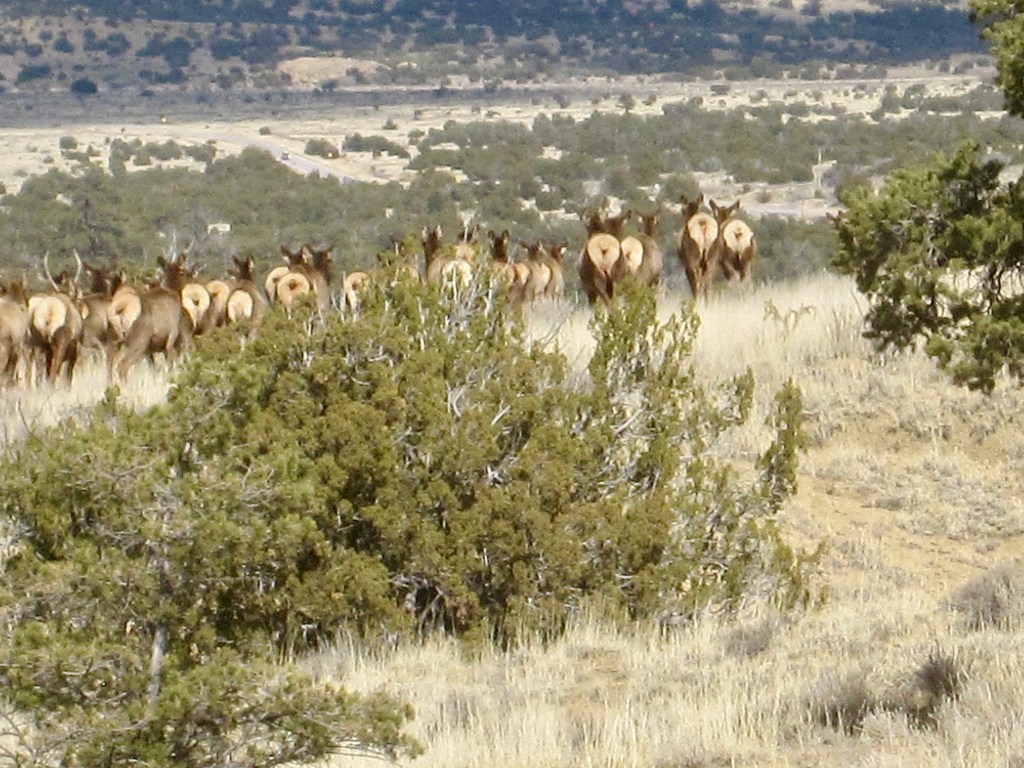
More than fifty elk, cautious but unworried, moved slowly away from us around the base of a narrow mesa. We hoofed it up the slope and across the mesa top in time to watch them leap two fences and head single file up the next ridge.
Not the best focus, but the best behinds.

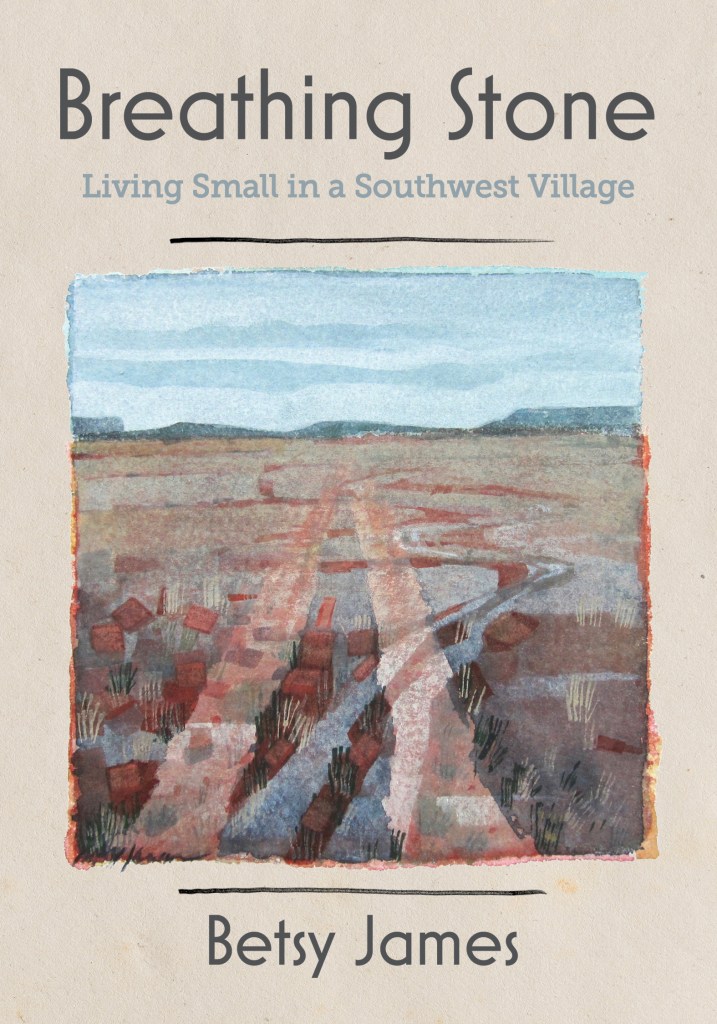
It feels like what it is, a field journal. I’m delighted with it:
https://casaurracapress.com/bookstore/p/breathing-stone
You can order it from your favorite indie bookstore; from Bookshop, the indie alternative to the big A:
or from the publisher, single copies okay:
https://casaurracapress.com/bookstore
Many miles of quiet walkabout. Illustrated.
April 16:

May 4:


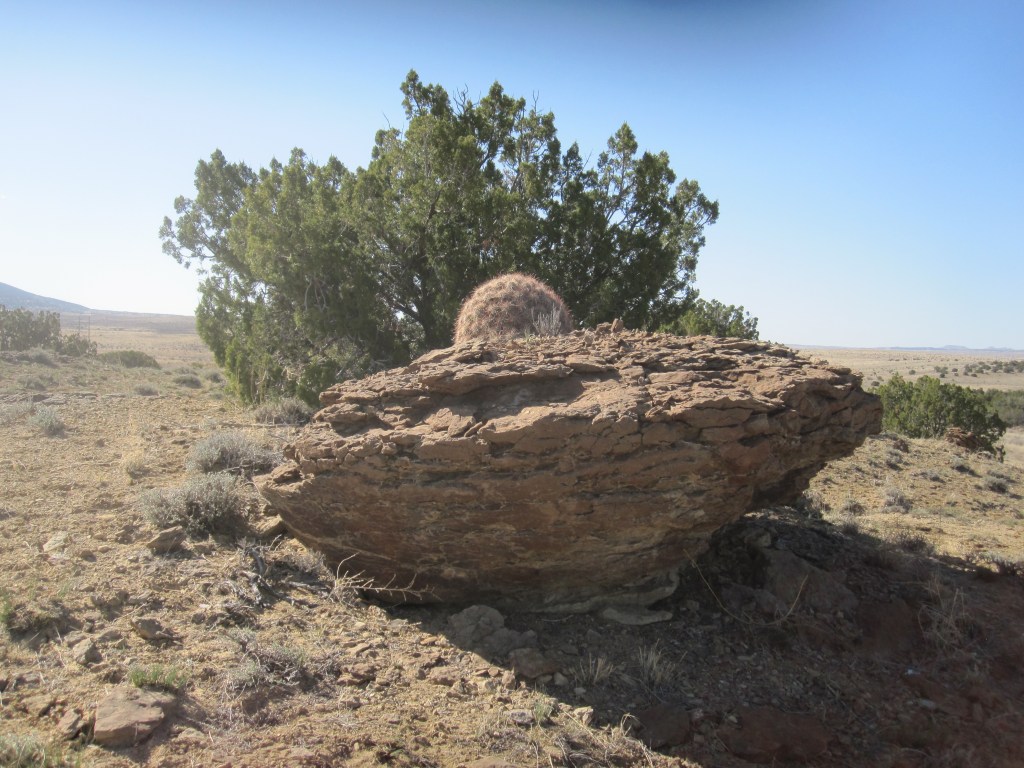
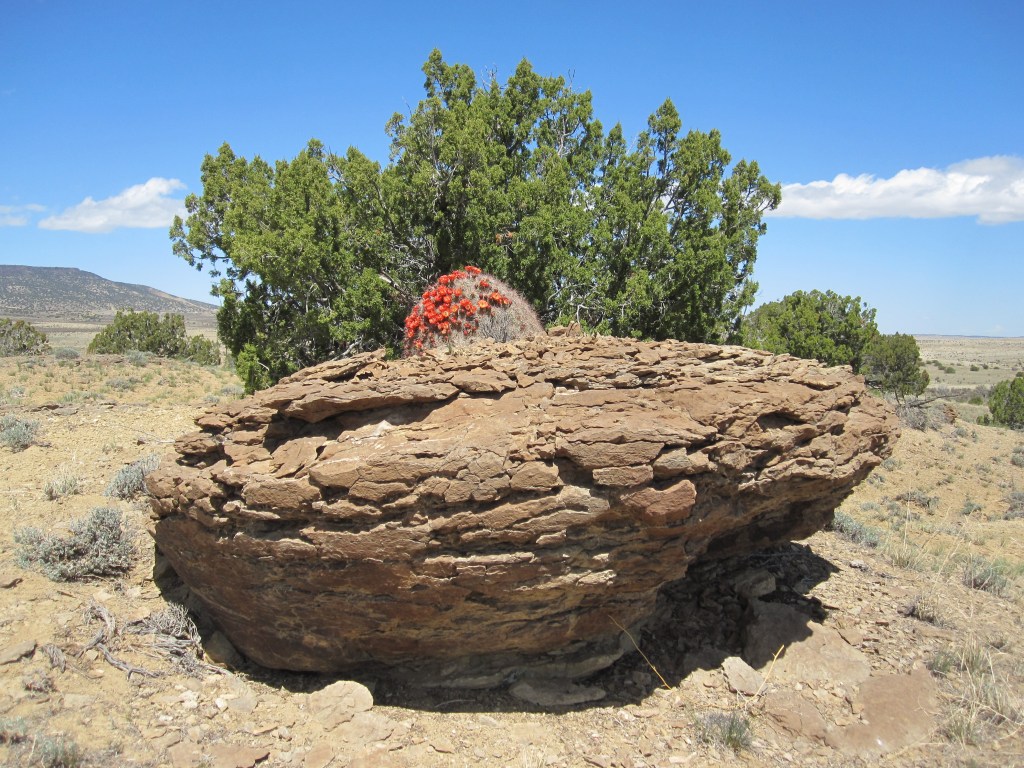
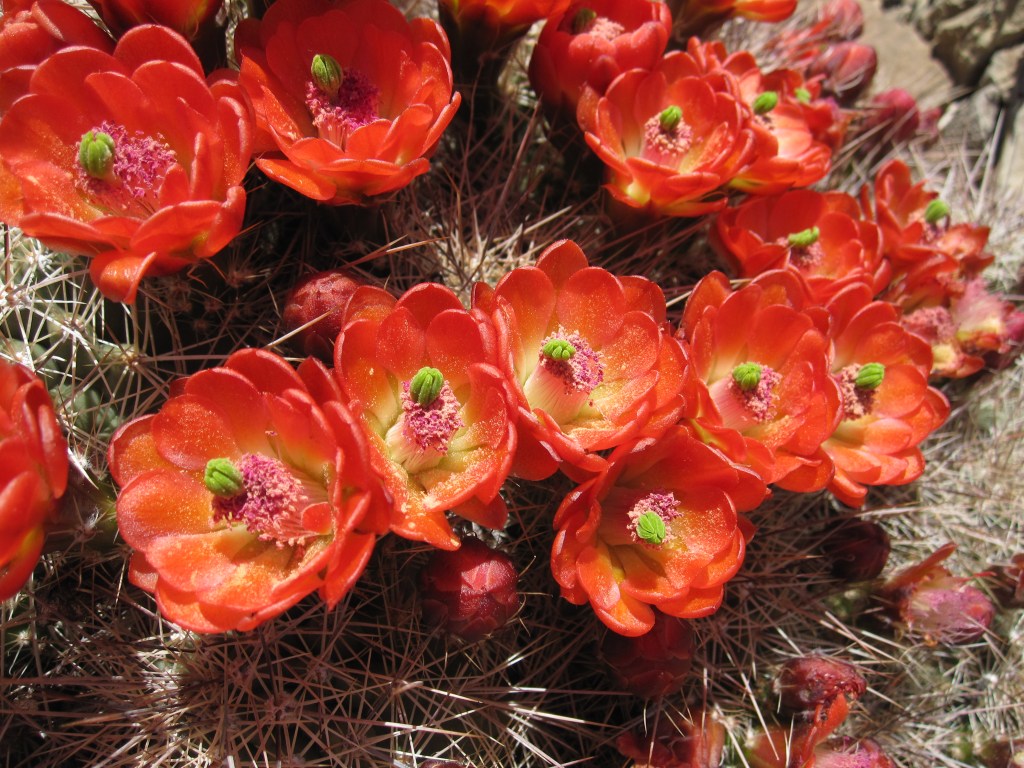
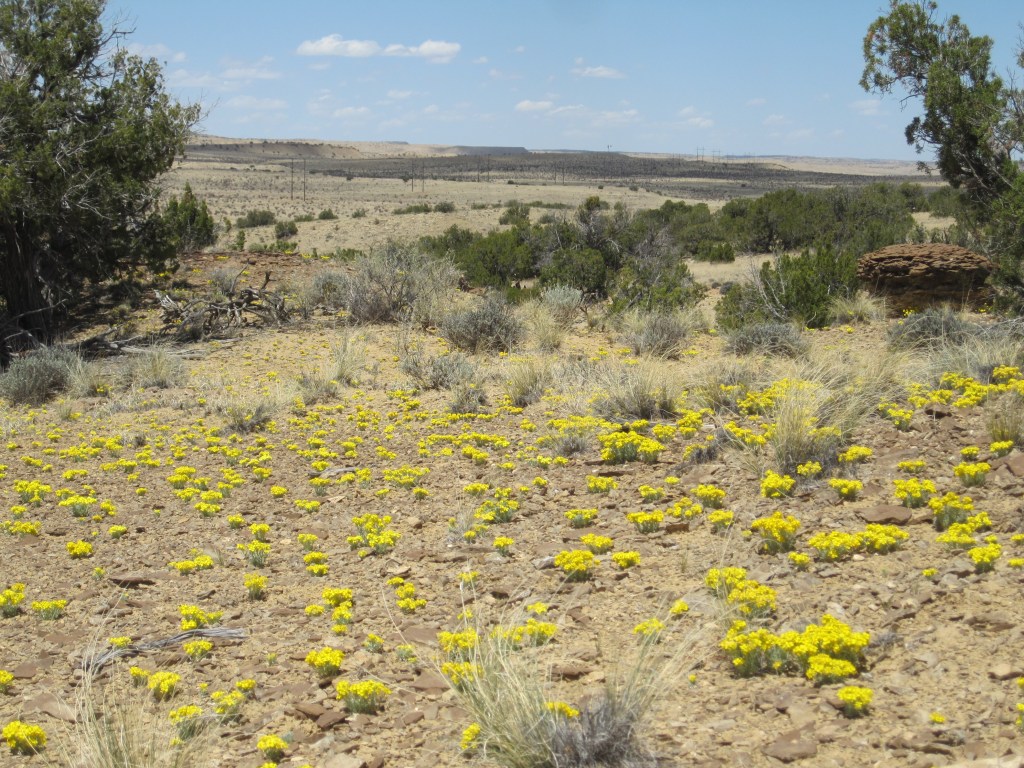
The desert was in superbloom. Our UFO is a scarlet beehive or hedgehog cactus, Echinocereus coccineus, exploiting a crack in a huge hematitic concretion. There were many concretions on the hillside, each with its resident beehive. The yellow carpet is probably Fendler’s bladder pod: Physaria fendleri.


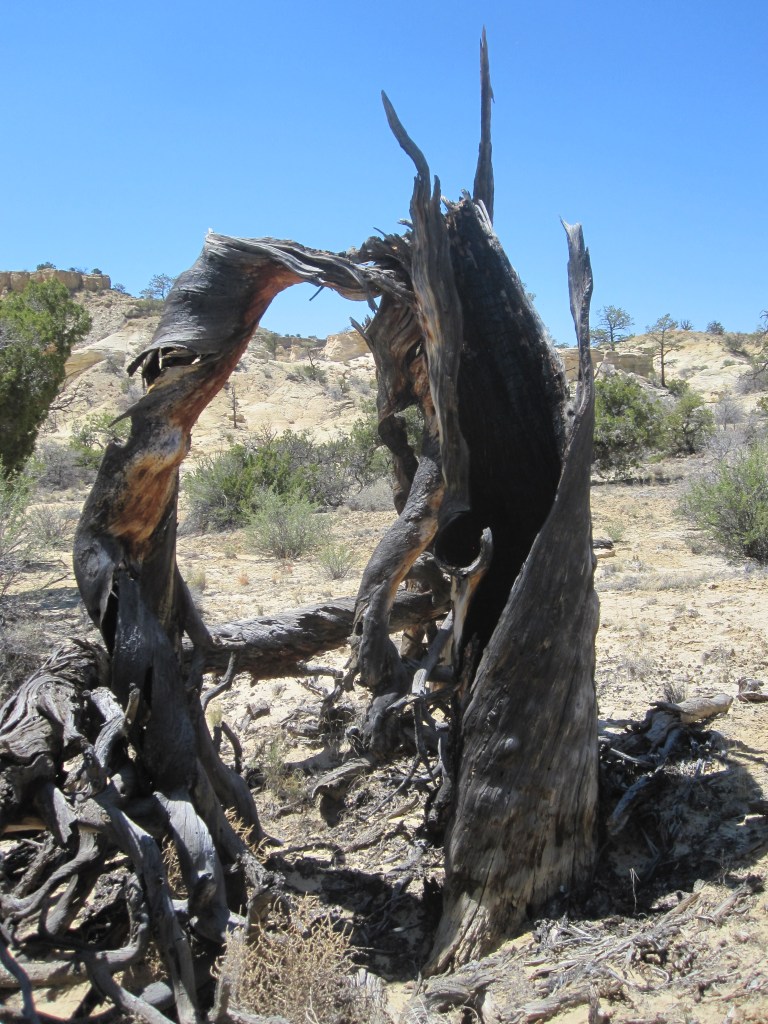
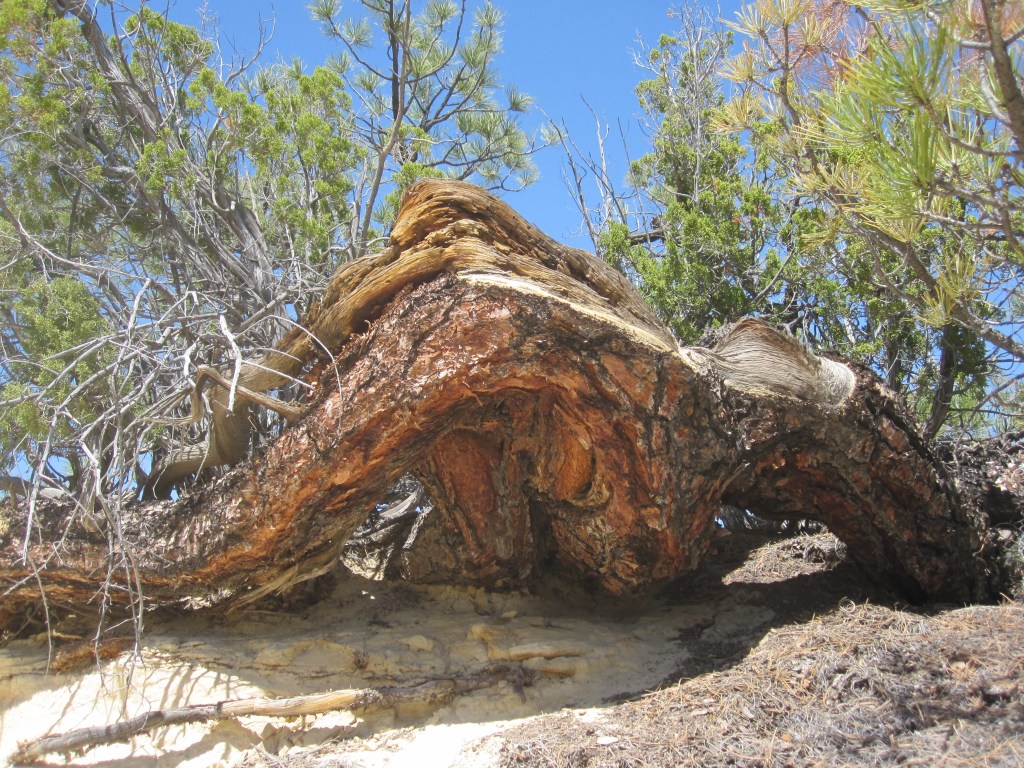
Two ponderosasr in a sandy bowl, both lightning-struck. One, a gray ghost; the other, twisted like a pretzel but still living, shelters a juniper in its embrace.


On raindrop-pecked sand, the subtle lunar crescent of an Archaic metate broken and abandoned a few thousand years ago.


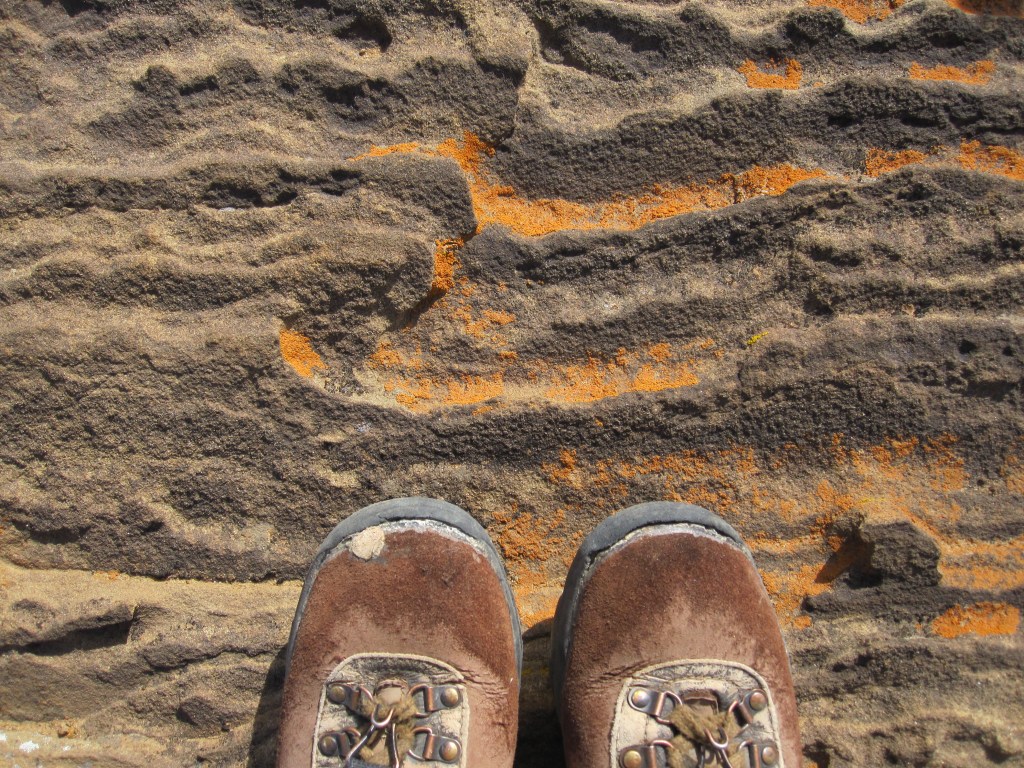
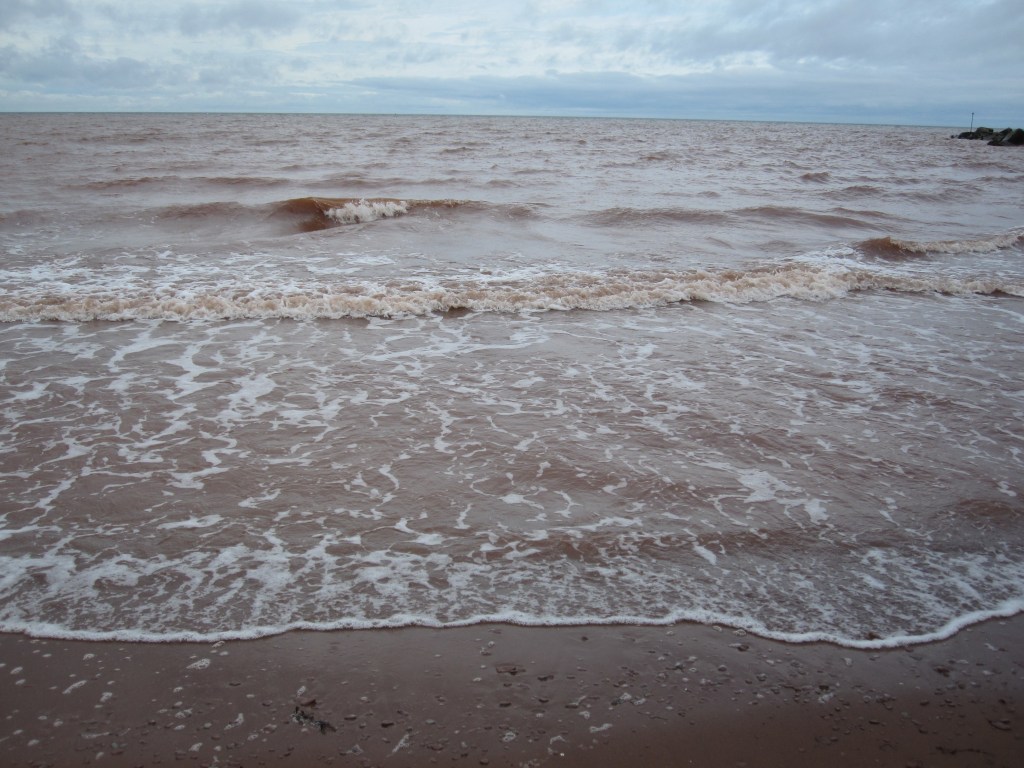
About 130 million years between tides.

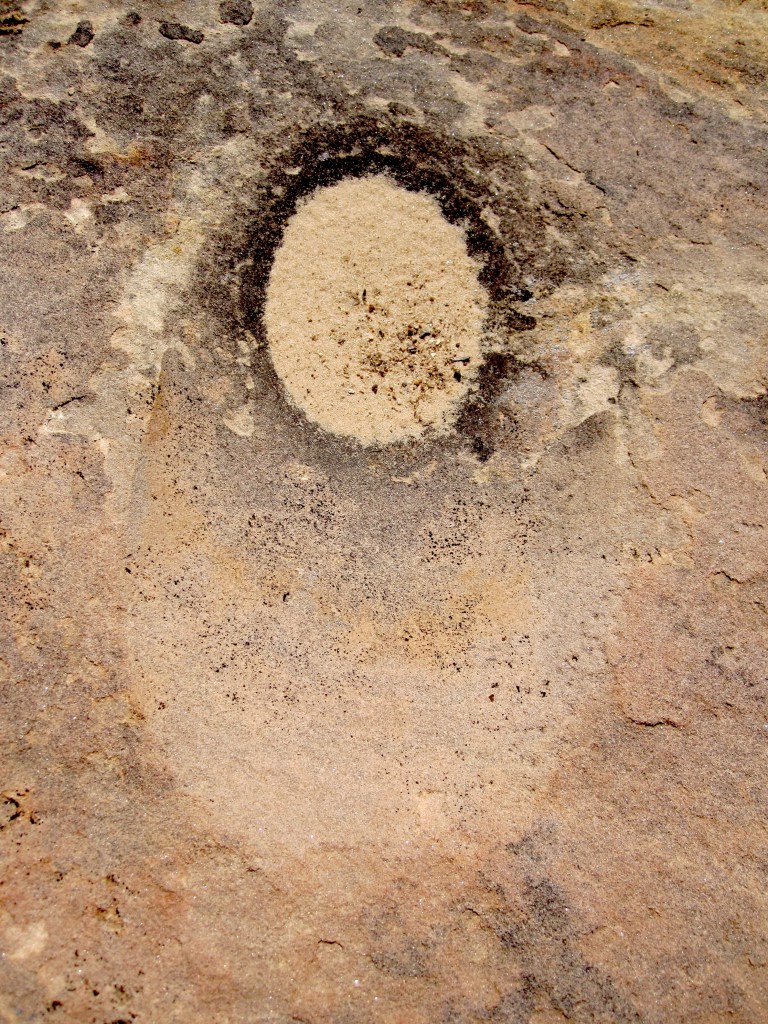
An Archaic mano, or hand grinding stone, begins its next few thousand years in the sand of a hearth. Time and weather have reduced the charcoal of ancient campfires to a shadow in the soil.

Under a juniper instead of a cork tree. Picked clean by coyotes and bleached by the desert sun.