
Mouse? Packrat?
I vote for a jumping rodent. See how the footprints are clustered? Maybe a kangaroo rat? The soil is clay. It was sloppy mud a couple of weeks ago, now hard as ceramic. This dance should last until the next good rain.

Mouse? Packrat?
I vote for a jumping rodent. See how the footprints are clustered? Maybe a kangaroo rat? The soil is clay. It was sloppy mud a couple of weeks ago, now hard as ceramic. This dance should last until the next good rain.
In the muddy pool of an elk footprint, frost at work.
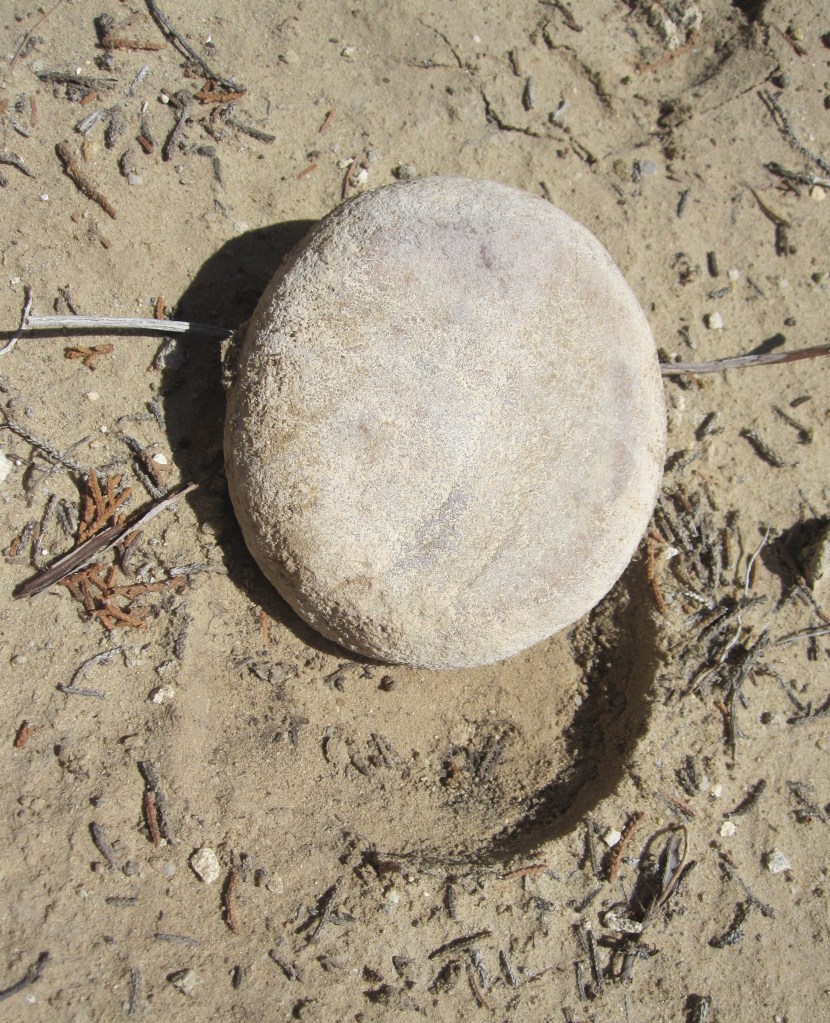
From a sandstone mesa we watched the moon slide over the sun. Later, in a vast site full of ashy firepits and burned stone, an Archaic mano echoed those lunar shapes.
Below: exposed surface, buried surface, and its thousands-of-years-old bed.

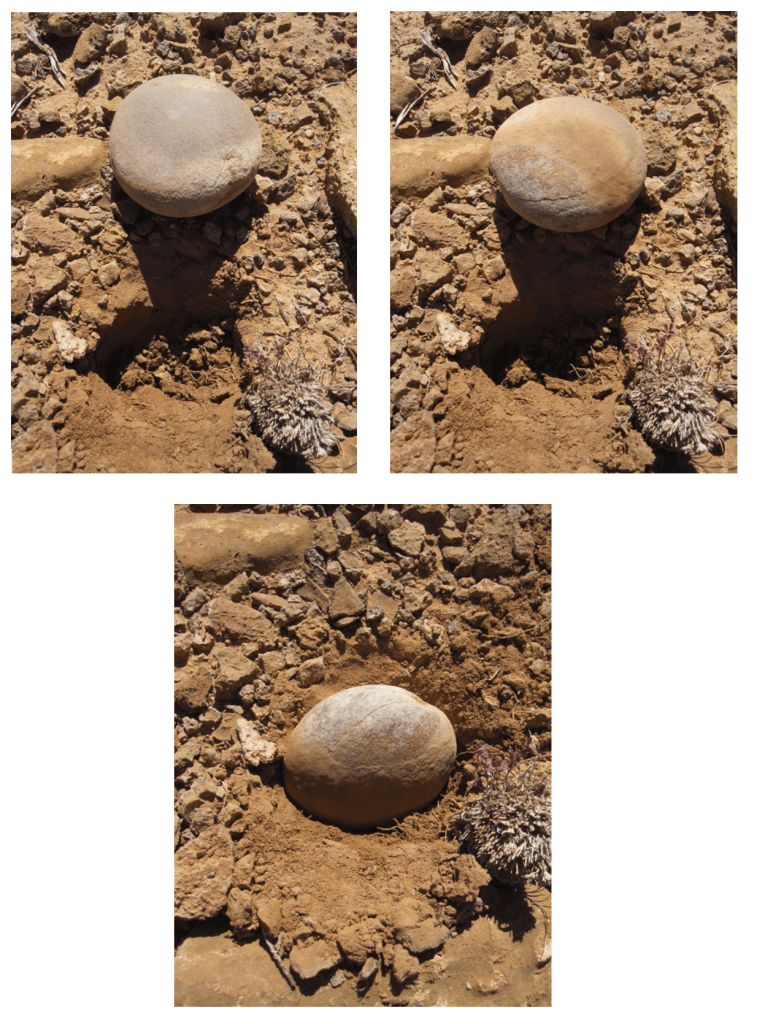
All day we spotted Archaic manos, grinding stones, whole or broken–this in terrain we’d hiked for decades. What was it about today?
First mano. Front elevation, rear elevation, then back into its nest for the next few thousand years:
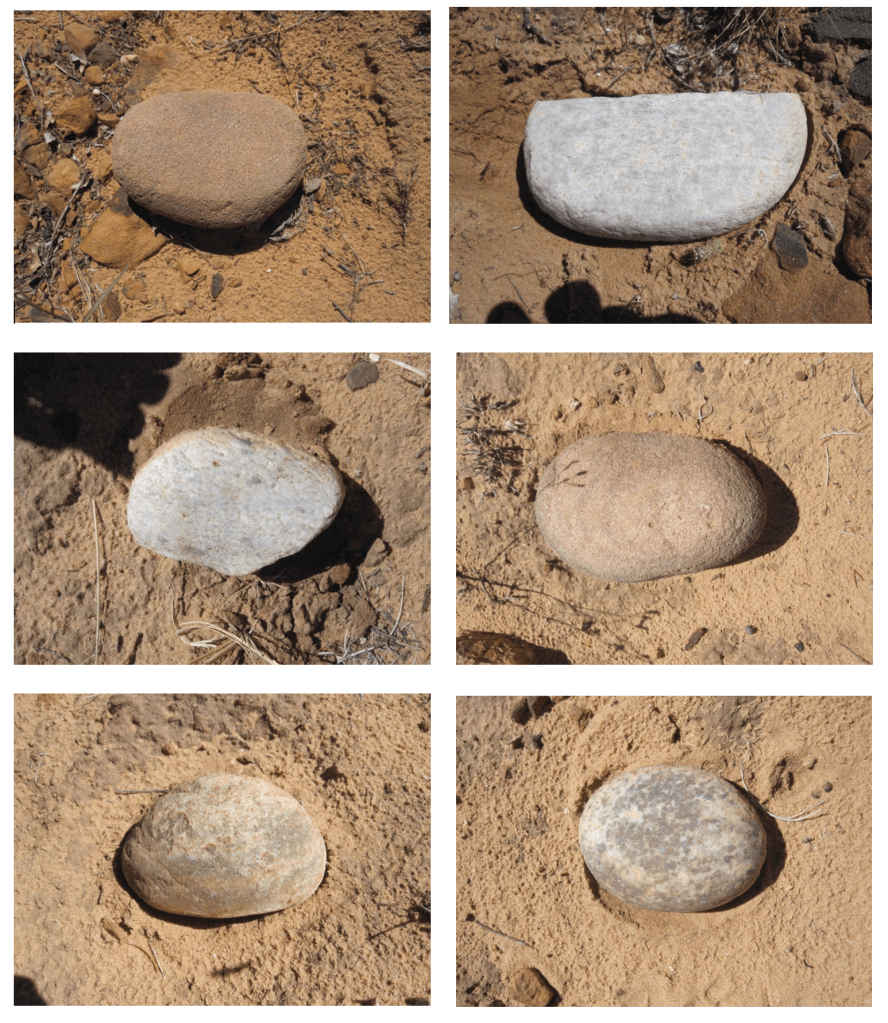
More manos: Some were carefully shaped. Some were an expedient cobble, one or both sides slicked by use on a handy flat rock as metate.
Unlike more recent, Puebloan manos, which were flat and wide for grinding corn, Archaic manos–thousands of years old–were a characteristic oval. Mostly they were used to grind wild seeds: Indian rice grass, for example. Or whatever edibles the desert had to offer. A friend in Zuni said of his wild-resourceful grandmother, “Grandma eats everything.”
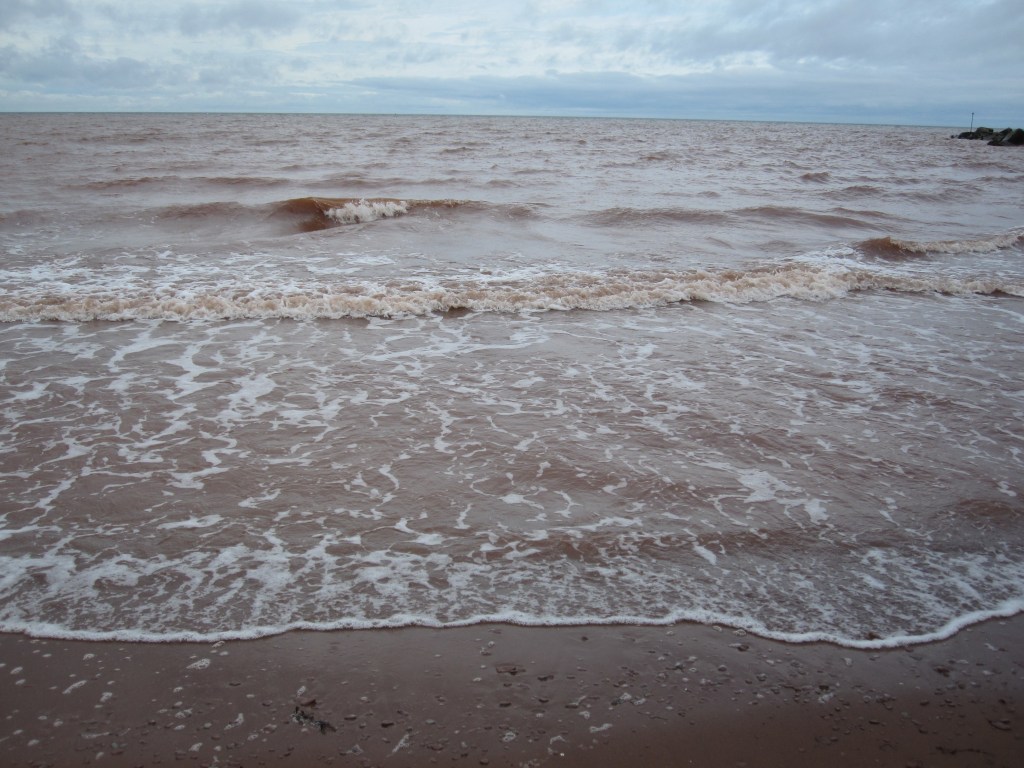
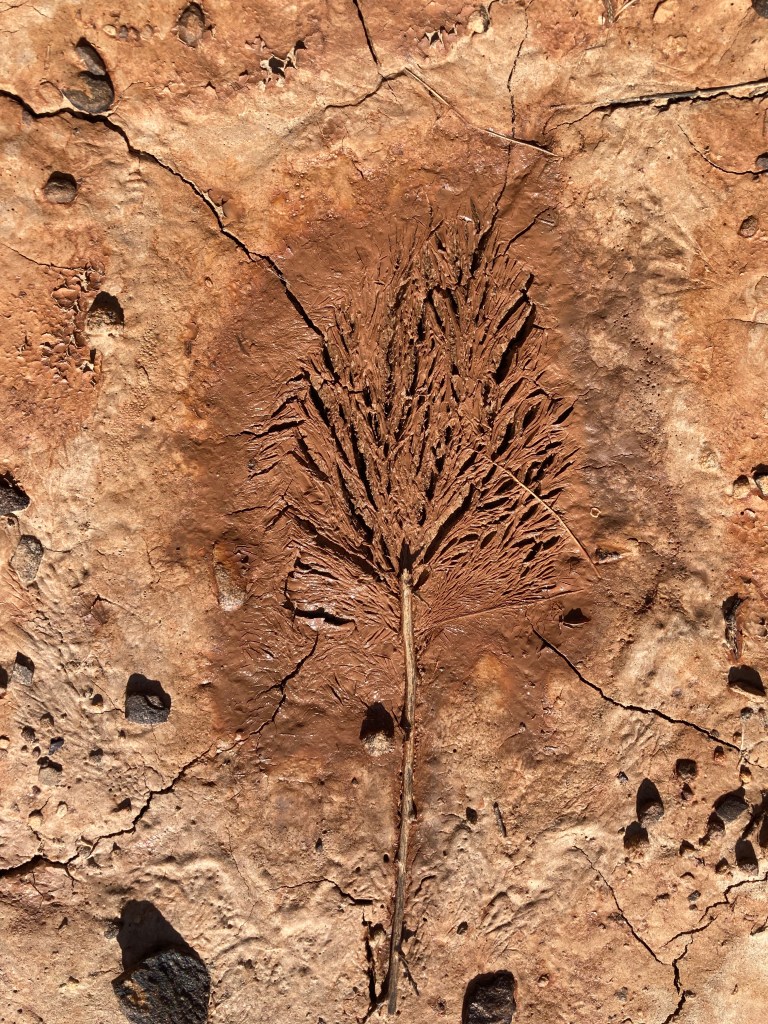
…but in the Triassic or thereabouts, when shallow seas and river deltas inundated where now we walk in the desert, it might have been. These are the red waves of the Bay of Fundy.
And this is how the waters of time soften and embellish the work of our hands:
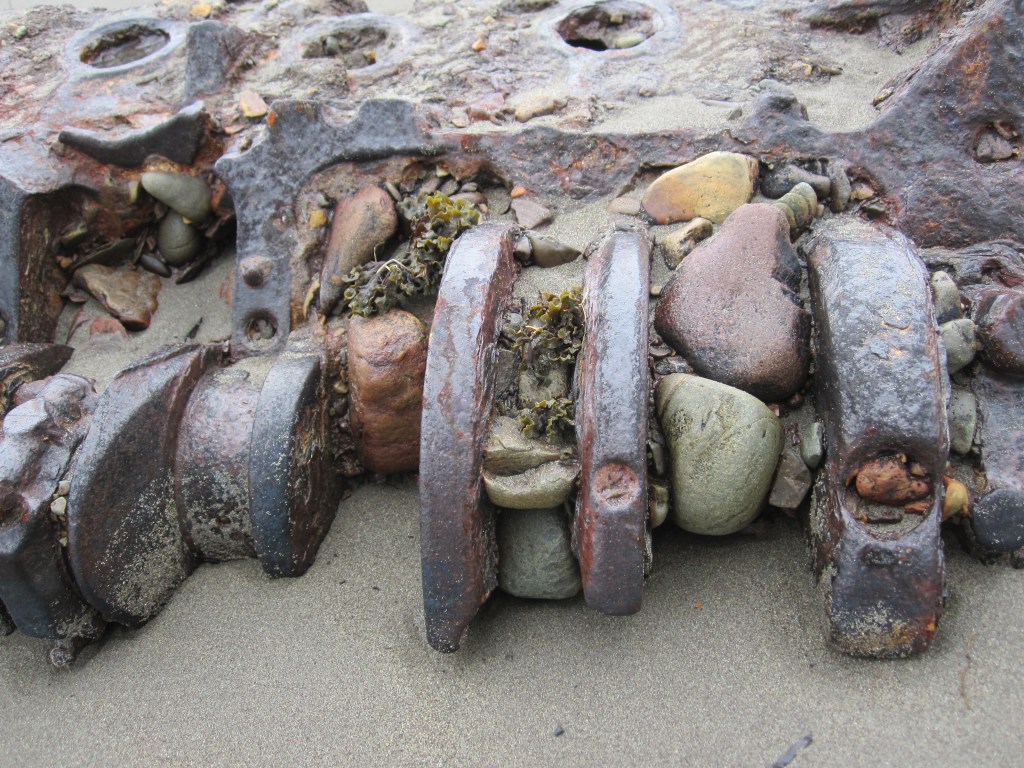
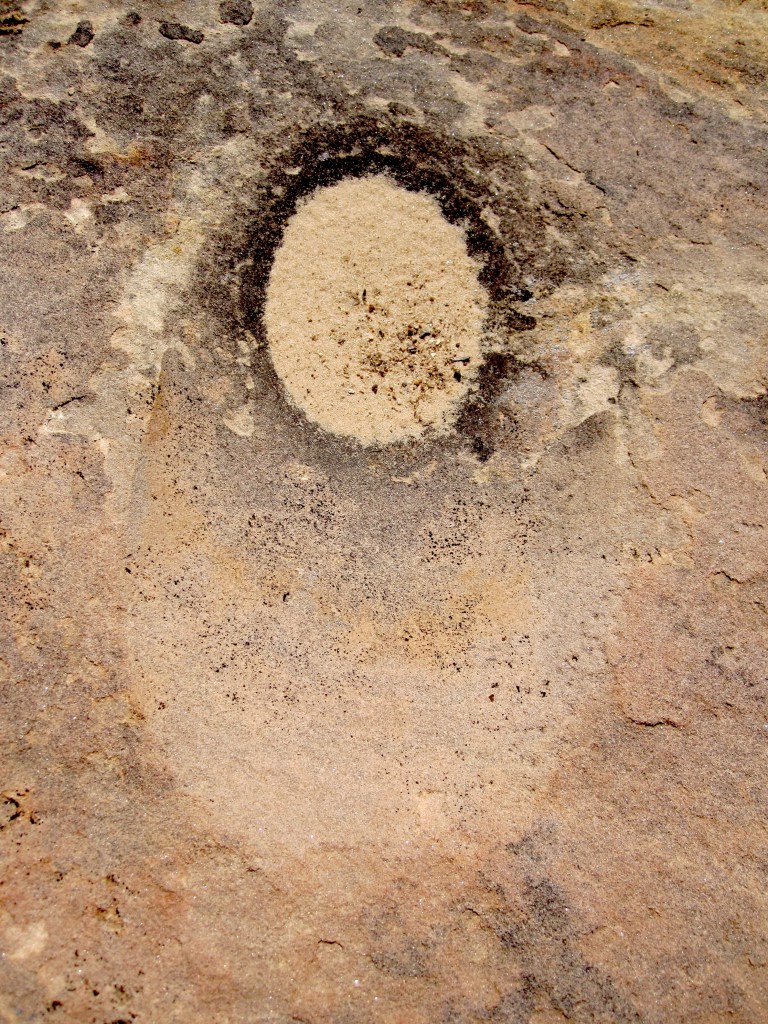
Bedrock metates are the oldest. They belonged to the Archaics, the first peoples in the Southwest, who became the Puebloans and still live and work here.
With a rounded mano as pestle, this one was used for the grinding of wild grasses. Corn had not yet spread up from its first cultivation in Mexico.
Season after season, a band of hunter-gatherers returned to this stone. As they arrived at their familiar camp, surely they felt, “There it is. Here we are.”
Time has filled this one with windblown sand.

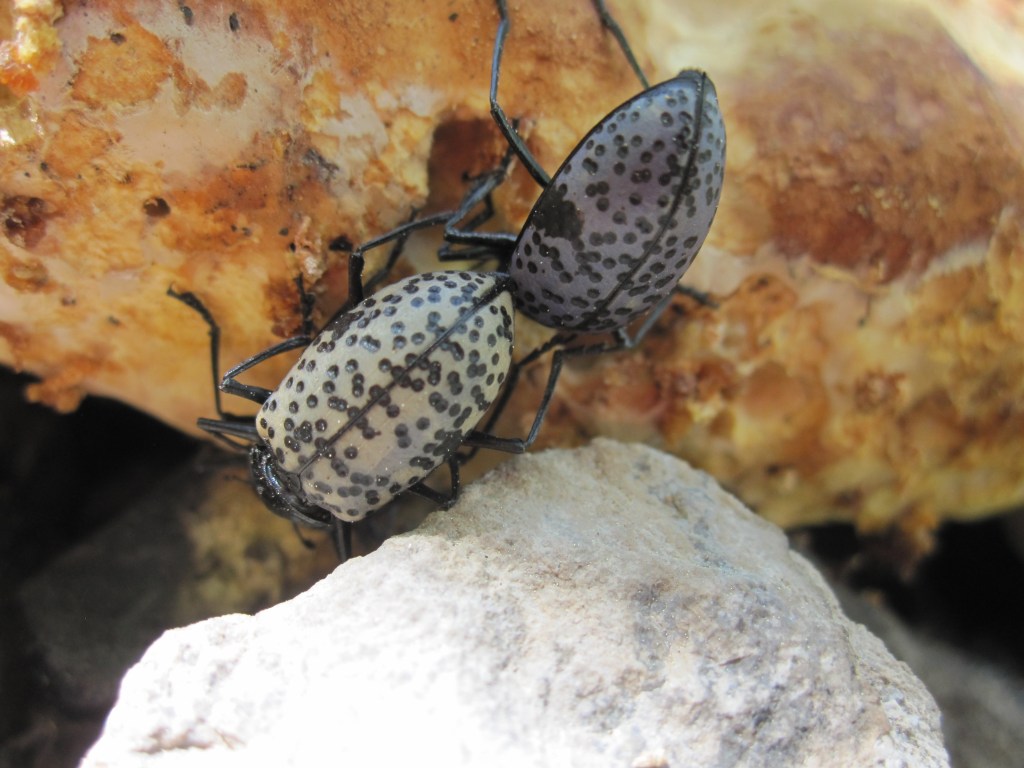
Pleasing Fungus beetles. Yes, that’s their actual name. They live on the fungus that grows on dead trees, in this case downed by fire. I don’t know whether this group–originally there were three–were mating or tussling.
As my zoologist mother said, “You be grateful to fungus and bacteria. If it weren’t for them you’d be up to your neck in dead dinosaurs.”
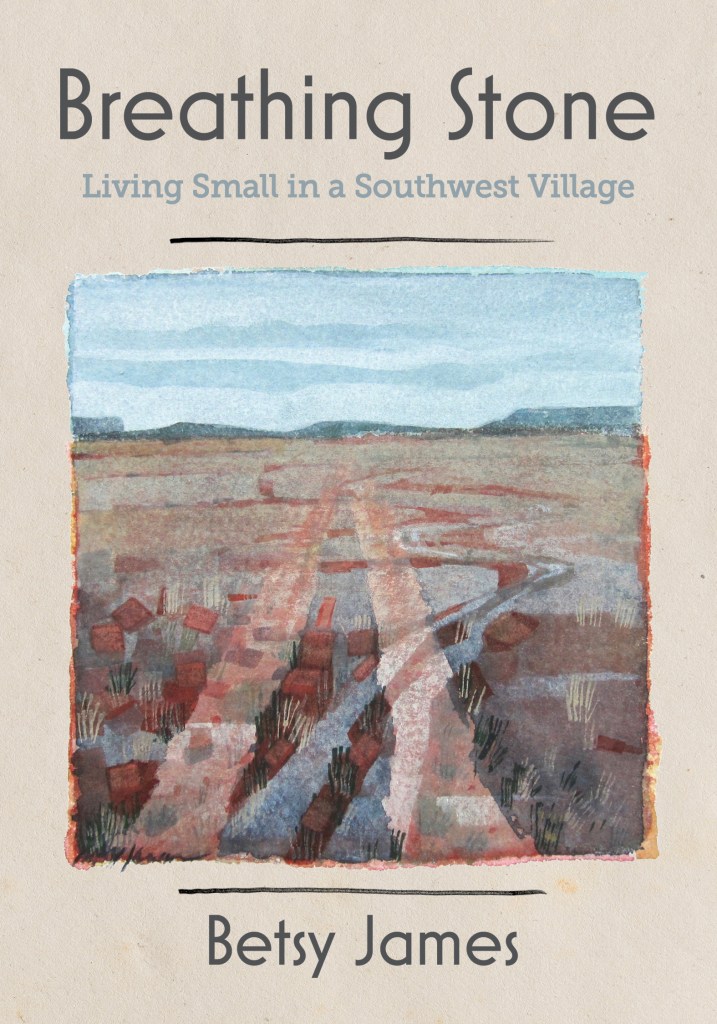
It feels like what it is, a field journal. I’m delighted with it:
https://casaurracapress.com/bookstore/p/breathing-stone
You can order it from your favorite indie bookstore; from Bookshop, the indie alternative to the big A:
or from the publisher, single copies okay:
https://casaurracapress.com/bookstore
Many miles of quiet walkabout. Illustrated.
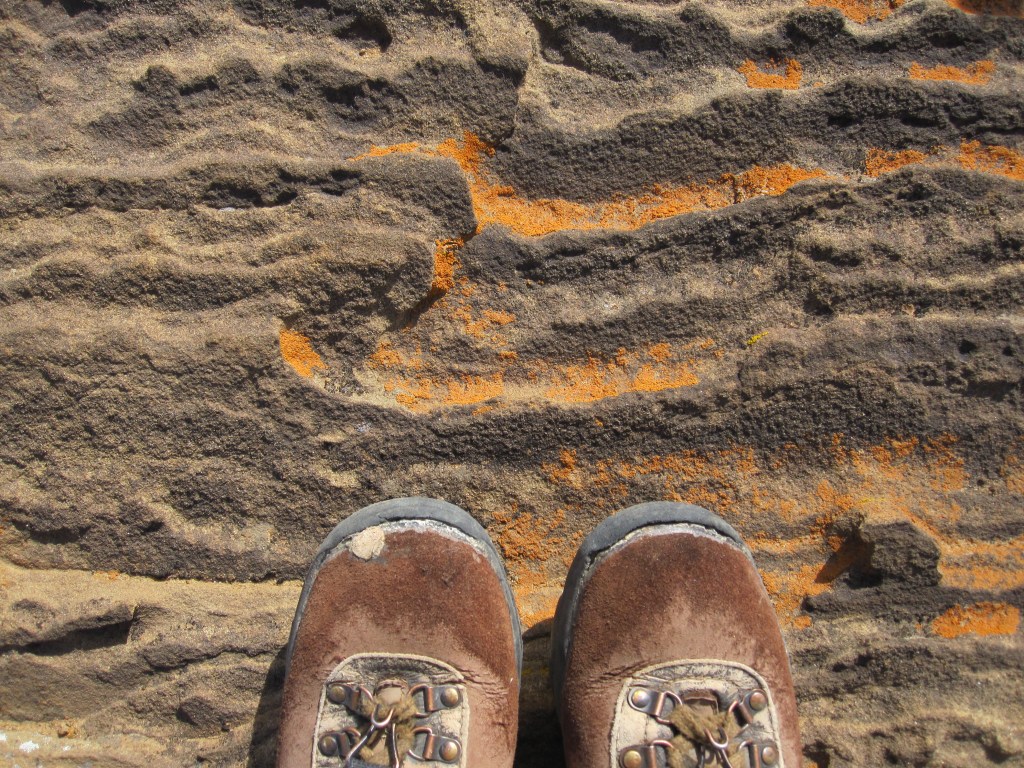
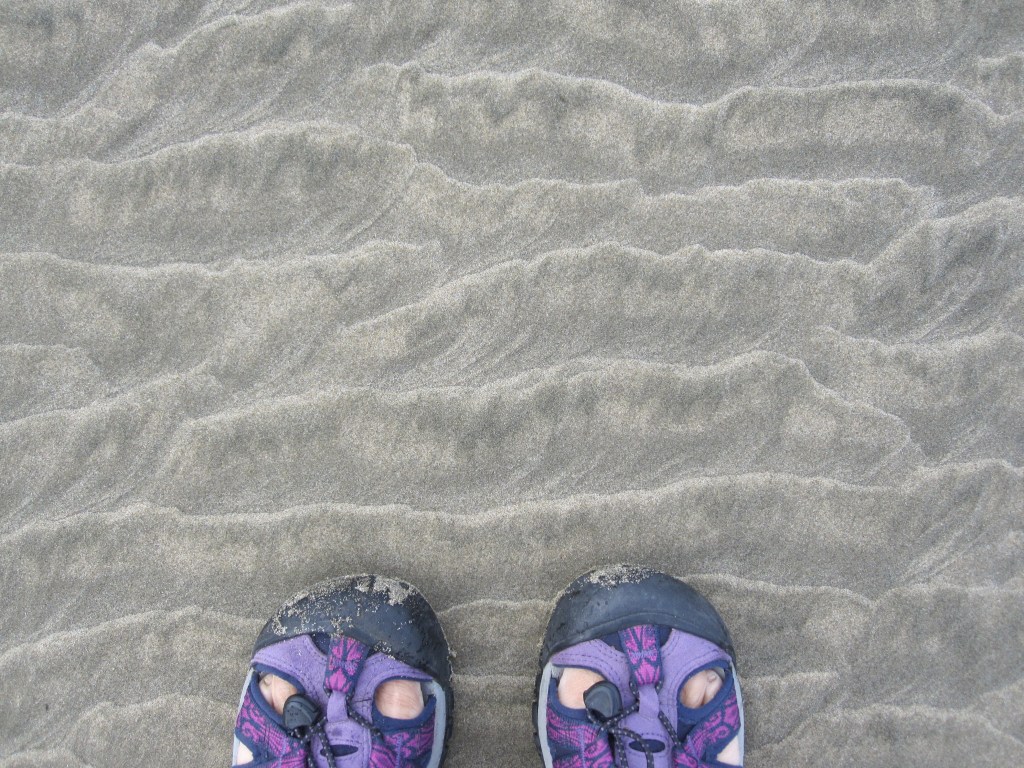
About 130 million years between tides.
 WORLD-BUILDING and WILDERNESS: