All posts by Betsy James

Face Down

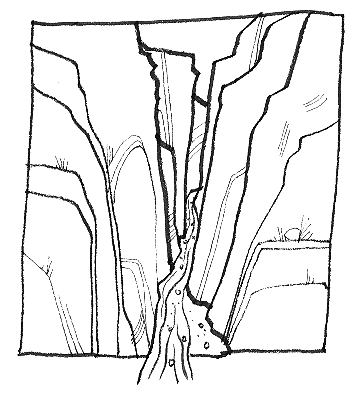
SlotCanyonDB124The day began with mottled clouds that later burned off. No friendly sand to walk in, just acrid mud dust, with now and then a stiff, dried place where a cow had pissed. We hiked down terrifying deep arroyos whose walls, scored by mud-laden runnels, were poised to collapse.

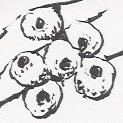
Mudstone concretions: eyeballs and entrails lay in drifts on the yellow-red dirt. We came across two half-buried spheres, both about twelve feet in diameter, like the backs of two huge skulls: Baba Yaga and her daughter.

*

And We Are As Brief

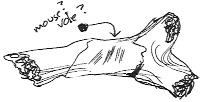
Fossil antlerAt the base of a sandy slope lay shattered antlers. I picked them up; they were stone.

Fossil bone lay all over, a jaw with a row of tooth sockets, an ungulate’s durable knucklebone. The antlers belonged to a proto-antelope. The weight of overlying strata had cracked them, but old rain, bearing minerals in solution, had mended the cracks. I found the tiny parallel tracks left by the incisors of that briefest being, a mouse or vole.

These sediments are slightly over two million years old.

*

Hogan Rings

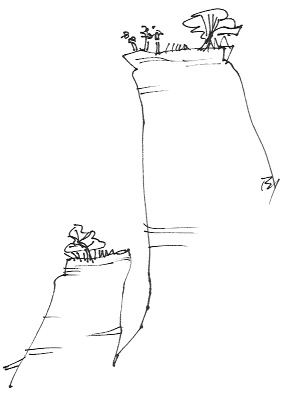
Navajo Slab CorralFrom the mesa edge we saw, on a south-facing bench, two Navajo hogan rings and a stone corral, and climbed down to them.

They were old. No historical pottery scatter at all. One of the rings still carried the juniper cribbing of the roof, though it had fallen. In the desert juniper can endure for hundreds of years.

The hogan’s door did not face east as is traditional, because the ring had been built against a sandstone slab; however, the north wall did appear to have been knocked out, customary ritual to release the spirit of a dead person. 

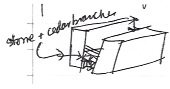
The corral had been formed ingeniously by piling cedar to wall up the ends of a cleft formed when a fallen slab split in two.

*

Feet

More millipedes, six inches long and shiny as mahogany fiddles. They look like little trains, like the Coast Starlight trucking along. Many wide holes of what Jan calls “evening ants.” If you poke in a stick and bring an ant up into the sun, instantly it dies. Each hole is surrounded by a spread of tiny discarded juniper twigs.

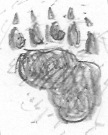
Clear bear tracks in the damp sand of the water chute.

Best of all, near the end of the long day and worn out: four adults lying on their bellies on the sandstone, watching a millipede poop.

*

Little, Big

Late summer, hiking on the syncline: dozens of millipedes, the color of polished violins, in frantic, foot-waving travel. Next spring we’ll find their husks, curled in tight spirals and weathered white as chalk.

On the road out we were passed by an enormous RV. From a distance its size-to-speed ratio was exactly that of a millipede.

*

Toads

The rains have come, and with them the toads. The pools of the Syncline were full of bright red mud-water, tadpoles and predators. A slim—but no doubt well fed—garter snake with a black head took to the opaque slurry, then poked its head out like a sea serpent.

In a drying pothole were many toadlets so small they looked like insects, not a quarter inch long. They had finished their lightning metamorphosis, but at the bottom of the hole was a gelatinous pudding of polliwogs that hadn’t grown up fast enough. Now and then there was a tiny squirm or shudder from someone in the black mass, a last effort at life.

*

Or “Squish”

On and around the Malpais, the hunter-gatherer-farmer presence of ancestral Puebloans is everywhere underfoot.

In a sandy cul-de-sac among the crinkled lava, all by itself, was a carefully-squared sandstone block that was probably a deadfall for small game: packrats, squirrels, deer mice. Jan propped it on a twig and demonstrated, remarking, at the appropriate instant, “Squeak.”

*