
We were picking our way down a remote and rocky draw in the Morrison when my companion looked back and said, “What’s that?”

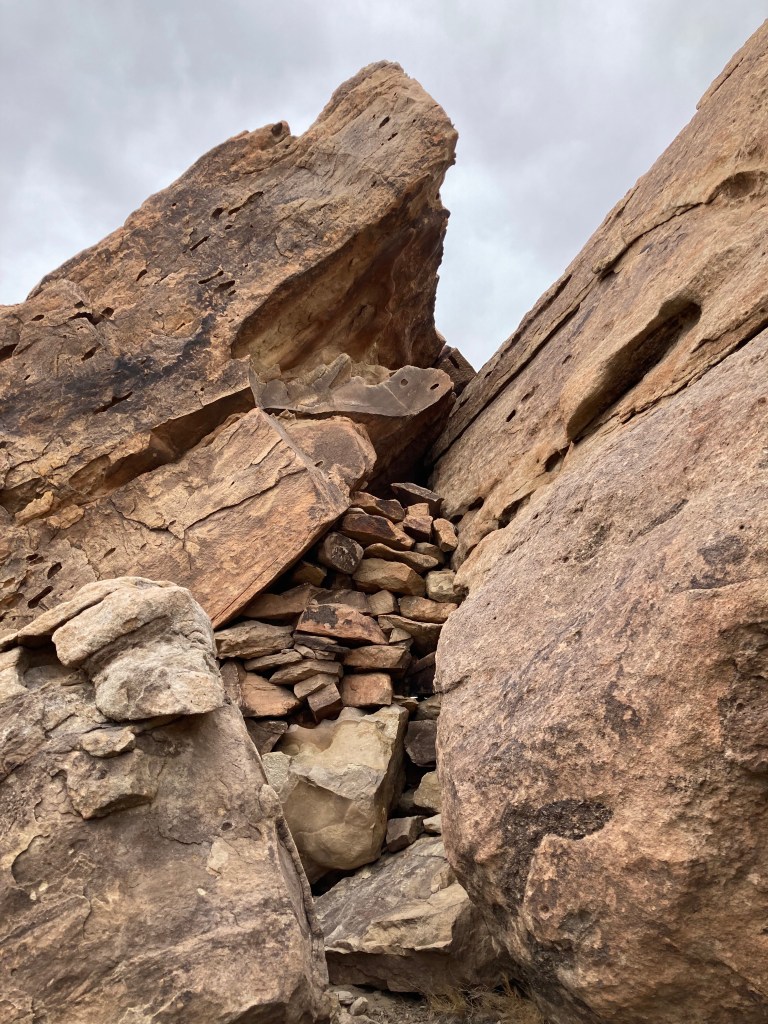
We’re used to finding stone structures—stone is the building material out there—but we’d never seen anything like this. The unstable mudstone cliffs aren’t good for cliff dwellings, nor was this the regular, well-set look of an Ancestral Pueblo house or granary. Just stones, randomly stacked to fill a gap.
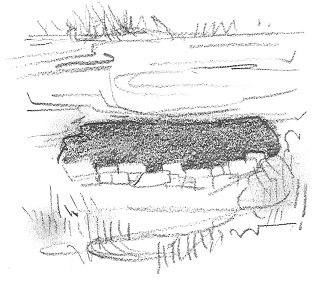
We scrambled up the tumbled cliff—always dicey, among the unstable fallen capstones—to see if we could understand what it was. Under the immense sandstone boulders, we found a room.
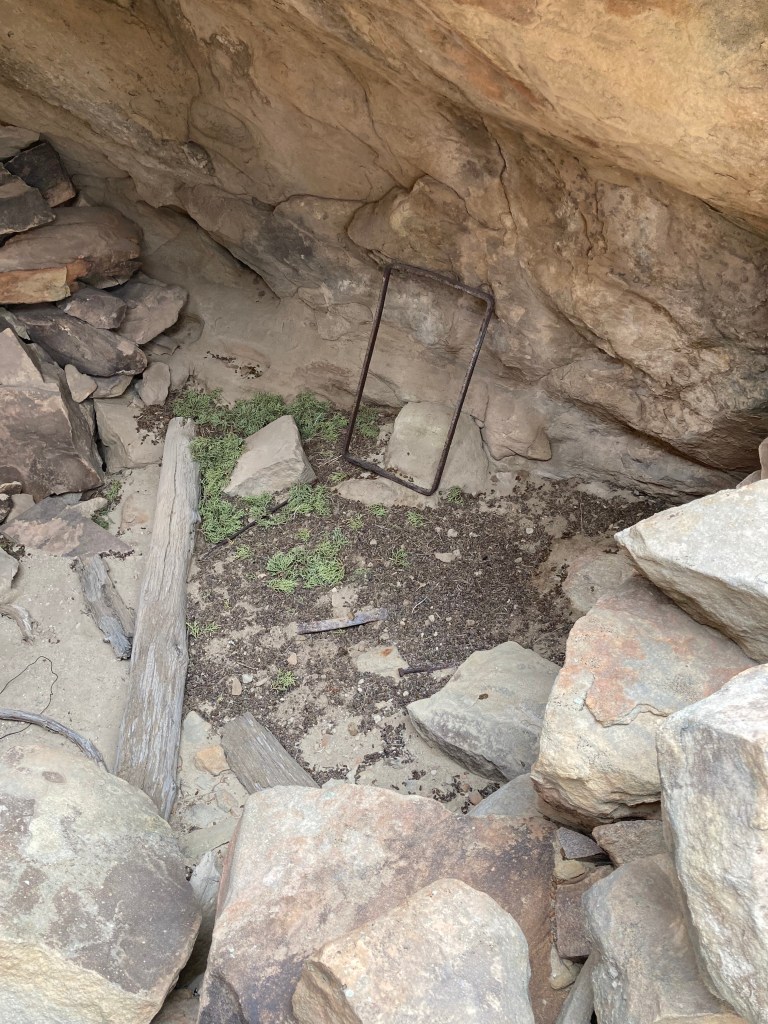
The windward side had that gappy wall, though a sketchy barrier had been built on the open leeward side. Had the floor been built up with imported sand? Had those sawn posts, now fallen, held up a tarp of some sort? What looked like a bed of green juniper was a pack rat nest; the floor was thick with droppings. Among them were bits of rusty iron: a bolt, a rod, a strap from the leaf spring of a buggy or an early auto. What had once been in that metal frame? In the “forecourt” was a rusty bucket.
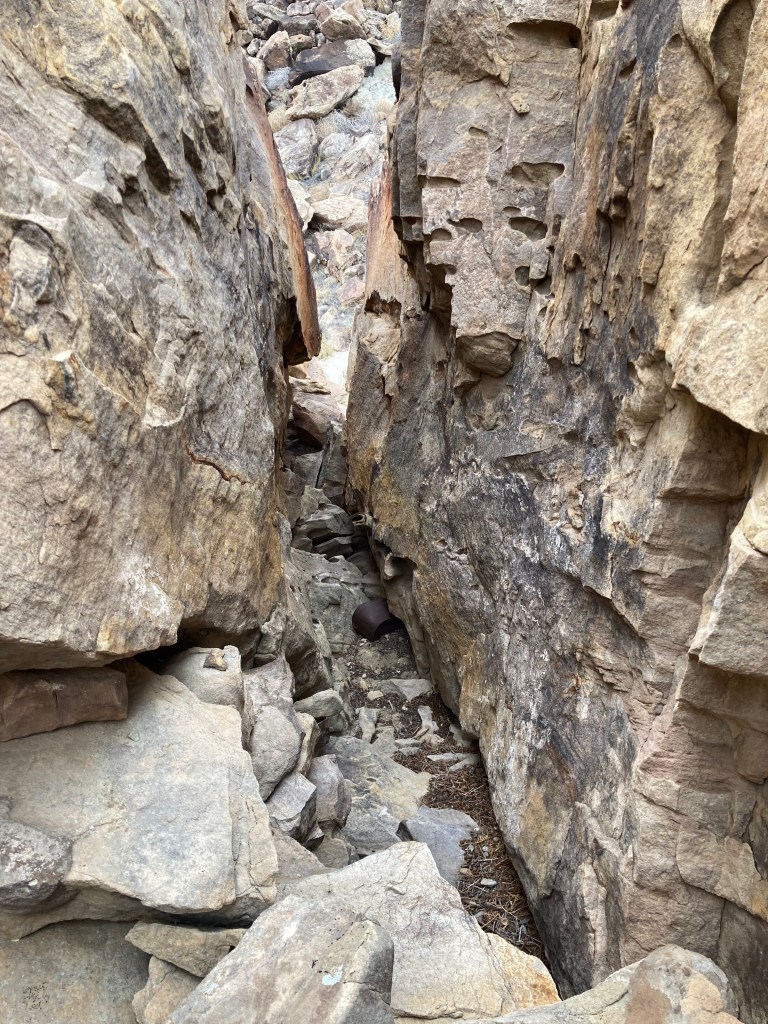
My guess would put the site in the thirties, latest. The ceiling was lightly smoked. Who lived here? Not in winter, certainly, nor during the monsoons. A sheepherder? So remote; were they in hiding? A moonshiner? An outlaw?
A lonely place, under looming stone.

 WORLD-BUILDING and WILDERNESS: