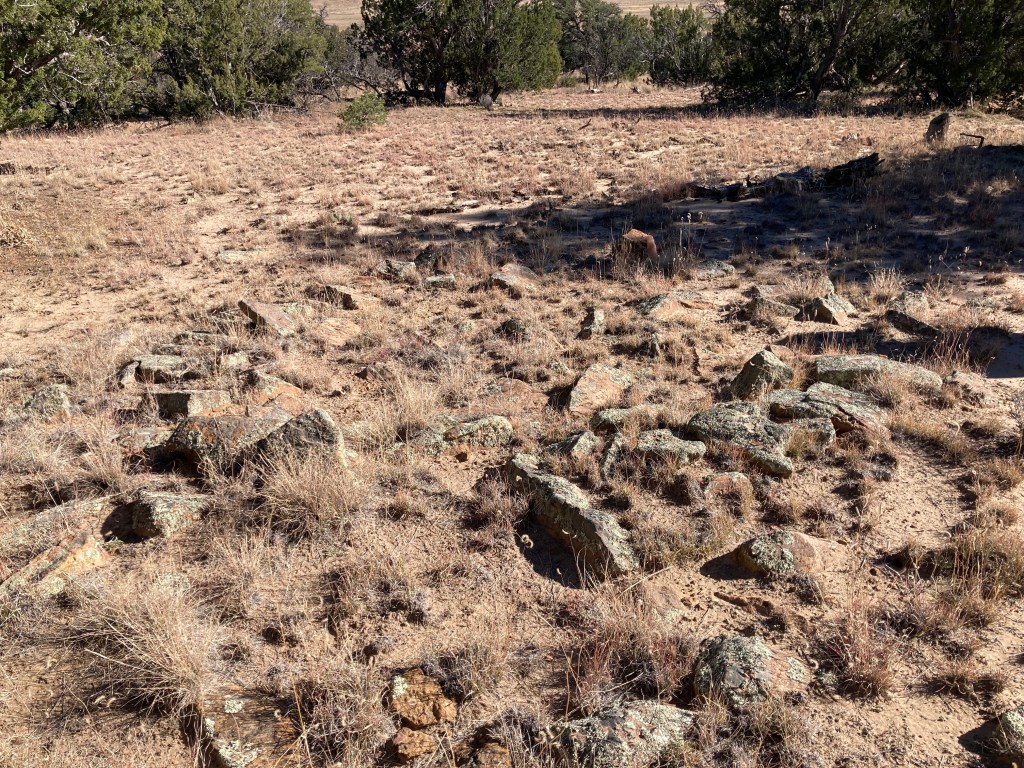
Like the circle in the earlier post, this one was in the wrong place and with the wrong doorway opening to be a hogan ring. Its lichened stones were next to the collapsed foundations of a Puebloan fieldhouse, ca. 1300s (my best guess; post-Chaco). But it didn’t have the sunken center typical of a kiva depression, and seemed too small for that as well.
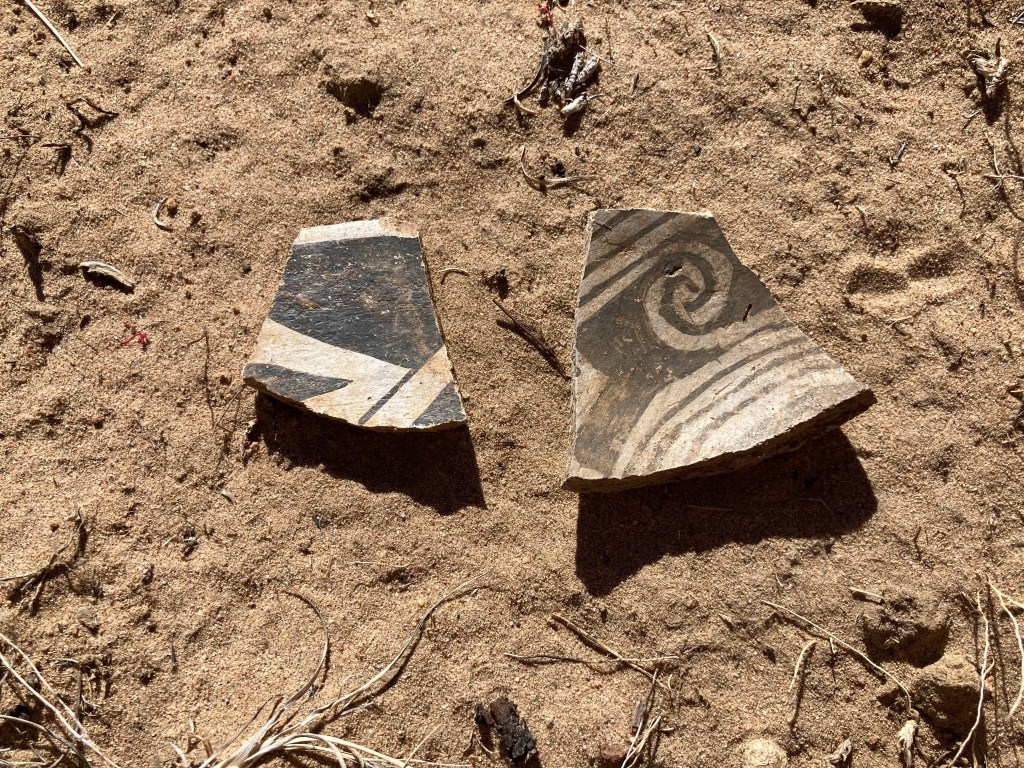
Beautiful potsherds.
Remember to turn potsherds face down again to protect the paint.
Red Mesa. The redness of the rock, and of the plants as well. Even the grass is red at the base. Perhaps that’s just the color it is—it might be Little Bluestem, such a contradictory name—or maybe it picks up the iron in the soil. Tracts of red sandstone are covered—covered—with knobby, black, marble-size concretions.
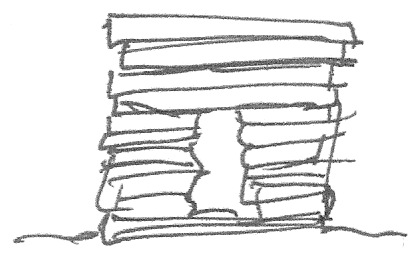
At the edge of the rugged canyon is a sheepherder’s monument, a two-legged stack of red sandstone reminiscent of an Inuit inuksuk. Old cairns mark the sheep trail down into the barranca.
Three big red potsherds lie where a pot was dropped, hundreds of years ago.
*
Betsy James on Writing, Art, and Walking in the Desert

 WORLD-BUILDING and WILDERNESS: