Tag Archives: metate

One Hike…

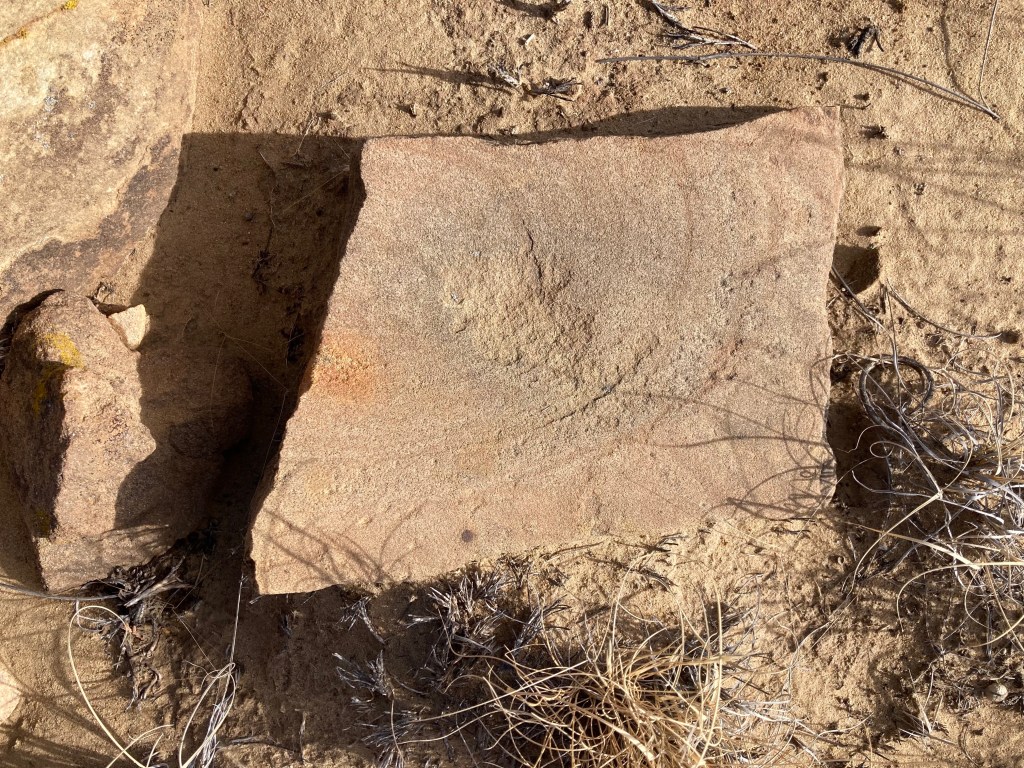
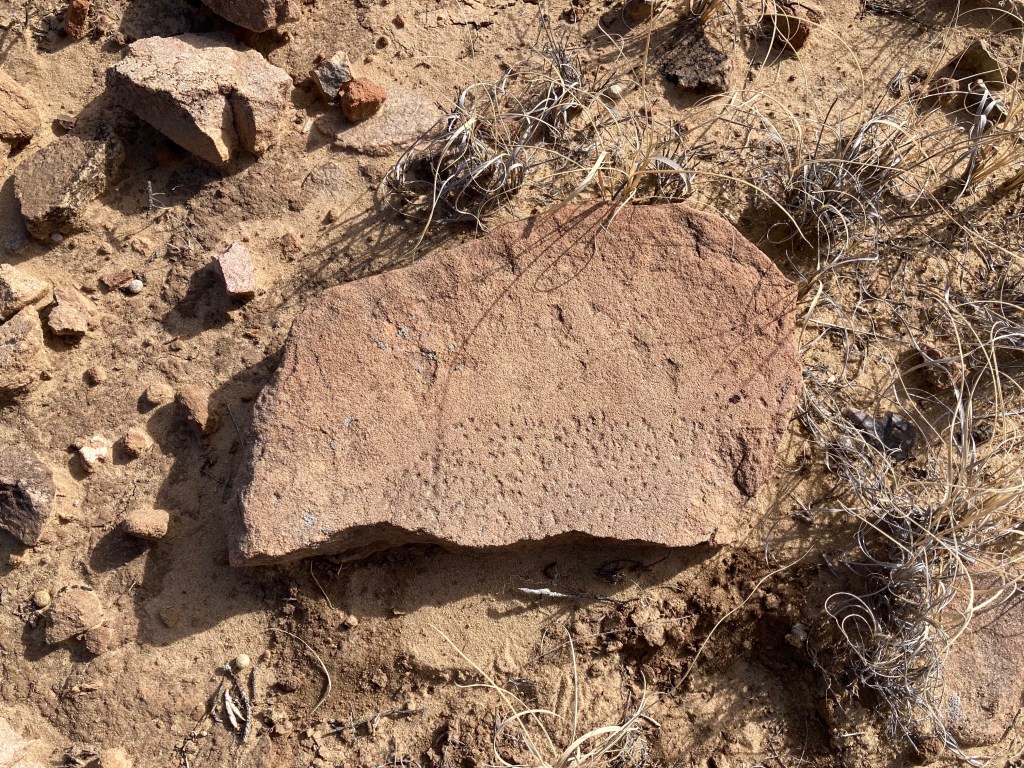
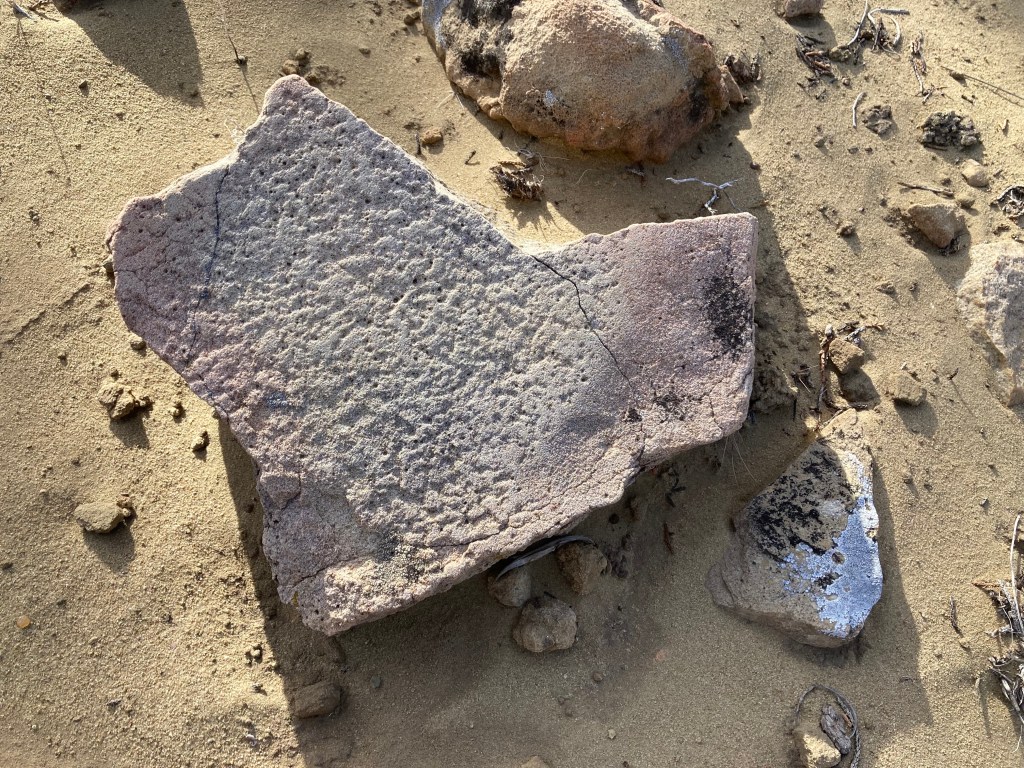
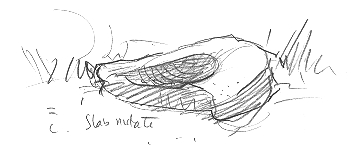
...three metates. Archaic, given their location, on earth once much wetter than it is in these times of drought.

Each is pecked to roughen its grinding surface. Use has rubbed the first into a bowl that exposes the thin strata of its sandstone, now spalled by frost and rain. All are broken.

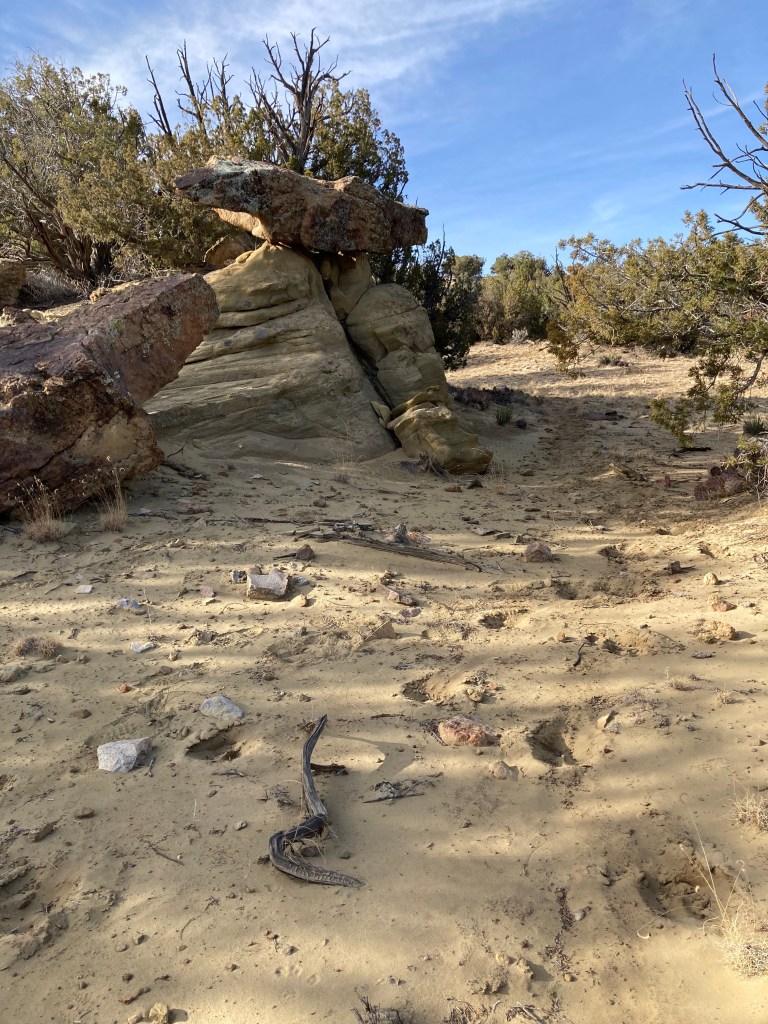
The third in situ in a messy prehistoric living room, now cross-trodden by cows:

The Unnoticed

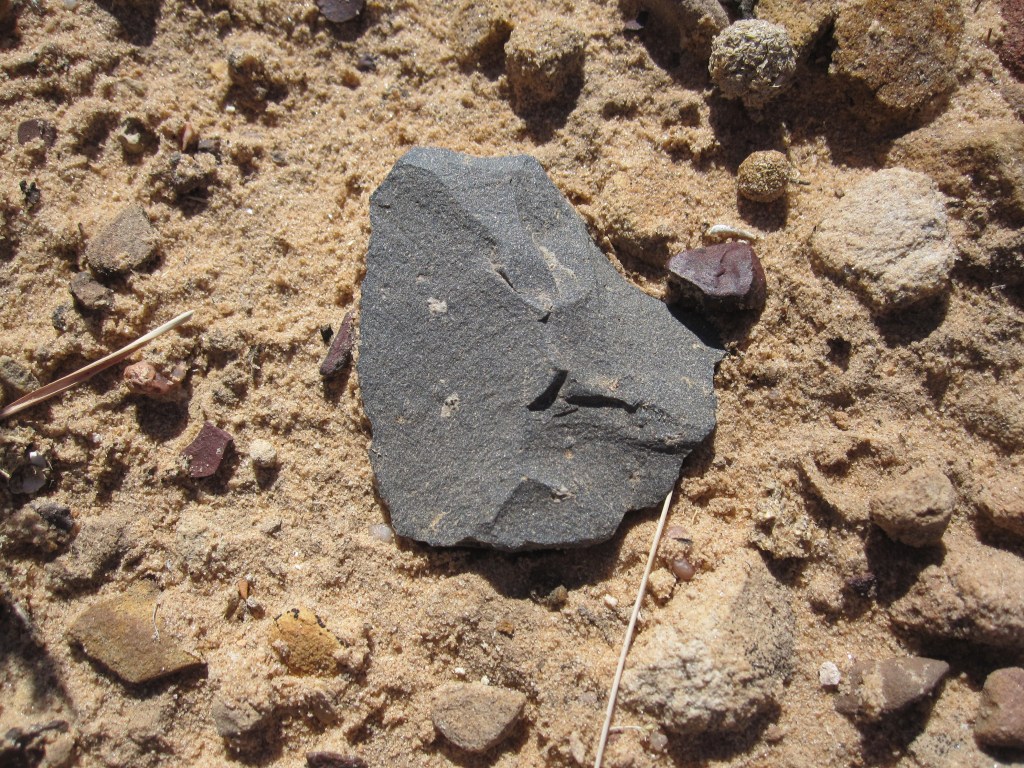
About seven thousand years ago, a culture that the invaders of five hundred years ago called the Bajada were making tools out of basalt.

Basalt. Were they crazy? Gluttons for punishment? Basalt is hard, grainy, homely, and close to impossible to knap. But by god it’s tough. It takes a lot to break it. Maybe that was the attraction?

We have to assume that the so-called Bajada–we have no idea what they called themselves, though they were all over the Southwest–were tough. And that hunters found a reason for their choice of that difficult material.

Where you find those basalt flakes you may also find the metate where gatherers ground wild grain:

Their camp is eroding into the arroyo. But if you’re alert you can spot what’s left of the place where folks sat around knapping basalt, sharing chapatis made of wild grains, and telling stories about the next seven thousand years.

Honey in the Rock


On archaeological field survey: way to hellandgone New Mexico, thirty miles of washboard dirt road on land so overgrazed it was “cow burnt.” A cold day.

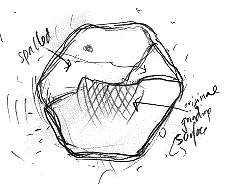
A wide, empty valley fissured by new erosion, arroyos thirty feet deep. On a low volcanic promontory, the scattered stones of an Archaic site like tossed newspapers in a messy room. There was a “kitchen”—a cluster of sandstone slabs—and in the middle of them was a worn grinding stone, a metate.

It was hexagonal. None of us had seen that before. Archaic, therefore thousands of years old—but hexagonal?

In this desert land, wild honeycomb would have been almost the only sweetness.

Homestead Canyon

To Homestead Canyon in the Cebolla Wilderness. A glittery fall day.

At the wilderness boundary hunters had driven off-road, broken down the fence, and taken a truck in. We parked and sloped off on foot through prickly year-end weeds; my socks are full of stickers.

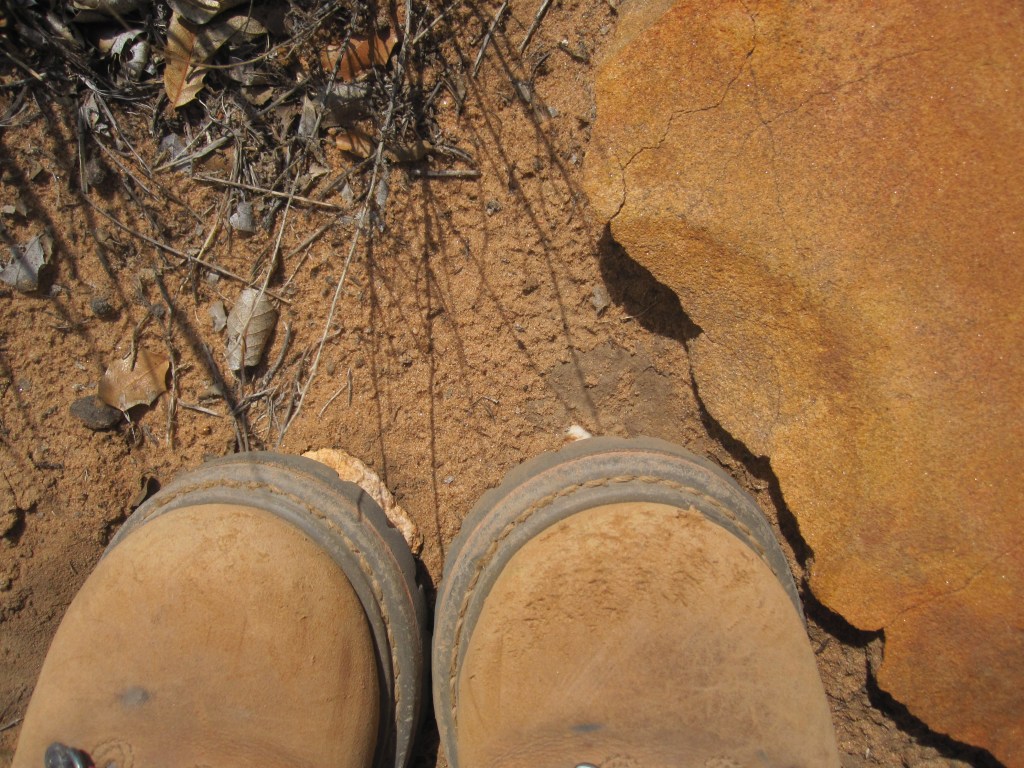
On the mesa top are the stone-heap remains of little pueblo. (The area was heavily settled in the 1300s.) On one sandy ridge the wind had exposed the four yellow-and-red sandstone slabs that made the half-moon edge of a storage cist. The whole ridge was sand-scoured, ventifacted, all wind-worn surface.

Nearby, also wind-scoured, were the sparkly bits of a metate (grinding basin), Archaic and thus hundreds of years older than the pueblos, that had been ground clear through with use. Human stories, one on top of another.

The piñon nuts were ripe and falling out of the cones. We kept stopping to eat.

Winterfat had the low winter light behind it, blazing silver. Spider guy wires were strung juniper to juniper; we broke those fine, elastic barriers as we walked.

*

For more walks on stone and sand, click here.