A chunk of thick, nineteenth-century beer bottle repurposed–right edge retouched–as if it were a flint flake.
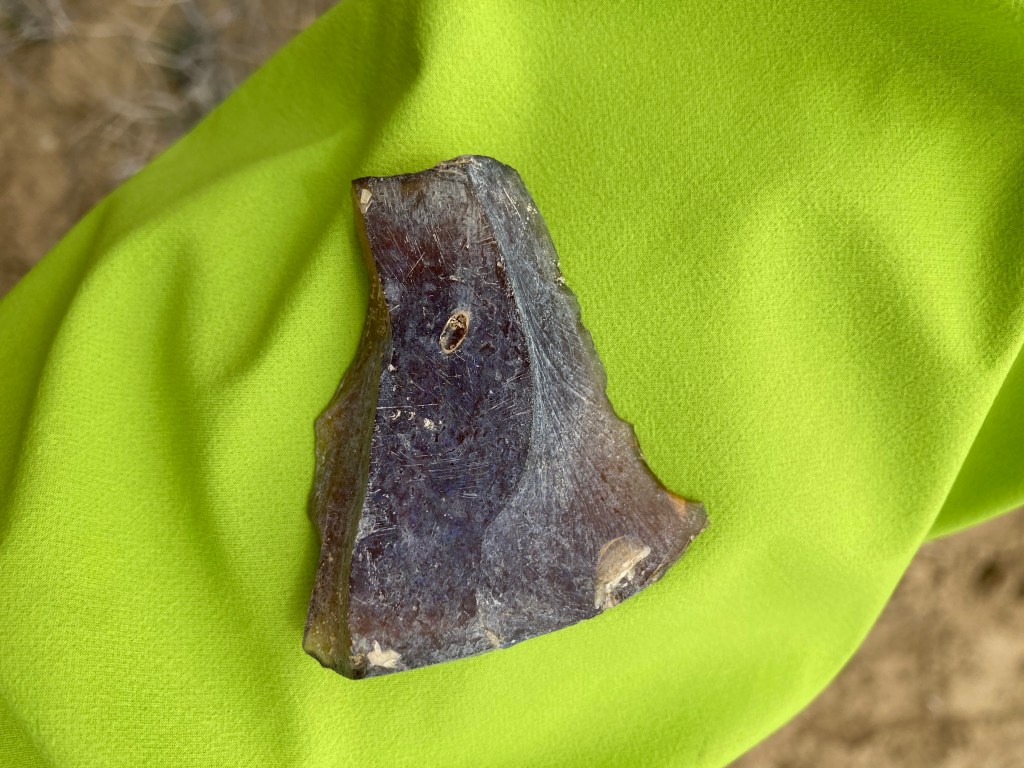

A chunk of thick, nineteenth-century beer bottle repurposed–right edge retouched–as if it were a flint flake.
Lightning-struck.
Burned to the stones, then scoured flush by weather and time.
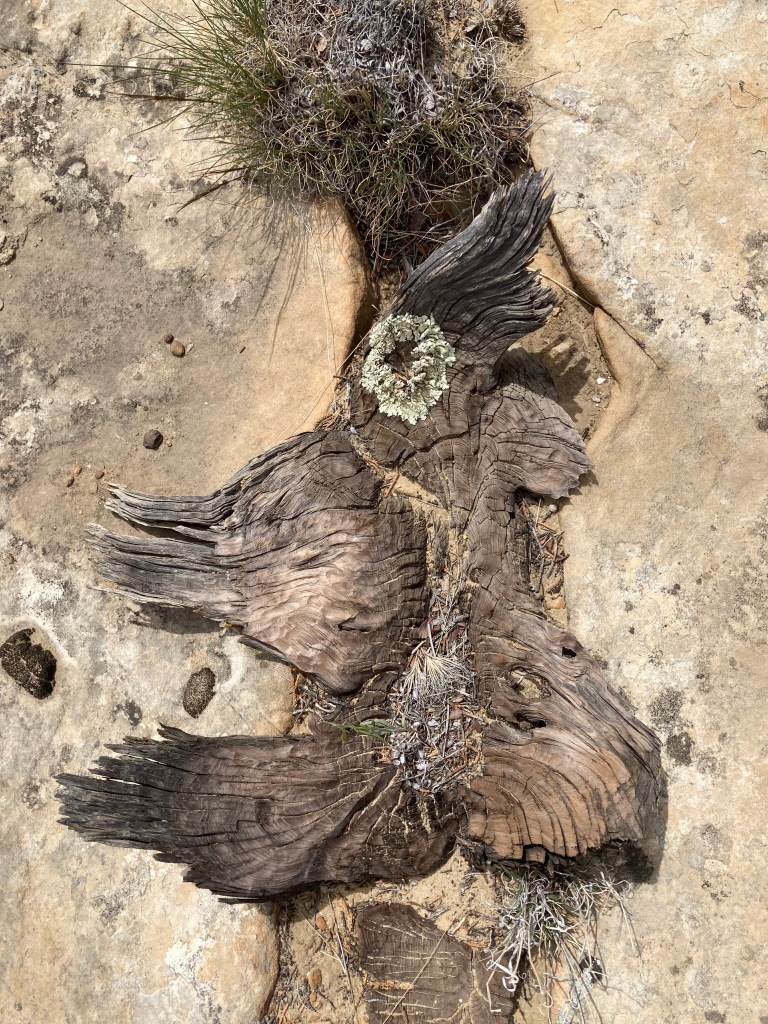

The leg it slashed –clinic visit, tetanus booster–was mine.
Vote to control shooters on public lands.
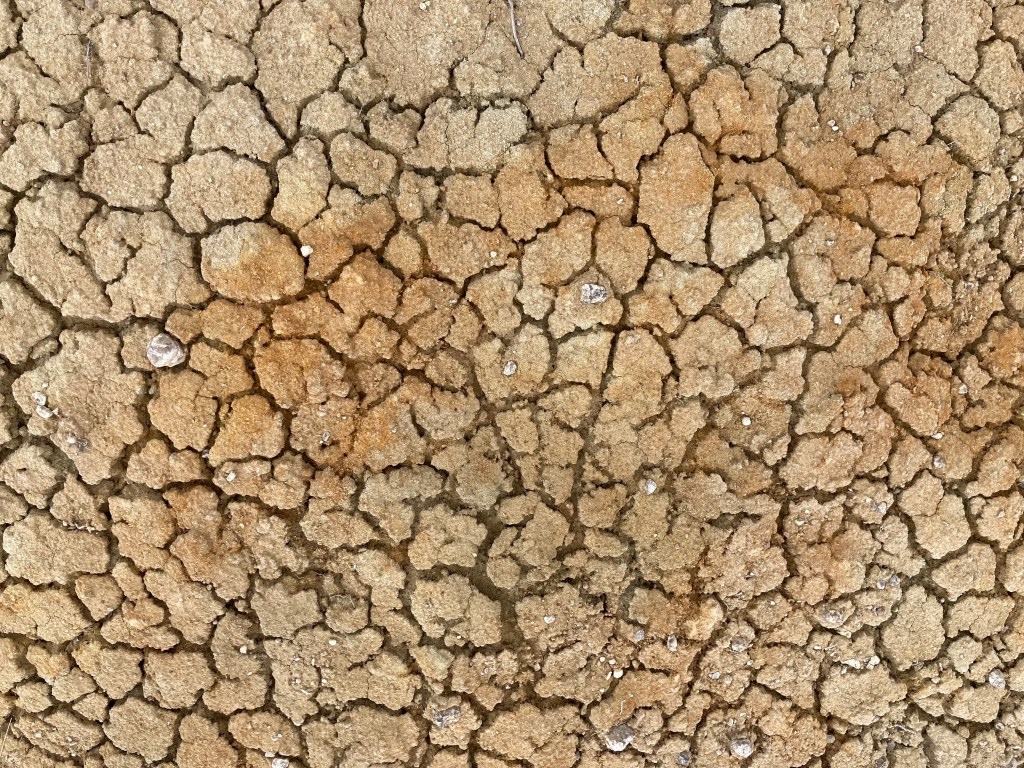
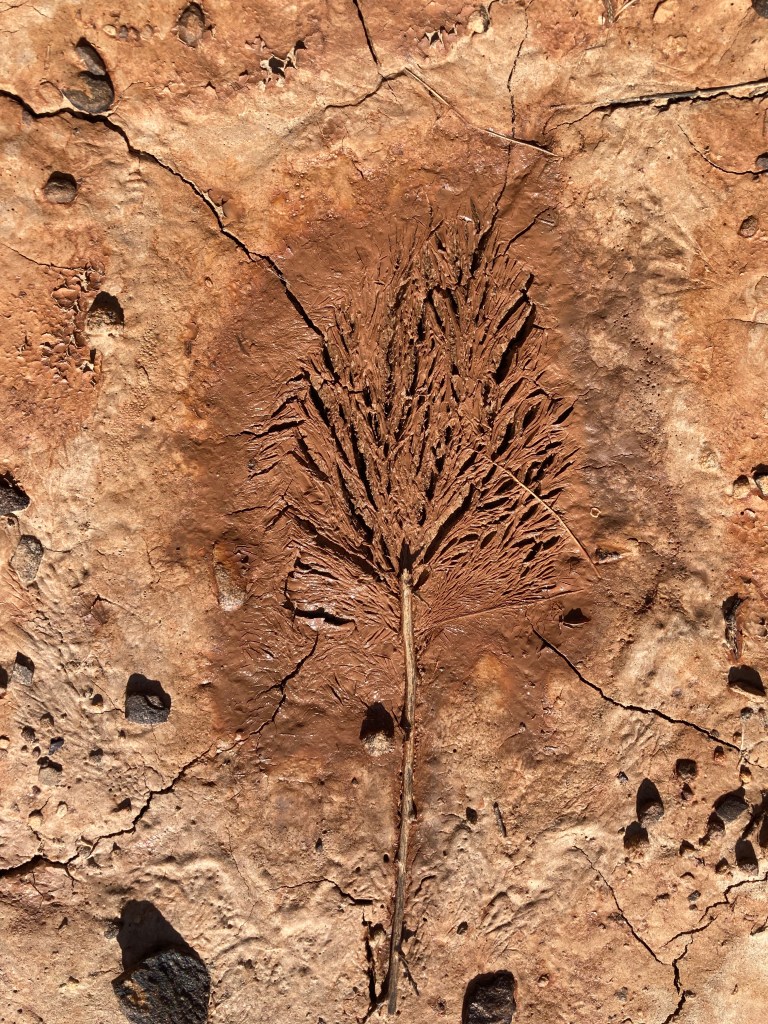
Two weeks ago we walked on dust. But a few days of snow and rain have swollen the bentonite clay in the Morrison Formation into a soft, brickled carpet. Sun and wind will soon turn it to dust again, except where cryptobiotic organisms can anchor it.
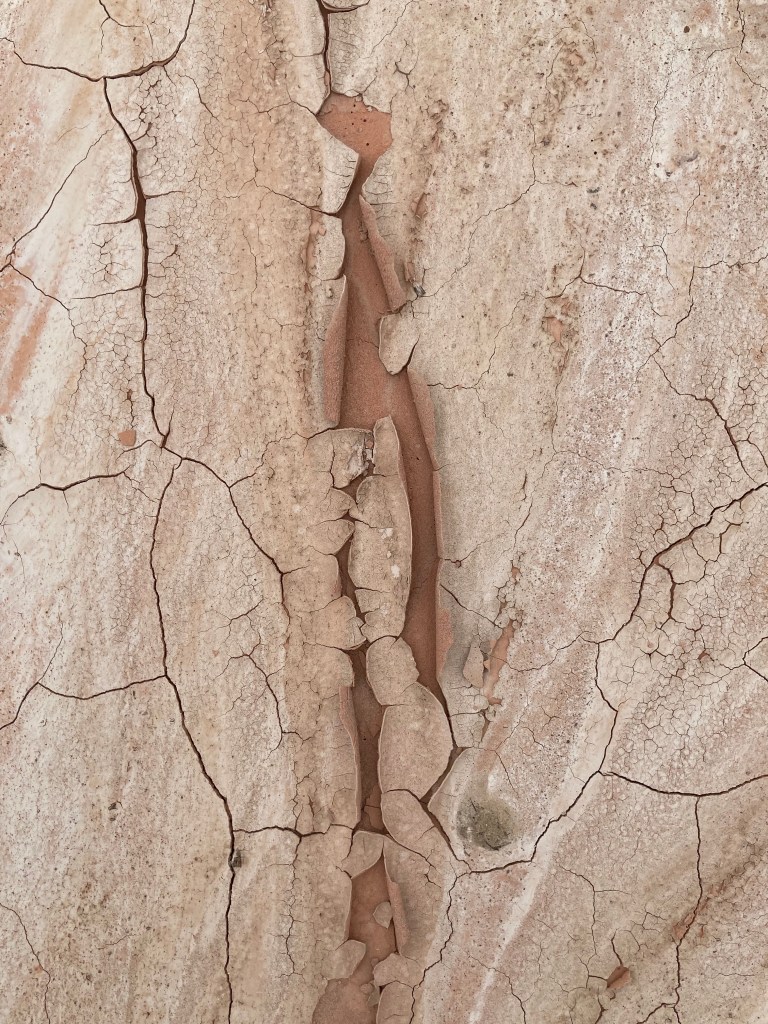
In another stratum of the Morrison, the winter wet had brought down a layer of outwash like melted creamsicle: flat as a dance floor, delicate and thin as old wallpaper.


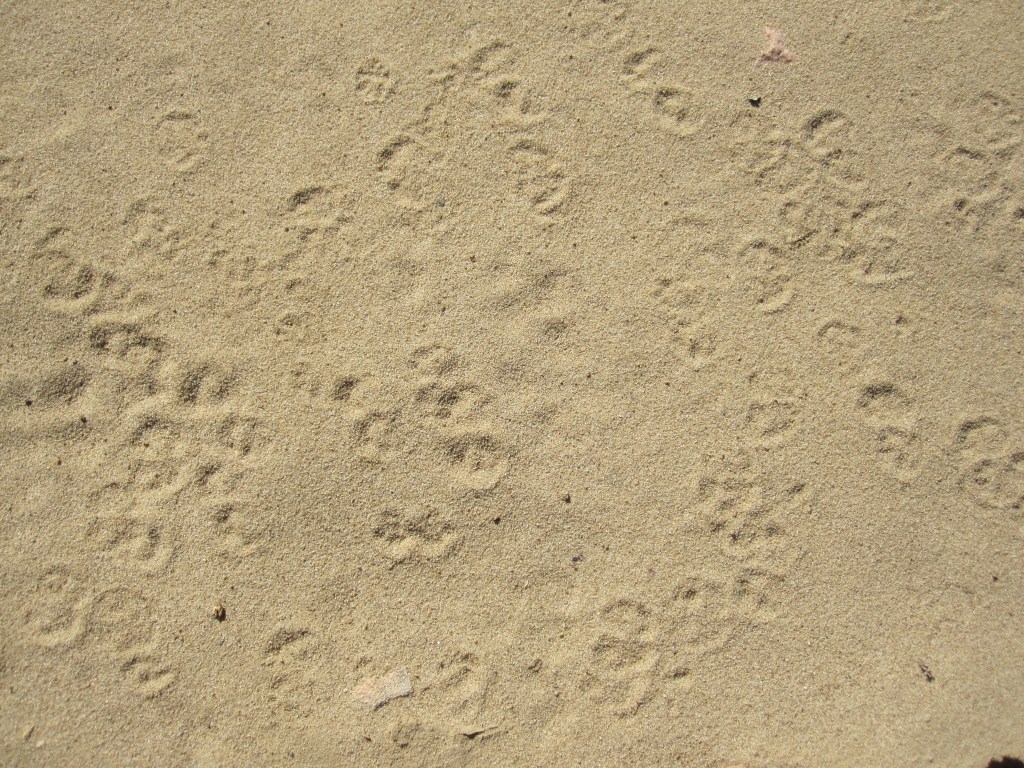
Mouse? Packrat?
I vote for a jumping rodent. See how the footprints are clustered? Maybe a kangaroo rat? The soil is clay. It was sloppy mud a couple of weeks ago, now hard as ceramic. This dance should last until the next good rain.
In the muddy pool of an elk footprint, frost at work.
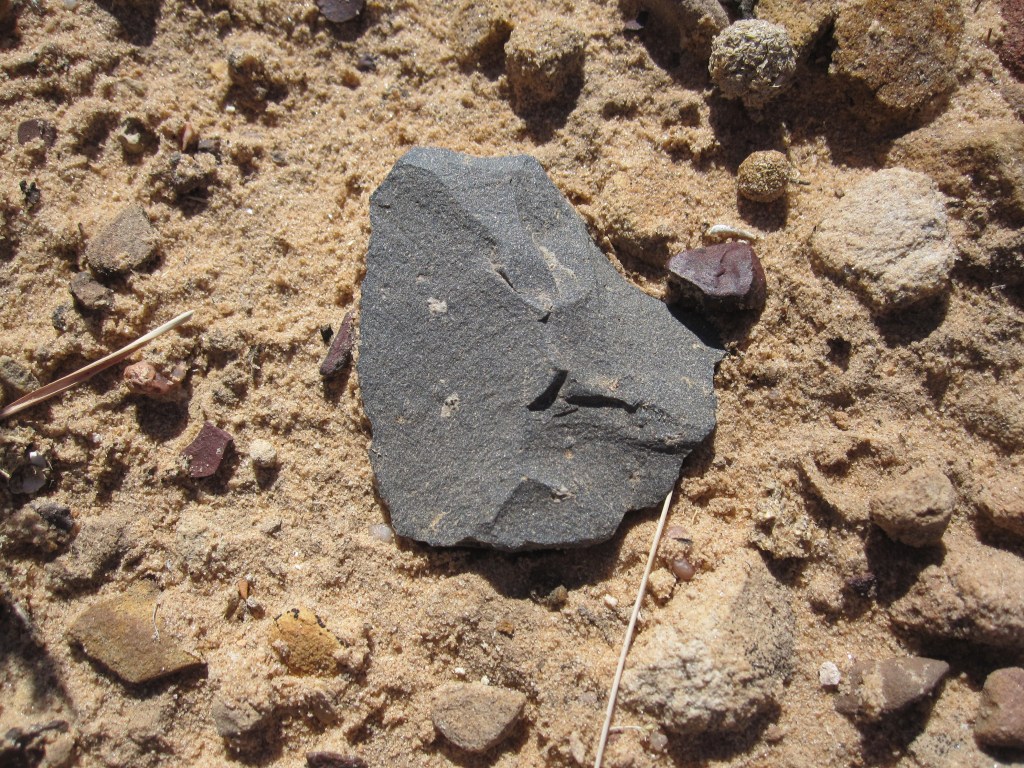
About seven thousand years ago, a culture that the invaders of five hundred years ago called the Bajada were making tools out of basalt.
Basalt. Were they crazy? Gluttons for punishment? Basalt is hard, grainy, homely, and close to impossible to knap. But by god it’s tough. It takes a lot to break it. Maybe that was the attraction?
We have to assume that the so-called Bajada–we have no idea what they called themselves, though they were all over the Southwest–were tough. And that hunters found a reason for their choice of that difficult material.
Where you find those basalt flakes you may also find the metate where gatherers ground wild grain:

Their camp is eroding into the arroyo. But if you’re alert you can spot what’s left of the place where folks sat around knapping basalt, sharing chapatis made of wild grains, and telling stories about the next seven thousand years.

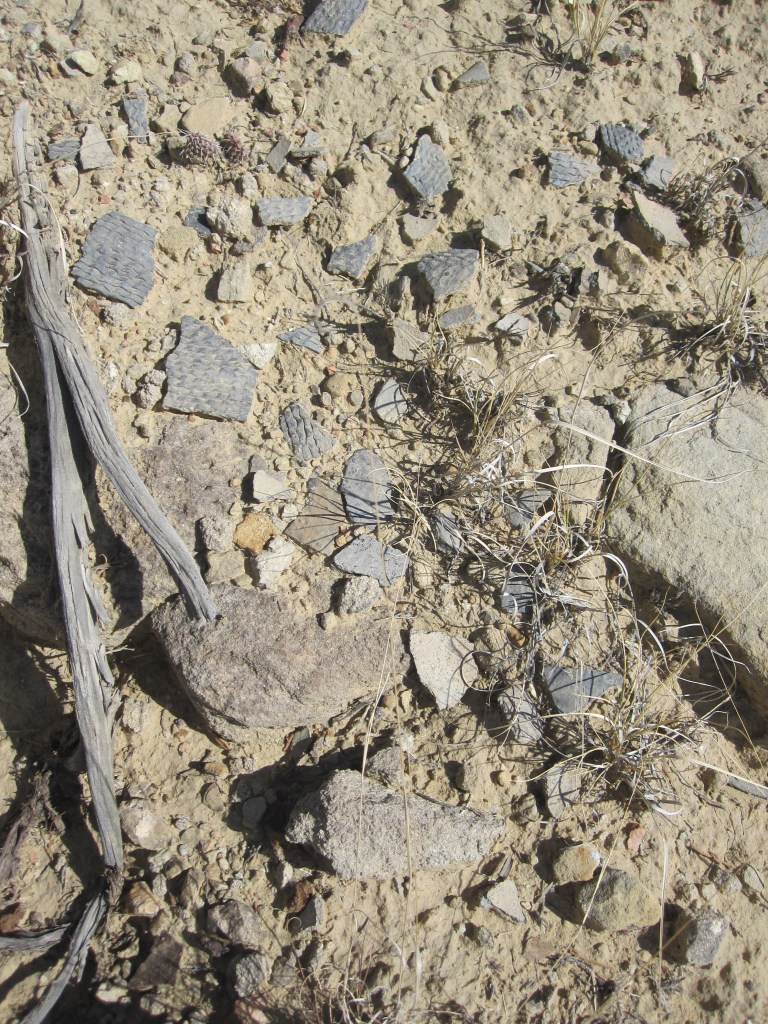
On the slope below a line of rubble that might–or, in that stony country, might not–have been a tiny ruin, was a cascade of the coarse grayware of the Late Archaic.
At first glance it seemed like a “pot drop”: the in situ remains of one vessel. But if you look closely you can see that the corrugation was done by a couple of different hands.
Not far away there was a little dance floor:
From a sandstone mesa we watched the moon slide over the sun. Later, in a vast site full of ashy firepits and burned stone, an Archaic mano echoed those lunar shapes.
Below: exposed surface, buried surface, and its thousands-of-years-old bed.

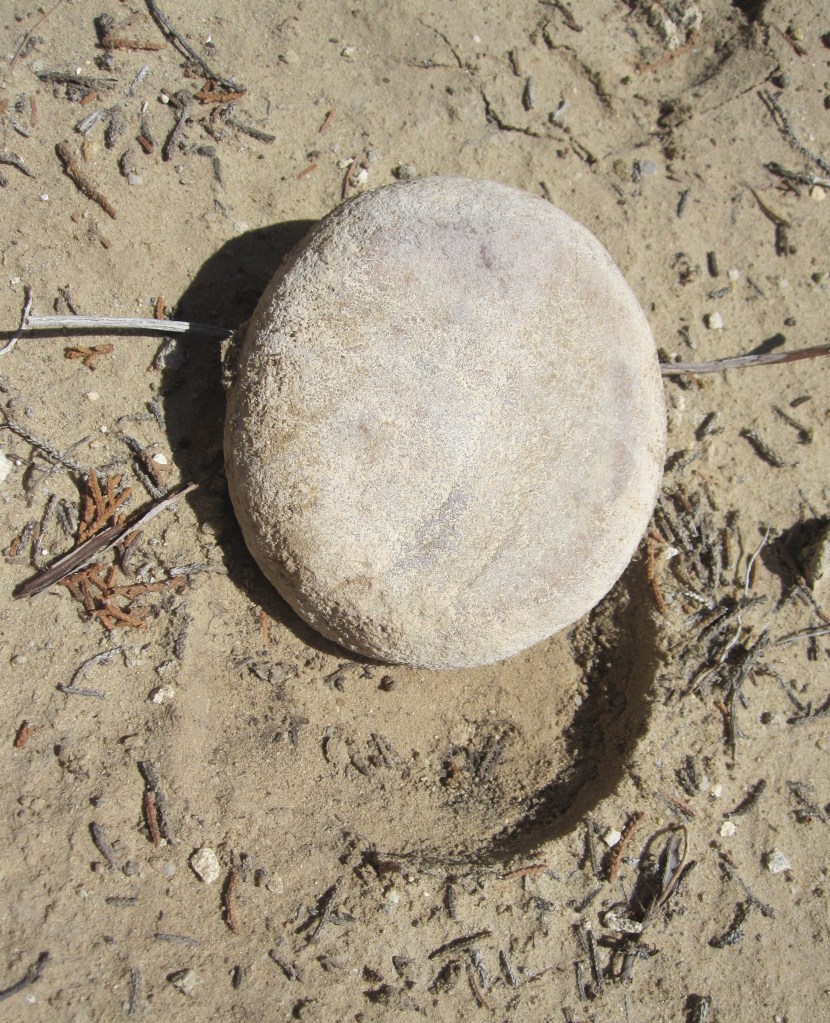
All day we spotted Archaic manos, grinding stones, whole or broken–this in terrain we’d hiked for decades. What was it about today?
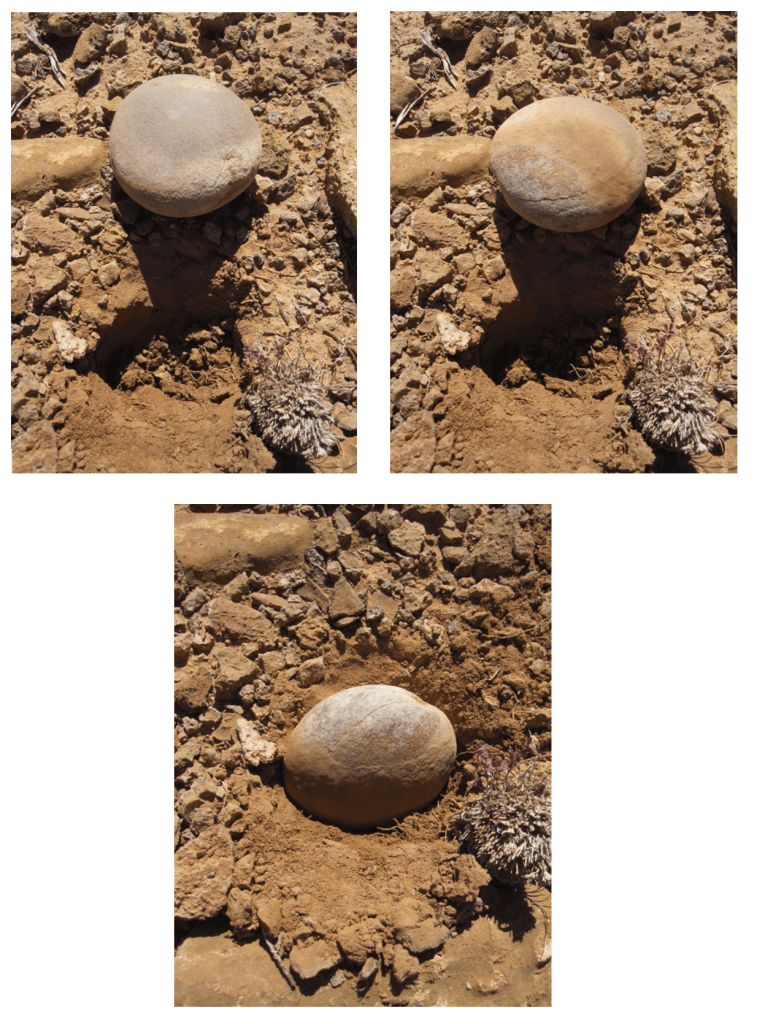
First mano. Front elevation, rear elevation, then back into its nest for the next few thousand years:
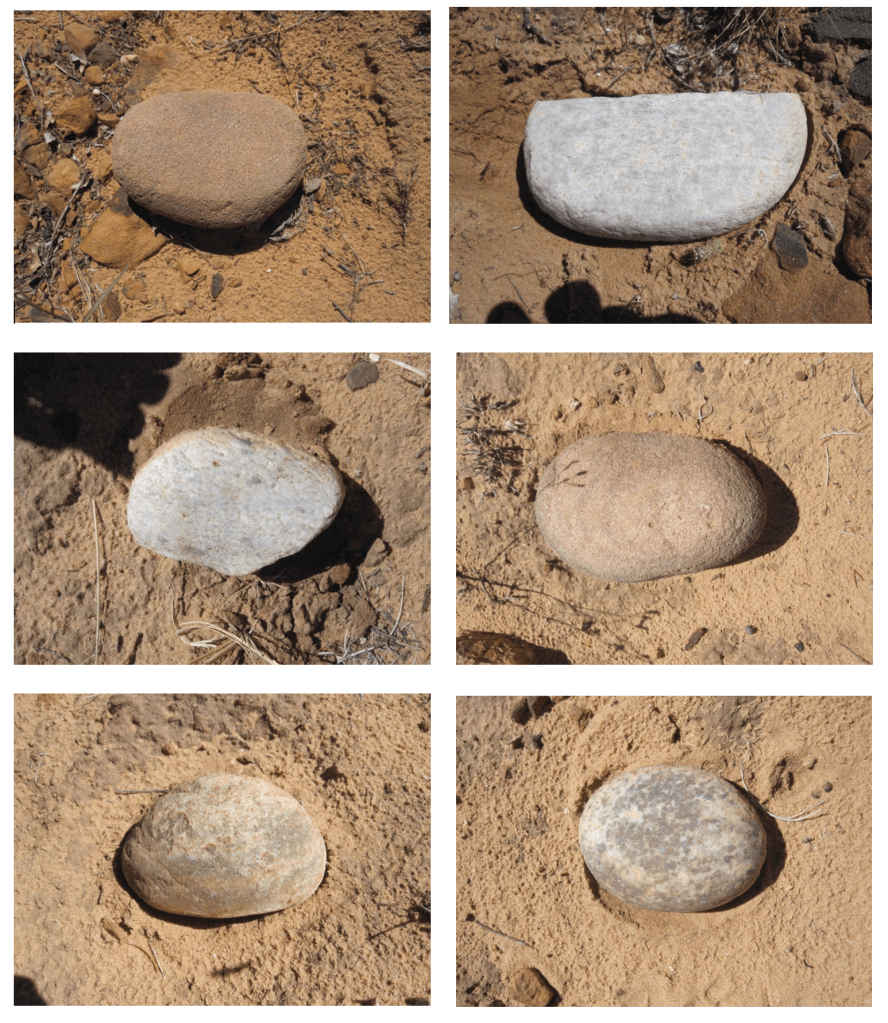
More manos: Some were carefully shaped. Some were an expedient cobble, one or both sides slicked by use on a handy flat rock as metate.
Unlike more recent, Puebloan manos, which were flat and wide for grinding corn, Archaic manos–thousands of years old–were a characteristic oval. Mostly they were used to grind wild seeds: Indian rice grass, for example. Or whatever edibles the desert had to offer. A friend in Zuni said of his wild-resourceful grandmother, “Grandma eats everything.”
 WORLD-BUILDING and WILDERNESS: