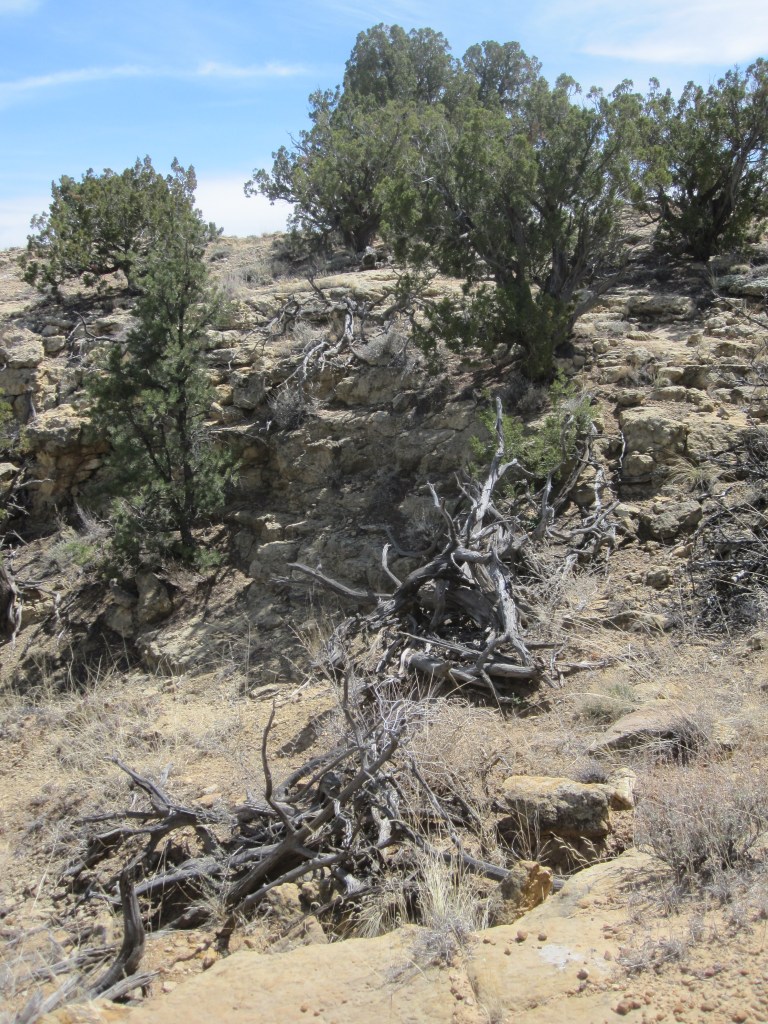
“A juniper post can wear out two postholes.” And a juniper-branch fence can last centuries. This one, probably built by Navajo herders, once kept stock from crossing between mesas and lowlands.


“A juniper post can wear out two postholes.” And a juniper-branch fence can last centuries. This one, probably built by Navajo herders, once kept stock from crossing between mesas and lowlands.


Cabezón, one of the sacred mountains.

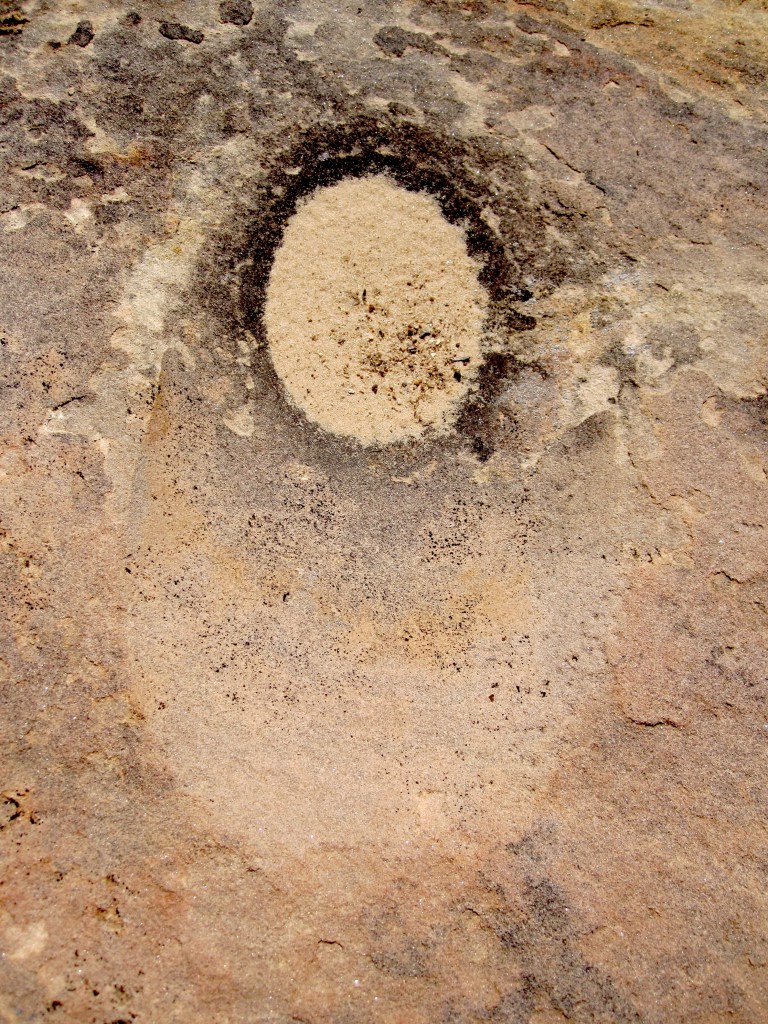
On raindrop-pecked sand, the subtle lunar crescent of an Archaic metate broken and abandoned a few thousand years ago.


About 130 million years between tides.

A little rock shelter in the sandstone where—maybe in the early 1900s judging from the state of the juniper—a Navajo sheepherder, a woodcutter, or an outlaw had augmented a natural cave with cut branches.


An Archaic mano, or hand grinding stone, begins its next few thousand years in the sand of a hearth. Time and weather have reduced the charcoal of ancient campfires to a shadow in the soil.

Under a juniper instead of a cork tree. Picked clean by coyotes and bleached by the desert sun.


…but the coyote was barefoot. Fair’s fair.

…and now, 150 million years later, so can we.
The Morrison Formation, deposited by rivers, deltas, and shallow seas. In rain or snow it reconstitutes to dinosaur poo—you will never get the mud off your boots.


Where we put our feet can change within a yard or two.
Also true for others’ feet.