South from the Sandia Crest trail. Summer rain.
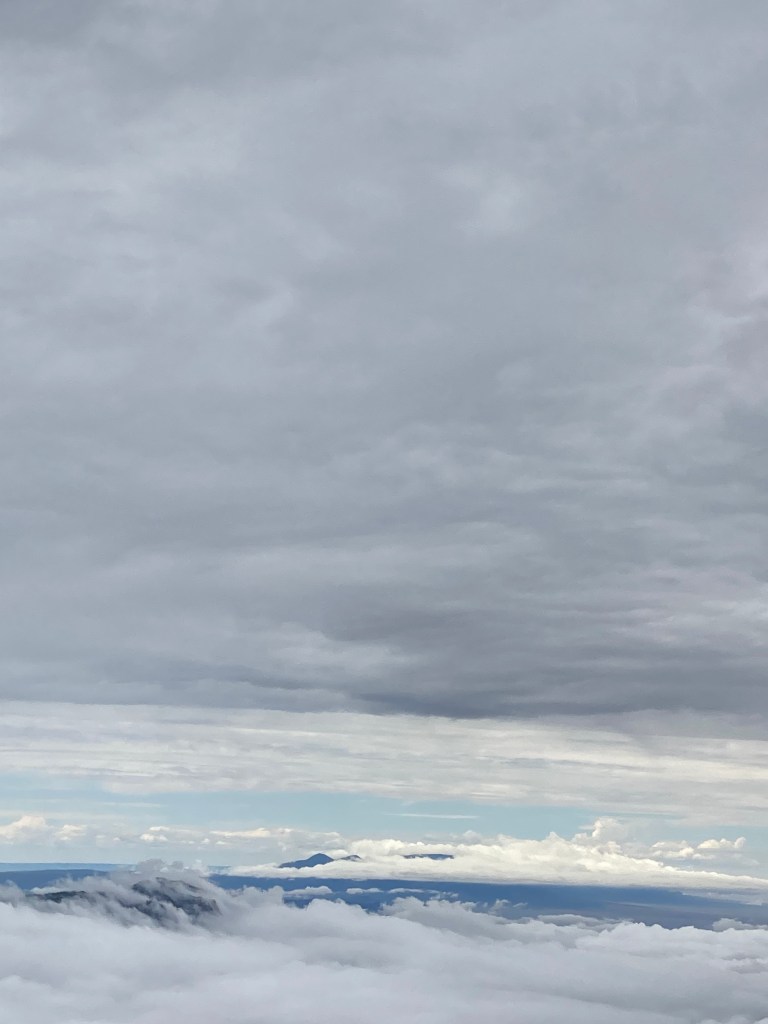

South from the Sandia Crest trail. Summer rain.
Lightning-struck.
Burned to the stones, then scoured flush by weather and time.
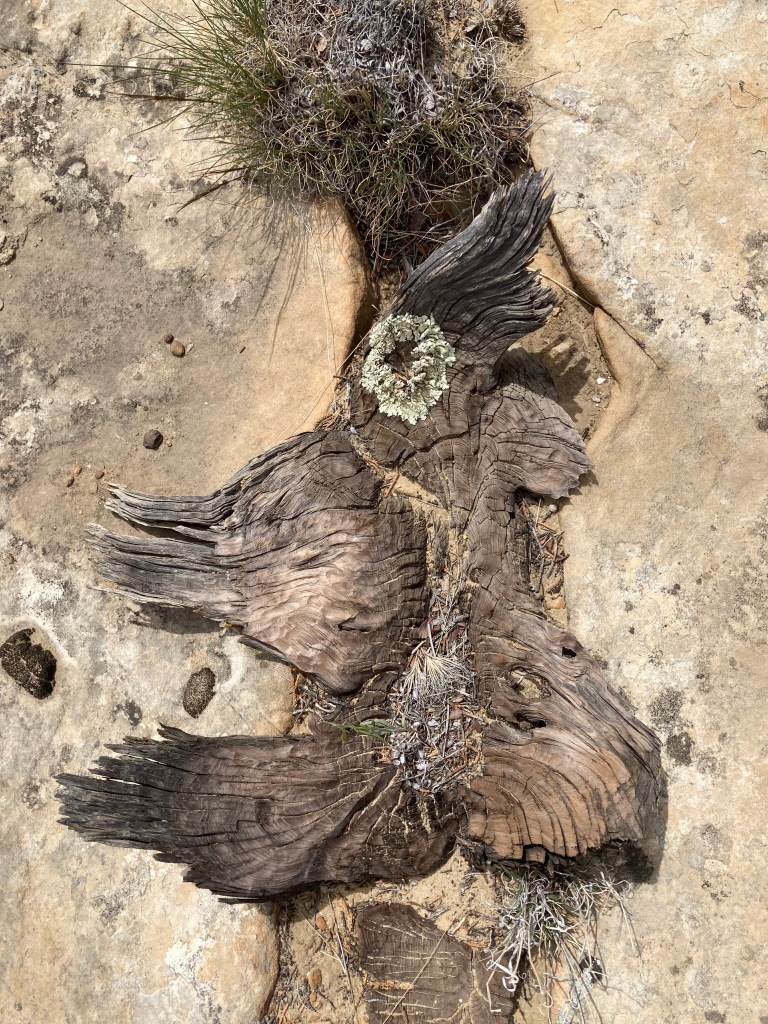

The leg it slashed –clinic visit, tetanus booster–was mine.
Vote to control shooters on public lands.
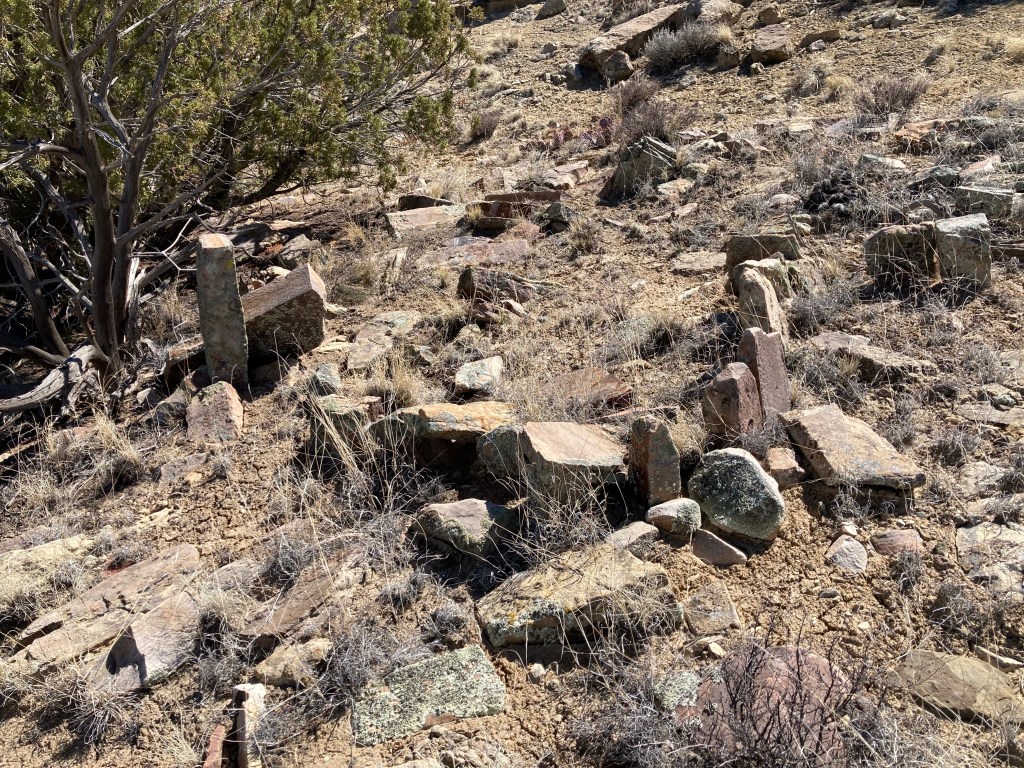
The square-cornered foundation and a couple of scattered sherds say Ancestral Pueblo, but both the vertical orientation and the size of the stones are unusual and impressive. Walls and roof–jacal style, the Southwest version of wattle-and-daub–have long since dissolved into the desert clay.
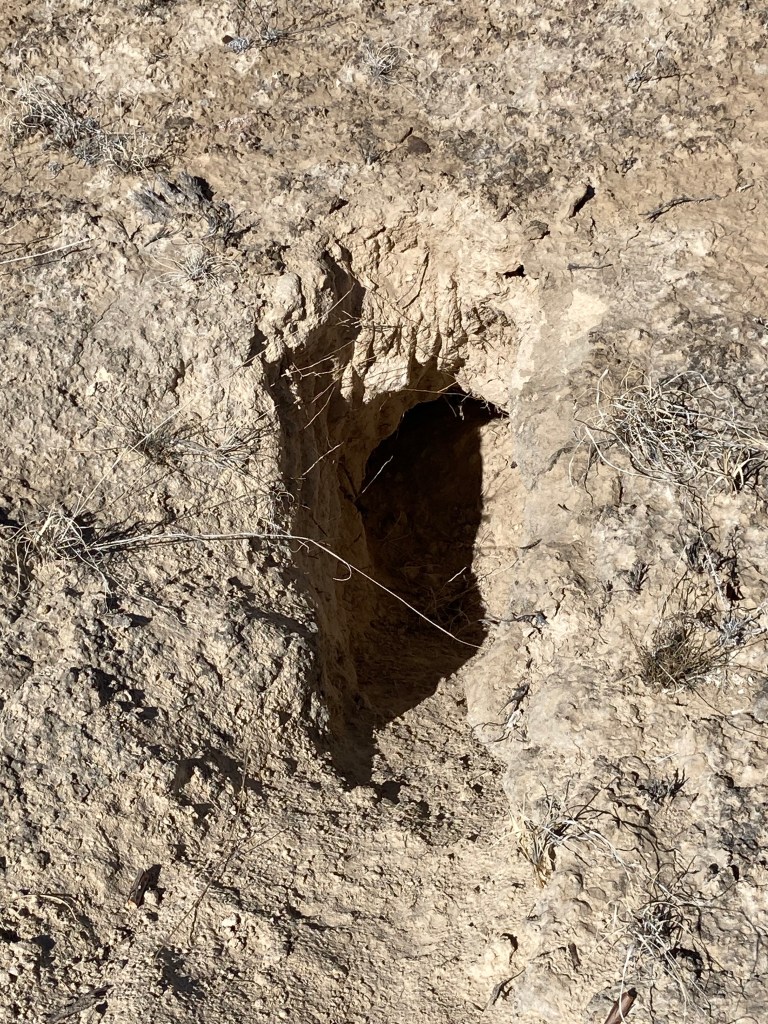
And another house. I have no idea whose, but the excavator left their claw marks above the doorway.
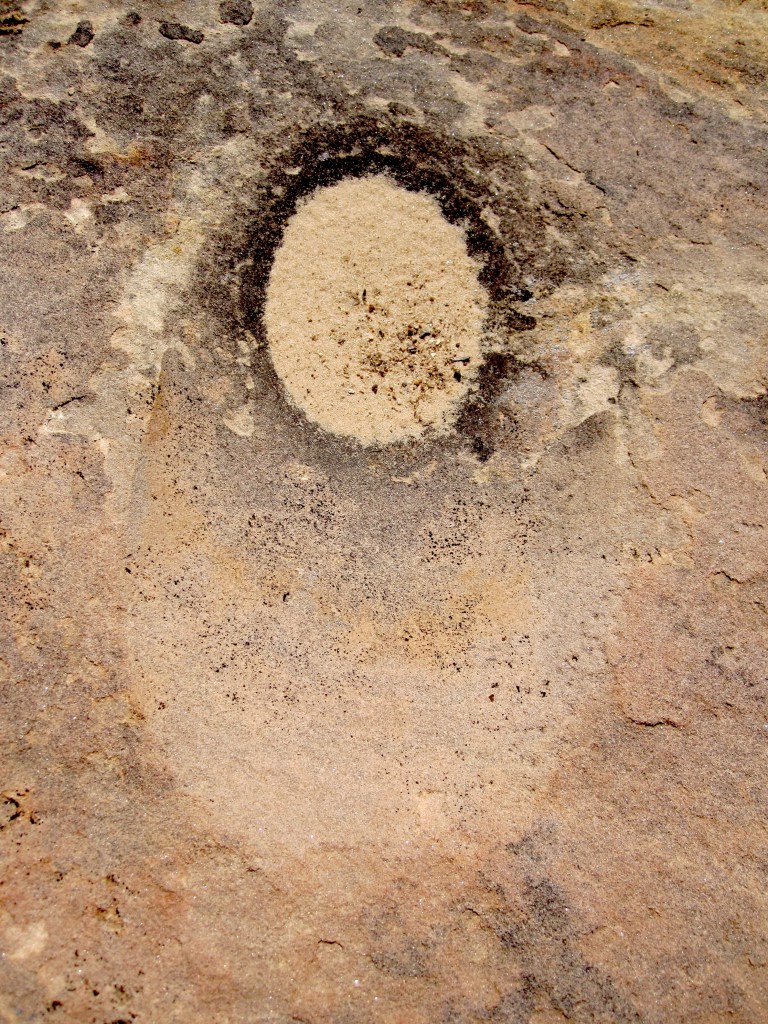
Bedrock metates are the oldest. They belonged to the Archaics, the first peoples in the Southwest, who became the Puebloans and still live and work here.
With a rounded mano as pestle, this one was used for the grinding of wild grasses. Corn had not yet spread up from its first cultivation in Mexico.
Season after season, a band of hunter-gatherers returned to this stone. As they arrived at their familiar camp, surely they felt, “There it is. Here we are.”
Time has filled this one with windblown sand.

Sheer mesa, Cretaceous mudlands, lightning-blasted ponderosas. But what struck me were the sherds of a busted sixties coffee mug and an open safety pin.
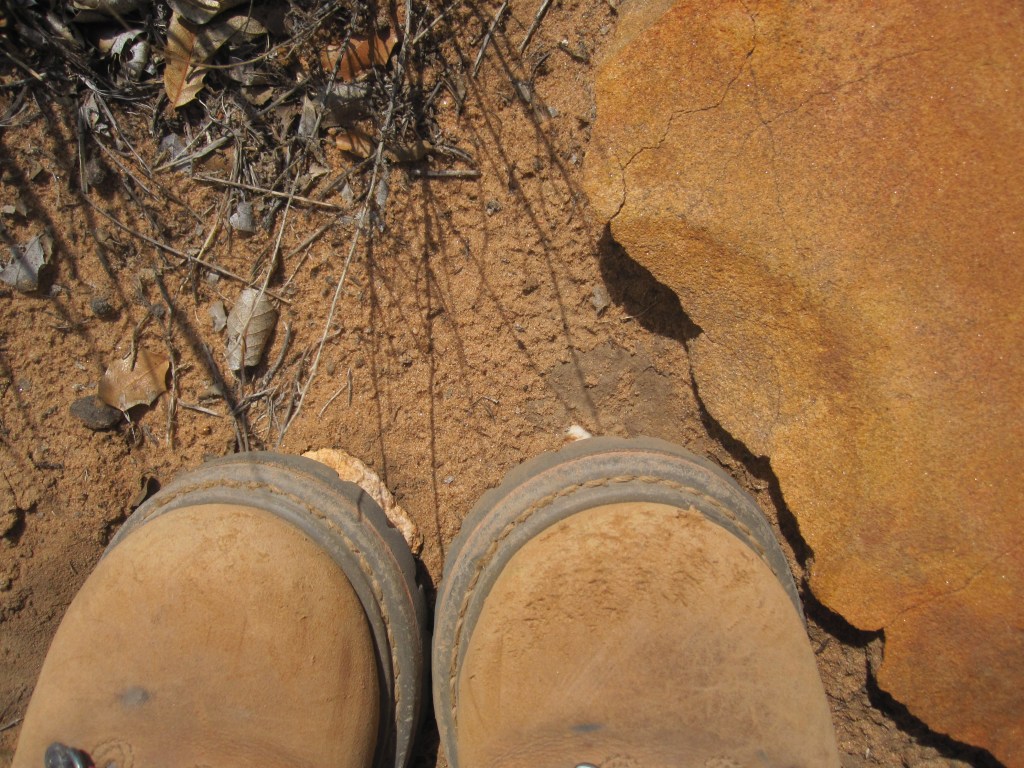
On raindrop-pecked sand, the subtle lunar crescent of an Archaic metate broken and abandoned a few thousand years ago.
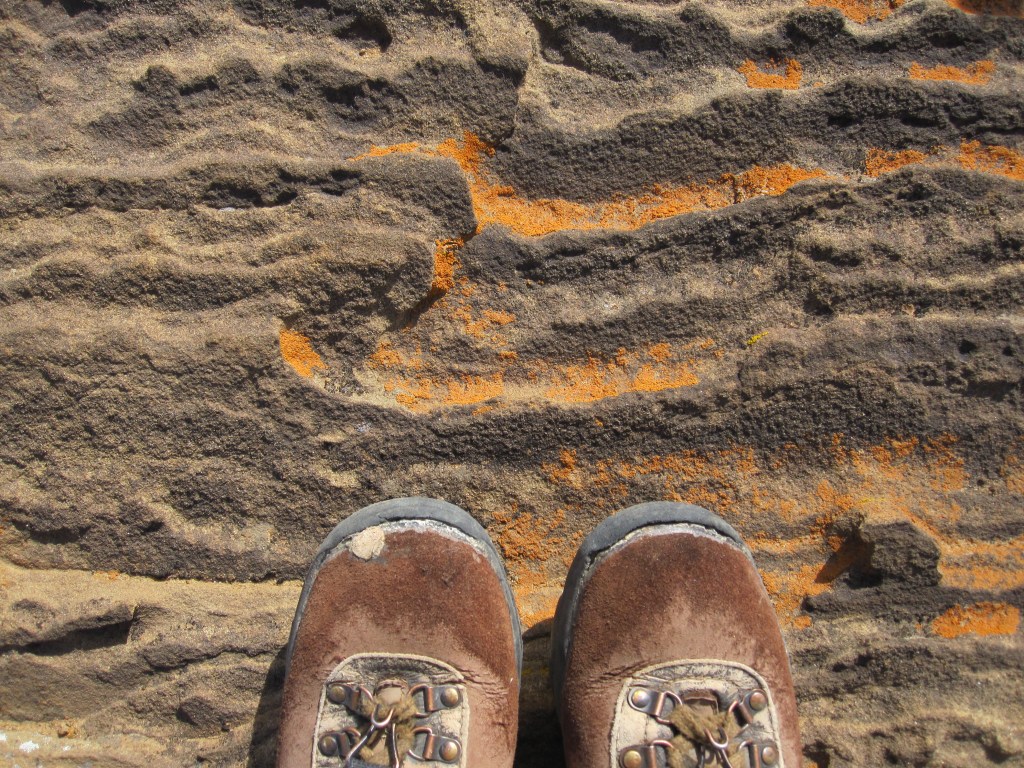
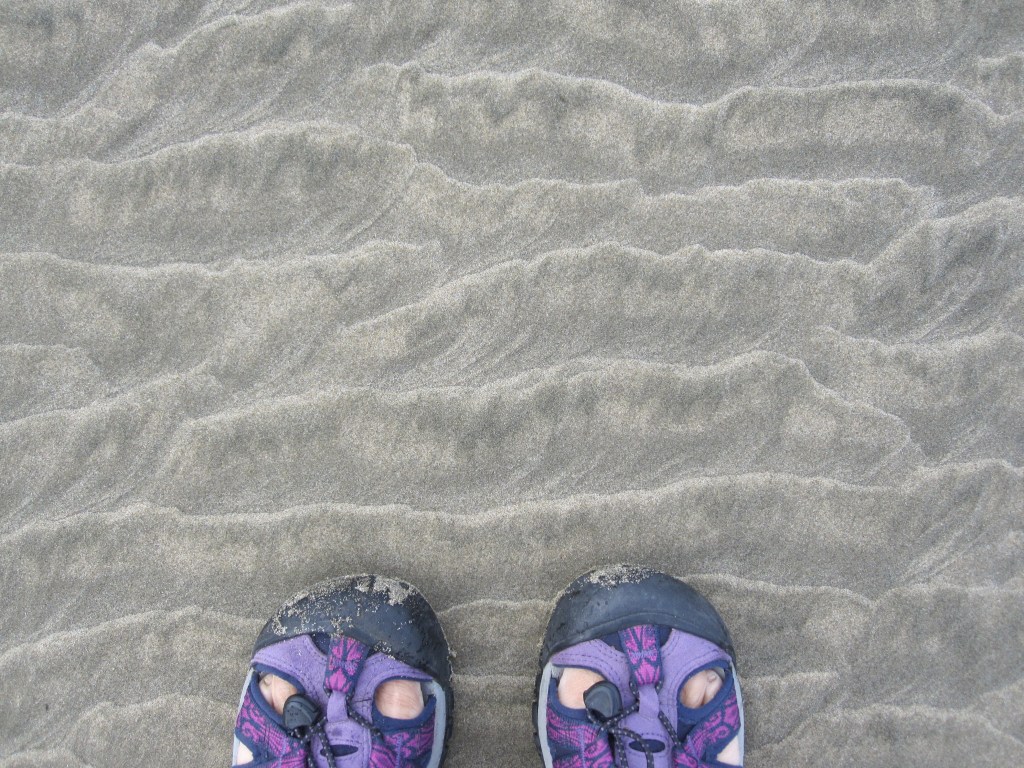
About 130 million years between tides.
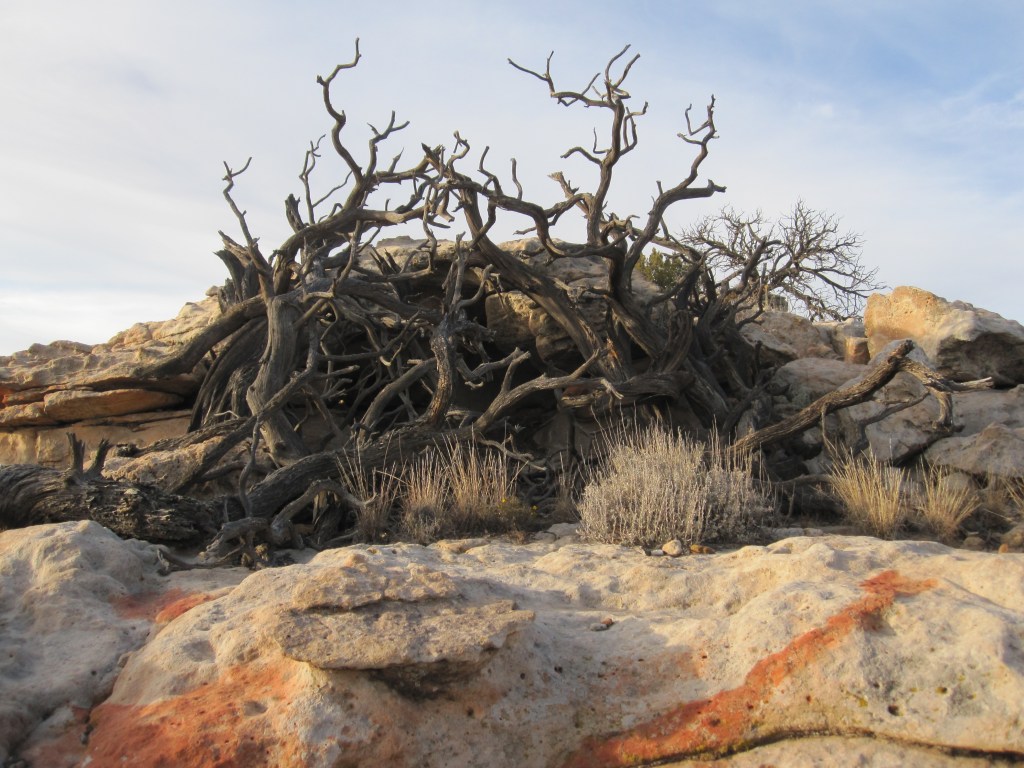
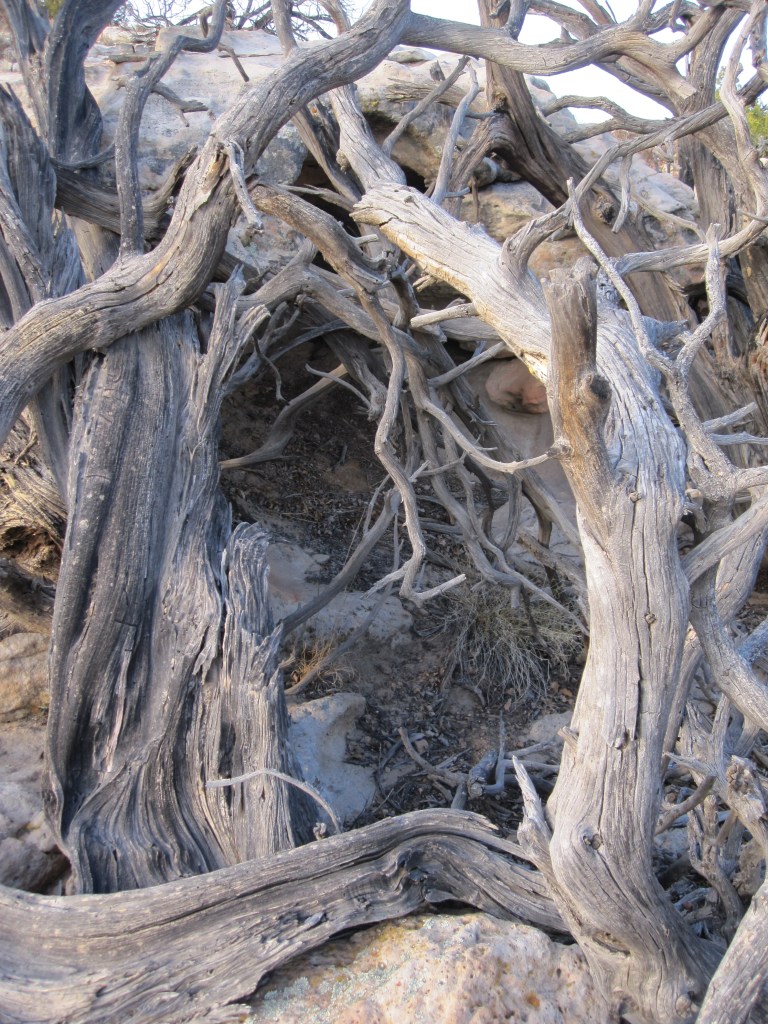
A little rock shelter in the sandstone where—maybe in the early 1900s judging from the state of the juniper—a Navajo sheepherder, a woodcutter, or an outlaw had augmented a natural cave with cut branches.
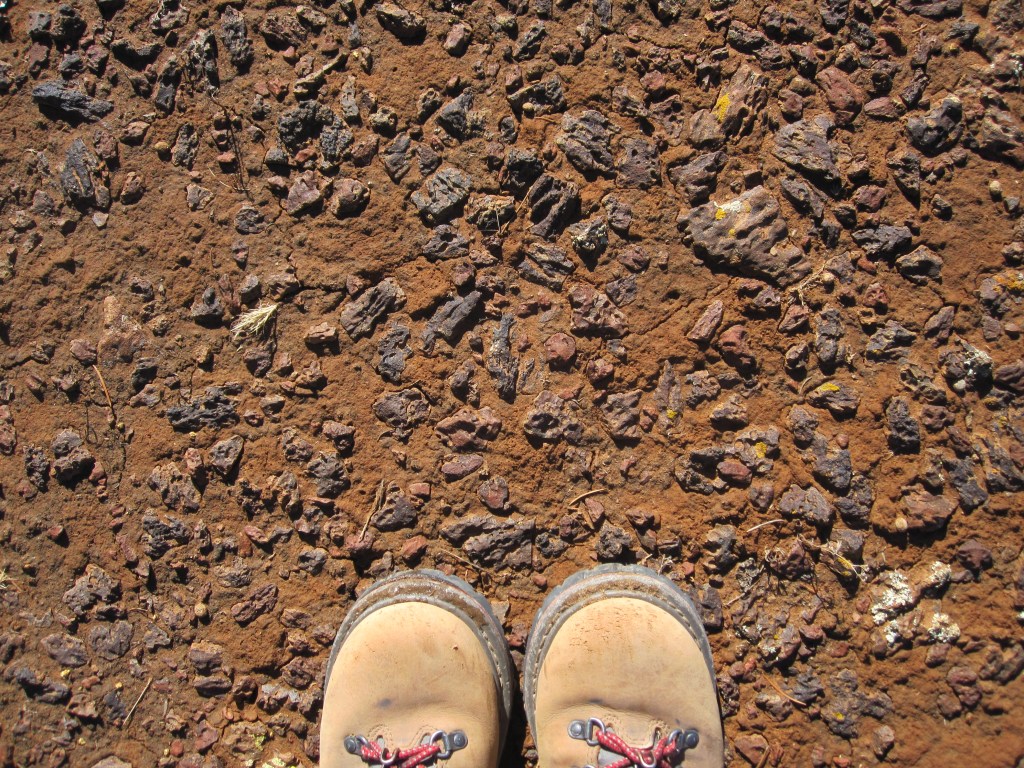

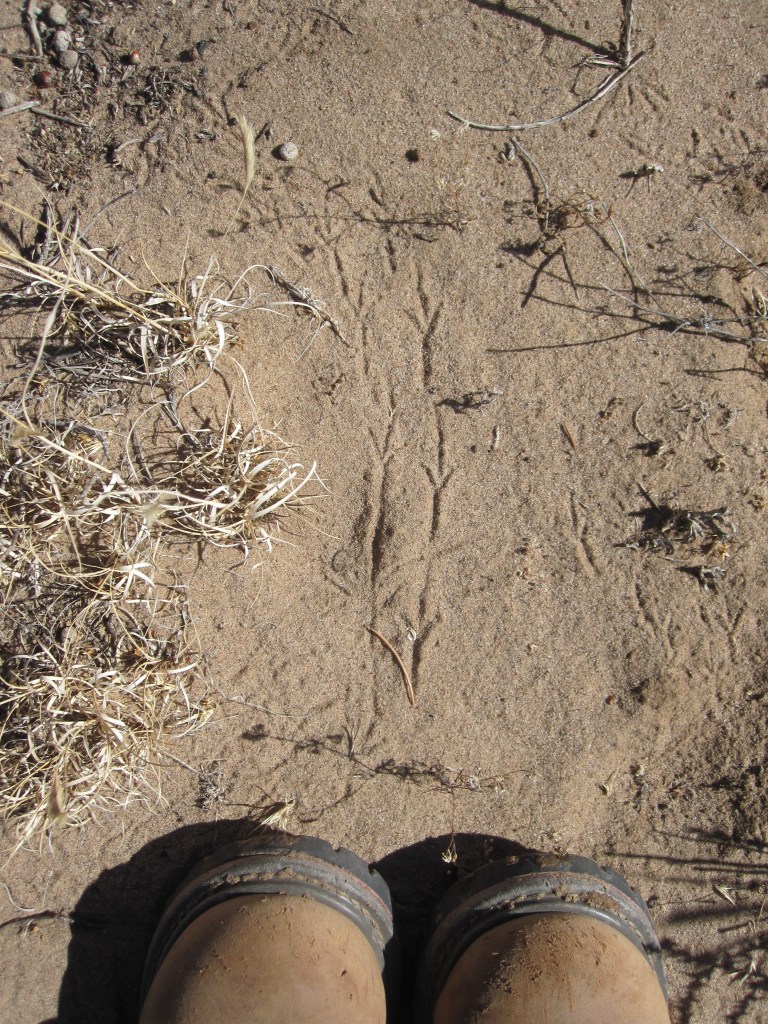
Where we put our feet can change within a yard or two.
Also true for others’ feet.
 WORLD-BUILDING and WILDERNESS: