Category Archives: On the Writing Life

Tracks

BearScratchbd cropMany Archaic firepits. Circles of black soil on yellow sand, red heaps of burned rock. The mesa ridges were wind-scoured, not a grain of loose sand, streaks and gullies gouged by the wind.

A bear’s footprints, round sole, four fat round toes. We followed them; the bear had broken branches from a juniper to eat the ripe berries. Suddenly Jan said, “There!

It took a moment to spot it, about five hundred yards away: black, big, ambling and then running away from us, its loose skin every which way, shining in the autumn sun.

Blast from the Past

HobbitIn the wilderness, so many unexpected traces of humans.

In a roadless canyon we came upon the disintegrating remains of a camp Jan had stumbled on, just abandoned, in the 70s. It must have been a hippie camp, he said, because there were tipi poles and a dew-swollen copy of The Hobbit. 

Poles and book were still there. The book was unidentifiable now, gray with sun.

I Wish I Could Do That

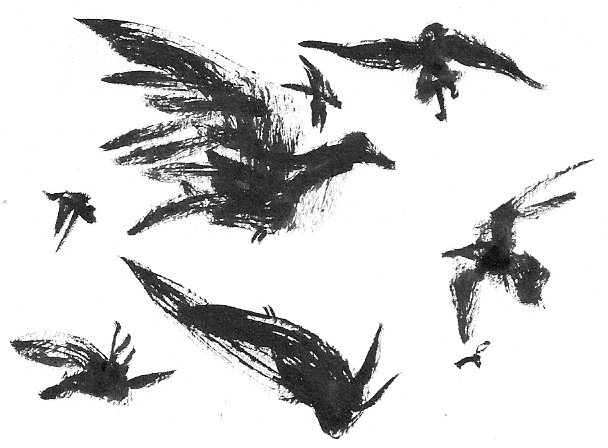
RavensIn the Jemez Mountains under a Maynard Dixon sky, lazing like lizards. As we sat on the edge of the high mesa a half dozen swallows buzzed our ears like bullets, like a mechanical breath.

A raven flew by. In mid-flight it folded its wings, turned upside down and said, “Clonk!” Unfolded, came right side up and flew calmly on.

La Plus Ça Change

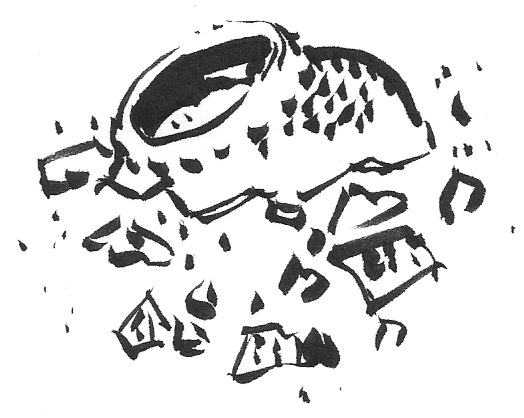
Smashed PotAs we walked a low ridge we came upon a mystery: a dozen square feet of desert pavement formed by gray Archaic potshards and eleven fragments of chert knives, none from the same knife.

Patricia said: Nah, no mystery. Some Archaic woman, PMS-ing, had busted her eight pots and eleven knives, hollering, “I’ve had it! Mend your own damn loincloth!”

No trace of habitation. Had we stumbled on a sacrificial place, where pots and knives were broken to send their spirits onward with the dead? Was it the site of a solstice ritual like Zuni’s, when pots were smashed? As a theory I like Paleo PMS.

Visions

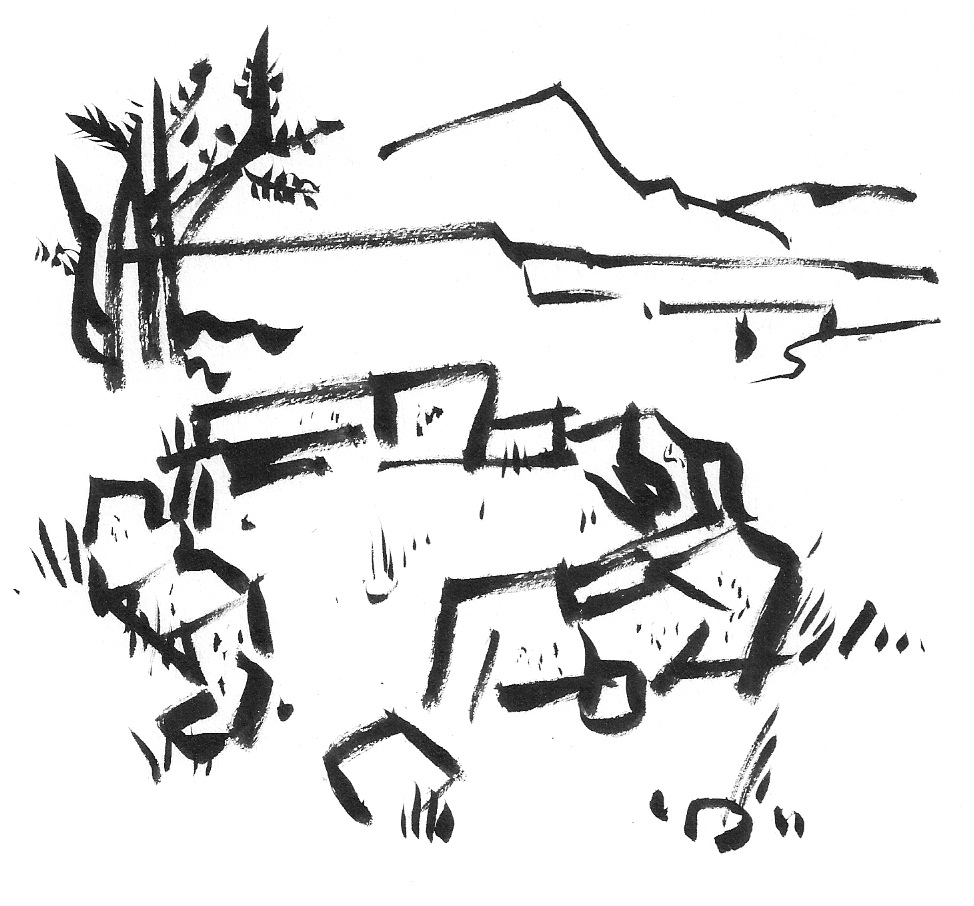
Stone Circle DB243Stone circles. Dozens, possibly more than a hundred.

Most of them consist of a single course of unworked rocks in a ring five or six feet across, usually on a high place.  Because they are clearly ancient and the stones have been scattered it’s hard to say for sure, but most seem to have a gap that faces a distant landmark: a mountain, a volcanic plug. They’re too small to be hogan or teepee rings. A visiting archaeologist friend took one look and said, “Did they do vision quests in these parts?”

Quite possibly. The circles’ size, placement and ephemeral quality—ephemeral for stone—seem right for solitude, fasting, and waiting upon silence. I am deliberately vague about their location lest there be an influx of Native-wannabe vision questers; those who have a right to know where they are no doubt already do.

One ring was more horseshoe-shaped, built higher at the curve and sloping to an opening that may have faced the winter sunrise. Another was built on top of a seven-foot-tall yellow sandstone hoodoo just the right size for it. Its rocks were bright red.

¡Buen Provecho!

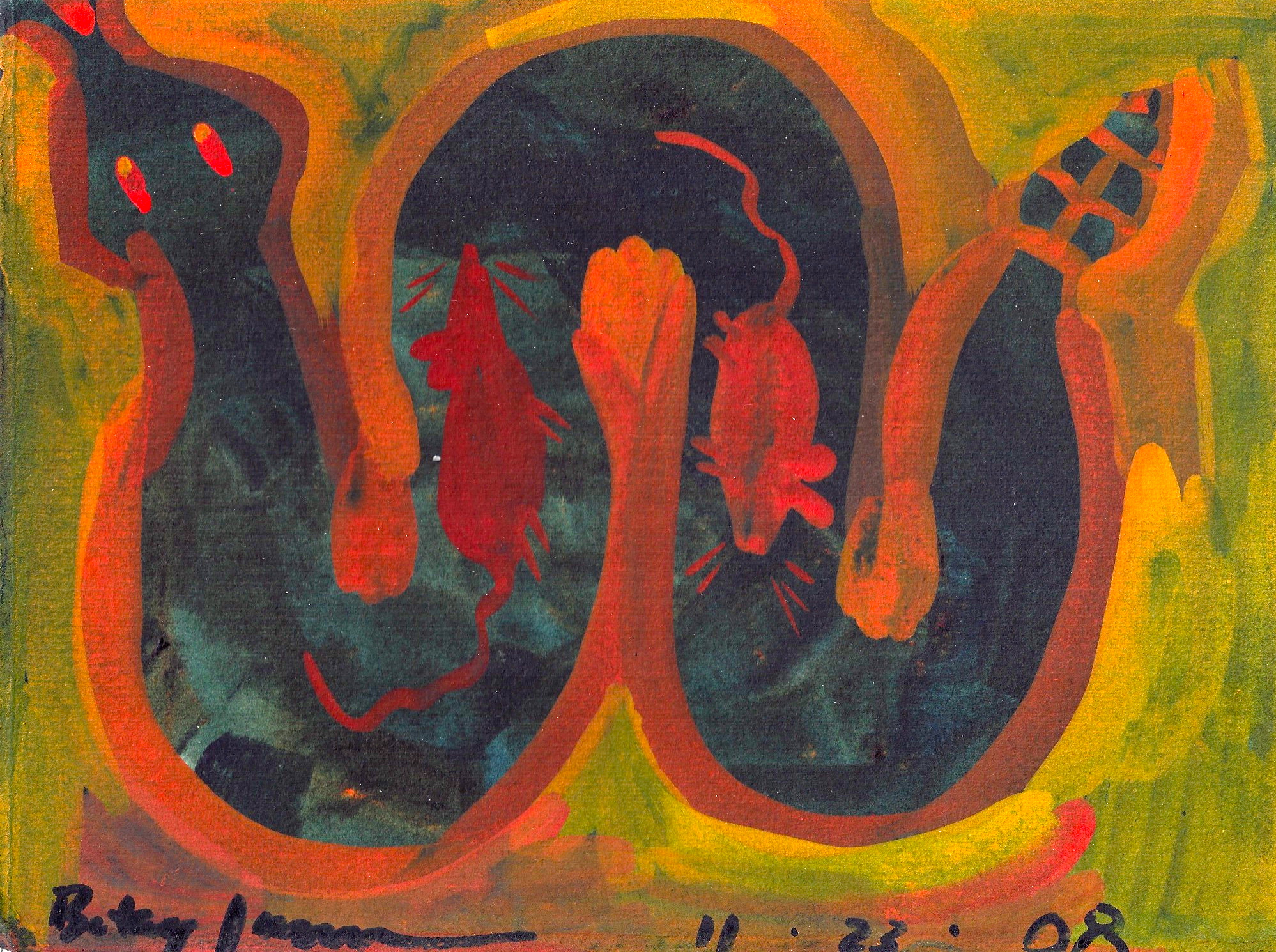
Snake and Mice EnhancedEarly in the day we saw a bright, limber young bullsnake, the diameter of a thick pencil, its body many tiny wiggles instead of the sober curves of an adult. And late in the day I almost stepped on a two-foot Western diamondback.

Its coon-tail and coon-mask were a dustier color than the bright scales in the middle of its back. It didn’t buzz, and seemed quite unbothered by our admiration. No wonder—halfway down its fat, spread-flat body was a mouse-sized bulge.

Though it didn’t react much, it knew we were there: its tongue was busy, tasting our airborne molecules. In spite of this “tongue smelling,” a rattler hunts largely by heat detection. On a summer evening, how does it tell a warm rock from a warm mouse?

Black Glass

Malpais hikerOn the Malpais, the McCarty’s lava flow, only three thousand years old. The surface looks fresh as yesterday, like Kilauea’s: so crevassed and glassy that Jan said, “On the Malpais, you don’t bruise.” We kept a sharp lookout for rattlesnakes—there’s sure to be a black morph.

The perfect, trembling webs of orb spiders stretched across the black fissures as if to draw the shattered rock together.

Where We Walk

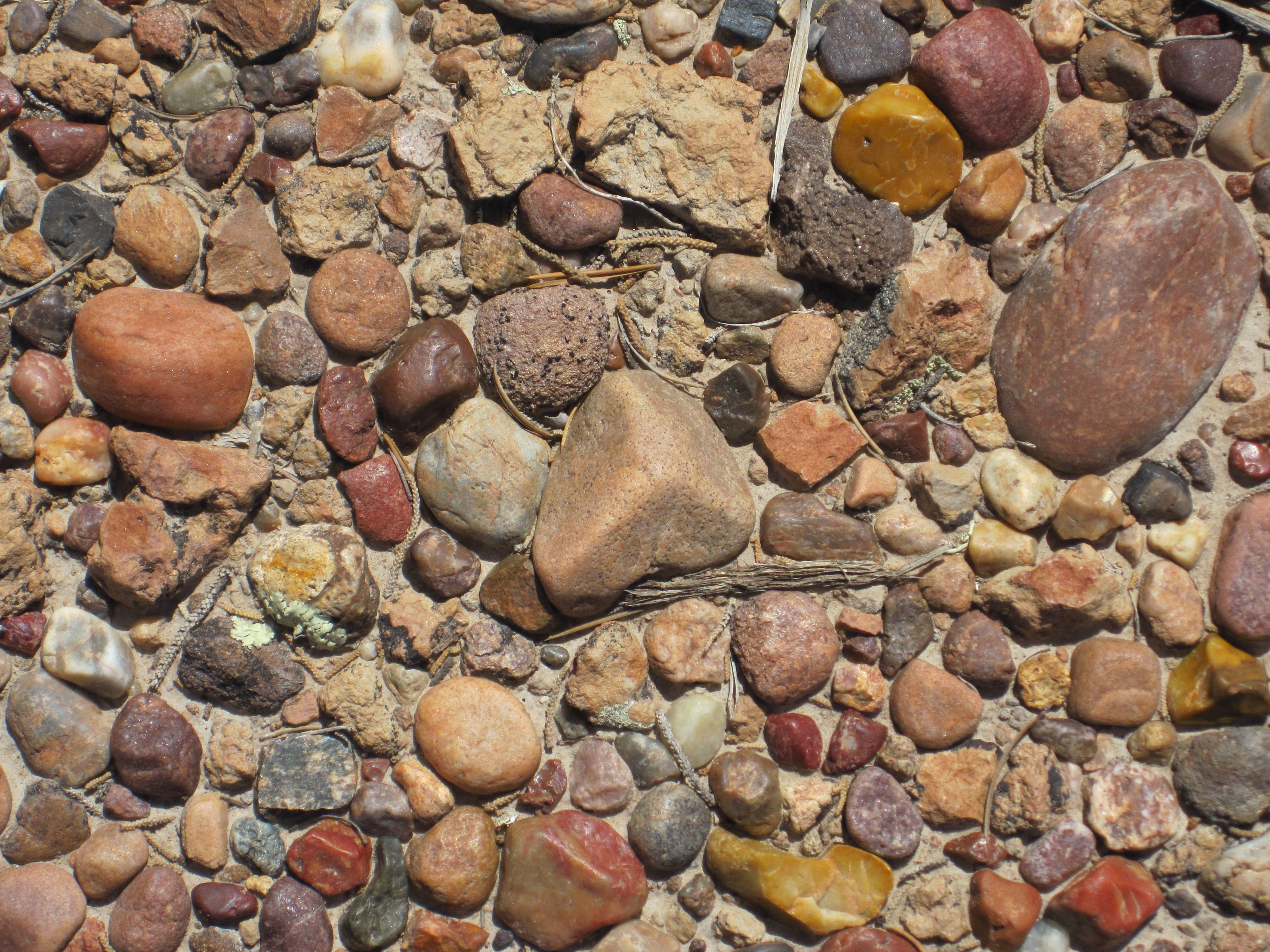
2014-06-09 02.38.21Desert pavement on Penistaja Mesa. Pebbles eroded 65 million years ago from long-lost ranges, tumbled in quick creeks and dropped at the feet of trees in green estuaries. Time and the rains wash away the clays from the polished stone. Here’s where we walk, marveling.

Caught Knapping

FlintknapperA flint knapper’s site. Flakes everywhere, all from the same crystalline quartzite core. The knapper had built himself a seat by propping a sandstone slab against two smaller rocks. Bill said he must have been an old guy with arthritis who had to get his chair just right.

To me the site seemed recent, say 300-500 years old: the slab had not toppled, the flakes had traveled only about thirty feet down the slope. But the quartzite was typically Archaic, which would put it back a thousand years at least. Possibly much more.