Category Archives: On the Creative Life

Serpentine Curves

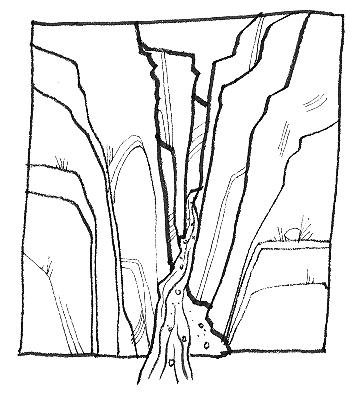
Hiking the canyon of the  Rio Santa Fe, over our heads the stone-cribbed hairpin turns that carried Spanish wagons, Civil War soldiers and Model Ts up this section of the Camino Real. The eroding pale strata of the canyon walls were capped by tumbled, slightly columnar basalt.

At the cliffs’ feet the rio’s busy water looped and twinkled. It smelled chemical; it was runoff from Santa Fe’s sewage treatment plant, equal parts groundwater from Buckman Wells and bottled water from Fiji that had been filtered through wealthy Santa Feans. Winding down that river was, no doubt, a lot of cocaine.

In the sedge at the brink I nearly stepped on a bull snake. We left, abruptly, in opposite directions.

*

Winter

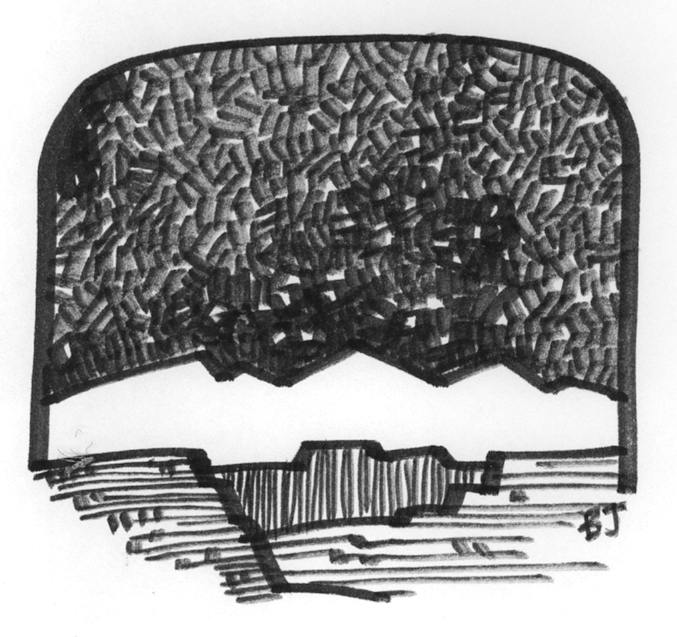
On the east ridge, looking east. Still a slight afterglow on the wrinkled, stratified, bitten and convoluted land. The snowy Ortiz rising above the mesas like ice; far away, the Sangre de Cristo peaks white, turning blue, and nothing, nothing, nothing human visible but two tiny lights, distant, almost to Santa Fe.

*

No Doubt

At Zuni: We borrowed a clutch of neighbor kids and went hiking in the windblown sand south of the pueblo. The kids were itchy and wild, flinging themselves off the red dunes, playing cowboys and Indians—funny, given that they were all Indians.

One of the adults, a fast hiker, disappeared for awhile. We wondered aloud, “Where’s Andy?” Small Brandon said seriously, “Prob’ly those Indians got him.”

*

The One Who Stayed

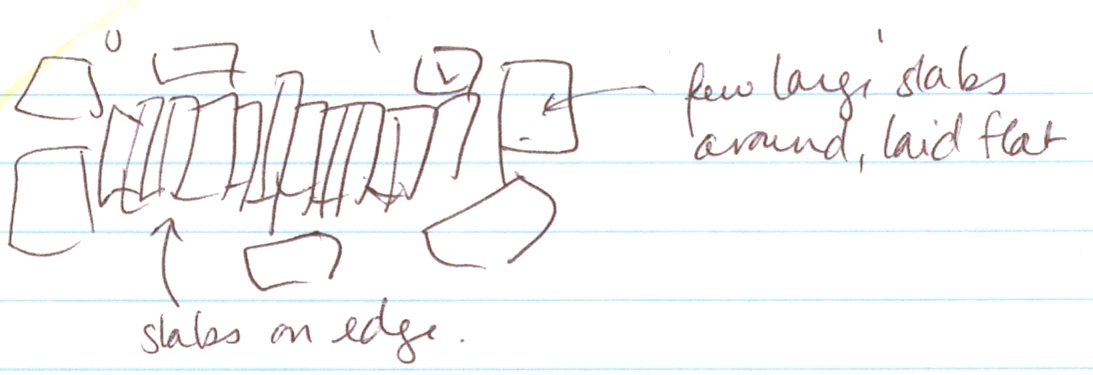
Far back on a badlands hillside, we came upon a crude corral and, to our surprise, a grave. Man-sized, oriented east-west and probably shallow, because limestone slabs had been laid densely and on edge to prevent coyotes from digging.

The site overlooked a trade and travel route in the valley. We wondered about this death. Illness? Indians? A cowboy, a shepherd, a traveler? Such a lonely place.

The land was bare, long ago grazed to gravel. In raking winter light the hillside was corrugated with grazing trails, here and there a hummock of grama to hint that all had once been grassland.  Limestone bedrock: shoe-eating, hand-ripping, home now of ocotillo and creosote bush, with sparse juniper and piñon growing along washes that were relics of wetter times.

A harsh land. Not many humans ever lived there. But one died there.

Marks

I bit a dried ball of piñon pitch. It tasted like cloves.

The wide horseshoes of mesa canyons, naked slopes of the Morrison formation, eroded, sleeked by rain and full of the sandy tongues left by its torrents: a water-made landscape without a drop of water in it.

The Morrison slopes were fissured, pristine—sandy corries where only animals had walked. Footprints of coyote, mice, ravens, deer.

*

Feel Any Different?

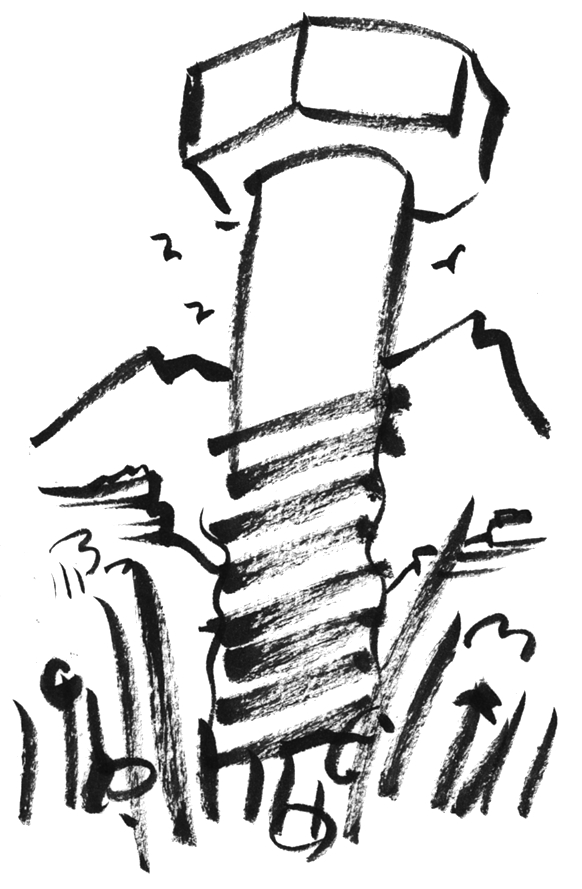
Among the lifts and holts of sandstone in the beaten, overgrazed terrain west of Albuquerque, overrun for centuries by sheep, cattle, Spaniards, Navajos, soldiers, ranchers and uranium prospectors, in the plumb middle of nowhere, we came upon an enormous galvanized bolt sticking out of the ground.

Pat said it held the universe together. With a little work, feeling like King Arthur, I pulled it out.

*

Rain Arriving

The most wonderful thing to happen in the hike happened right at the beginning of it.

There’d been rain the night before, and the clouds had half withdrawn over the mesas. Arroyos were dry. But as we crossed the first, and just as we crossed, a slow, creamy tongue of water came snaking down it.

It arrived from some far-distant cloudburst, miles away and maybe hours ago. Traveling, say, five inches per second. It was cream-colored and laden with lumps of tan foam, remnants of some fury upstream, now abated.

Best was its sound. As it moved over the dry sand it made a purr, a hiss, filling tiny underground gaps—perhaps animal or insect burrows—from which the air escaped in tiny gurgling fountains. The flow came slowly, slowly over the rippled sand.

When, five or six hours later, we hiked back, it was still running slightly, but the sand was saturated and completely silent.

*

Home on the Range

Back in the red-rock hills, the scattered ruins of a mine, thick with mechanical garbage. As though no one who worked there had ever done anything but let broken refuse fall straight from his hand.

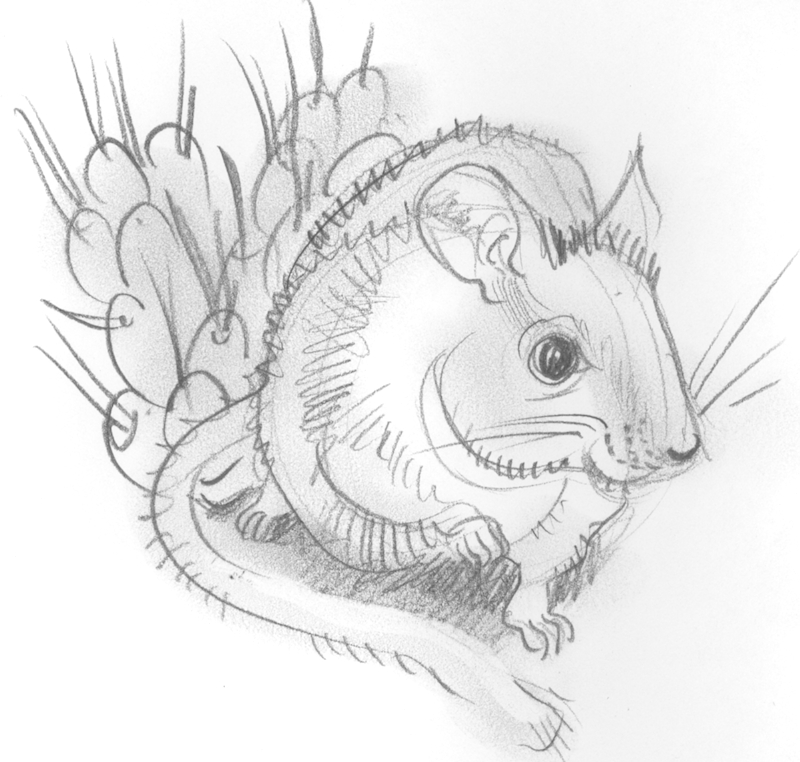
Pack rats had annexed a battered, faded-blue Dodge van and filled it, floor to ceiling, with cholla cactus. Another rat duo—they’re usually mother-daughter pairs—lived in a fairly new range: it lay on its back, the burner holes serving as windows. I opened the oven door (the roof) and looked down into the chambers. The rats weren’t home, but the clippings were still green. Nice digs.

*

Desert Skinnydipping

The Syncline: The sandstone ponds had had a flashflood through them. In the lower pools the willows were torn and  full of wreckage, but the higher ones were beautiful. We went in naked on the sandy, gravely mud.

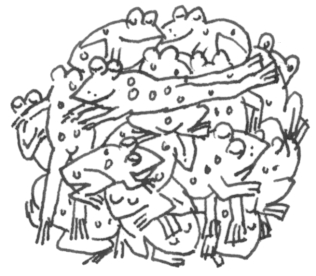
Polliwogs and froglets nibbled us. We slid down the algae-coated water chutes of the linked pools; the stream’s steady drip from pool to pool became overflow as our bodies displaced water.

So quiet! Wind in the cottonwoods, sun on the washed stone, warm breeze on bare skin. Absolute peace.

Barriers

My pencil fell out of my pack; I took these notes on a three-by-five card by scratching with a rock.

At the top of the acequia was a tunnel in the side of the mountain, originally a mine. I couldn’t see into it—it was dark and the day was bright. But away back in there I could make out a reddish door; the sound of water came from behind it. Across the square black tunnel mouth orb spiders had built three perfect webs, one after another.

*