More millipedes, six inches long and shiny as mahogany fiddles. They look like little trains, like the Coast Starlight trucking along. Many wide holes of what Jan calls “evening ants.” If you poke in a stick and bring an ant up into the sun, instantly it dies. Each hole is surrounded by a spread of tiny discarded juniper twigs.
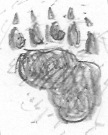
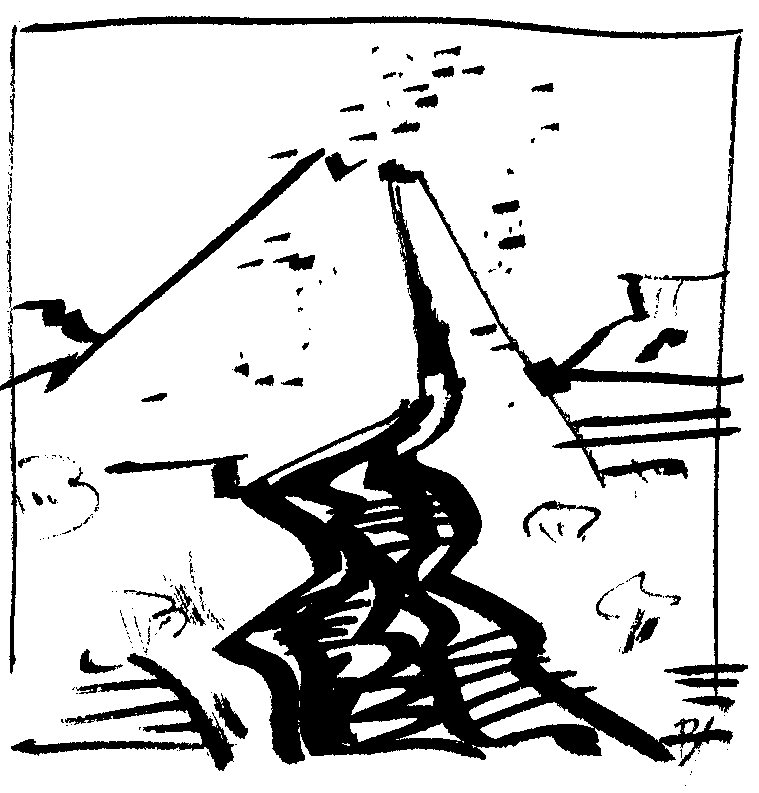
Clear bear tracks in the damp sand of the water chute.
Best of all, near the end of the long day and worn out: four adults lying on their bellies on the sandstone, watching a millipede poop.
Late summer, hiking on the syncline: dozens of millipedes, the color of polished violins, in frantic, foot-waving travel. Next spring we’ll find their husks, curled in tight spirals and weathered white as chalk.
On the road out we were passed by an enormous RV. From a distance its size-to-speed ratio was exactly that of a millipede.
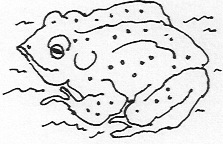
The rains have come, and with them the toads. The pools of the Syncline were full of bright red mud-water, tadpoles and predators. A slim—but no doubt well fed—garter snake with a black head took to the opaque slurry, then poked its head out like a sea serpent.
In a drying pothole were manytoadlets so small they looked like insects, not a quarter inch long. They had finished their lightning metamorphosis, but at the bottom of the hole was a gelatinous pudding of polliwogs that hadn’t grown up fast enough. Now and then there was a tiny squirm or shudder from someone in the black mass, a last effort at life.
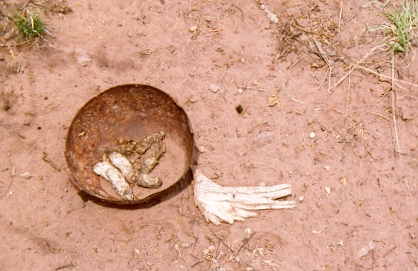
Along a dusty red two-track we came upon a ring of burned stones, a campsite that probably dated to the Thirties. In the rusty upturned bowl of a Model T headlamp, tidily deposited, was a pile of coyote poop.
On and around the Malpais, the hunter-gatherer-farmer presence of ancestral Puebloans is everywhere underfoot.
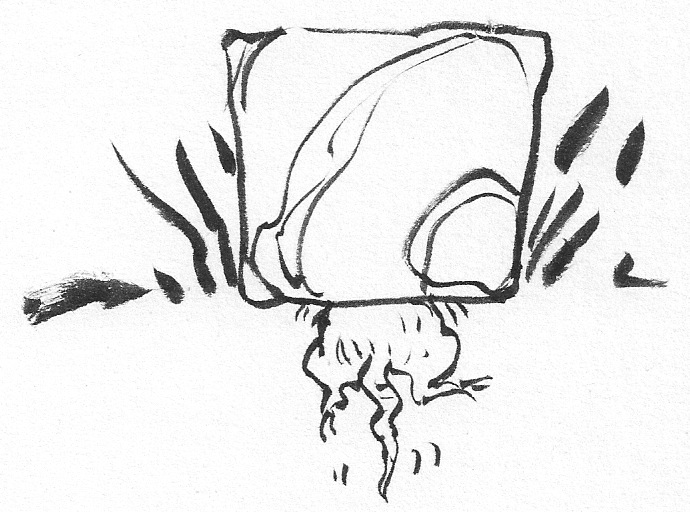
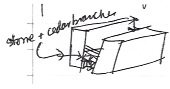
In a sandy cul-de-sac among the crinkled lava, all by itself, was a carefully-squared sandstone block that was probably a deadfall for small game: packrats, squirrels, deer mice. Jan propped it on a twig and demonstrated, remarking, at the appropriate instant, “Squeak.”
On the McCartys flow, the most recent in the Malpais. Easy walking, the lava ropy and wrinkled as a rucked-up rug, chink, chink of volcanic glass underfoot. I should have worn leather-palmed gloves; I was aware of my bare hands.
Navajo folklore has a story about the flow: the gods threw fire. Because the Navajo are recent arrivals from British Columbia—Athabascan hunter-gatherers who migrated down the east face of the Rockies and got to New Mexico around 1300—it had been suggested that the flow dated to the 1400s. But recent research says it is three thousand years old, so the Navajo myth must have risen from the lava’s burned, cindery look. Three thousand years ago it was the ancestors of the Puebloans who were living here. Surely there were frightened onlookers staring from the sandstone cliffs, watching the quick-running red river torch the junipers to flame.
This wide, dry land, faintly green with spring, and nobody as far as the eye can see. Wind roaring up from Ladrón Peak on the south horizon.
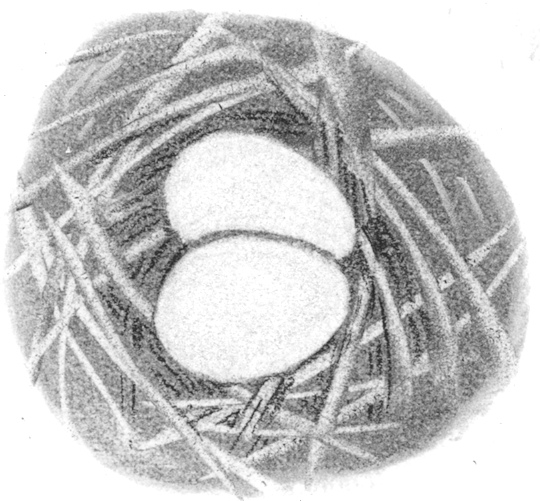
A mourning dove burst whistling from a clump of snakeweed. I thought, Hmm! Sure enough, there was her nest on the stony earth: round, shaped from dry grasses. Two exquisite white eggs in it, the newest things I’ve ever seen.
A yearling coyote had tried to leap a rusty fence, caught its hind leg and now hung upside down, dead. In an attempt to free itself it had indeed gnawed off its foot—but in the wrong place, the far rather than the near side of the entrapping wire.
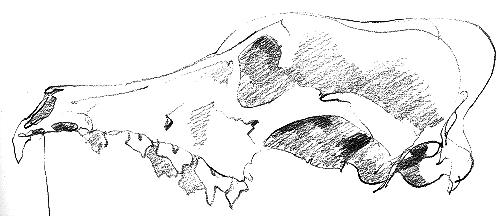
The leg bones protruded from the poor, chewed stump. In what would soon be a clean skull, its teeth were very white.
Bushwhacking in the dense piñon-juniper and oak brush that covered the mesa, on a windy day that obscured all sound. I was newly aware of how one tracks companions by constant, quick glances through the twiggage, near-subliminal glimpses every four to eight seconds: a scrap of color, a blink of movement out of place against the moving background. It’s an almost-unconscious art, and takes practice. First we lost Rob, then Gary, then John.
They all straggled in later at the car, remarking on how, in countryside like this, a group can get separated in less than a minute. Their shouts had been inaudible in the wind.
The big stock pond where we parked at the edge of the wilderness was desert-dry. Jan recalled hiking there after the monsoon, when there were so many frogs you could hear them two miles away. He said, “Dug in under that dirt are a hundred thousand frogs, waiting for rain.”
On our way back we crossed the pond’s dry bed, walking on thousands of frogs.
*
Betsy James on Writing, Art, and Walking in the Desert