Category Archives: On the Creative Life

Red

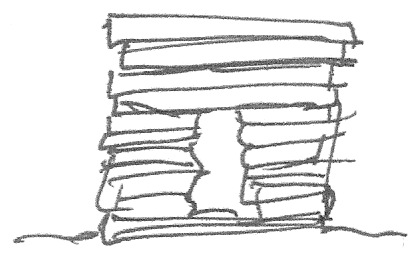
Sheepherders monumentRed Mesa. The redness of the rock, and of the plants as well. Even the grass is red at the base. Perhaps that’s just the color it is—it might be Little Bluestem, such a contradictory name—or maybe it picks up the iron in the soil. Tracts of red sandstone are covered—covered—with knobby, black, marble-size concretions.

At the edge of the rugged canyon is a sheepherder’s monument, a two-legged stack of red sandstone reminiscent of an Inuit inuksuk. Old cairns mark the sheep trail down into the barranca.

Three big red potsherds lie where a pot was dropped, hundreds of years ago.

*

Realism

Narrow ArroyoOn a promontory, a huge Archaic campsite. People had slept in that sandy hollow for millennia, for it was black with firepits, and at times it must have been a trash heap. But Archaic trash, unlike our own, was nothing: the husks of wild grasses scattered by the wind, the femur of a mountain sheep smashed for the marrow, a few human turds.

Halfway down the steep canyonside, irrevocably stuck, abandoned and stripped, was the shell of a vehicle of the species we call a “poodle jeep”: iridescent green, with graphics. Somebody thought that advertisement was real.

Ever Deeper into Time

Fossil fern 2To the Syncline, where we watched a pair of ravens build their nest. Among the braided channels of the arroyo was a beautiful Archaic metate—a smoothly pecked, scooped-out bowl in the bedrock, say two thousand years old.

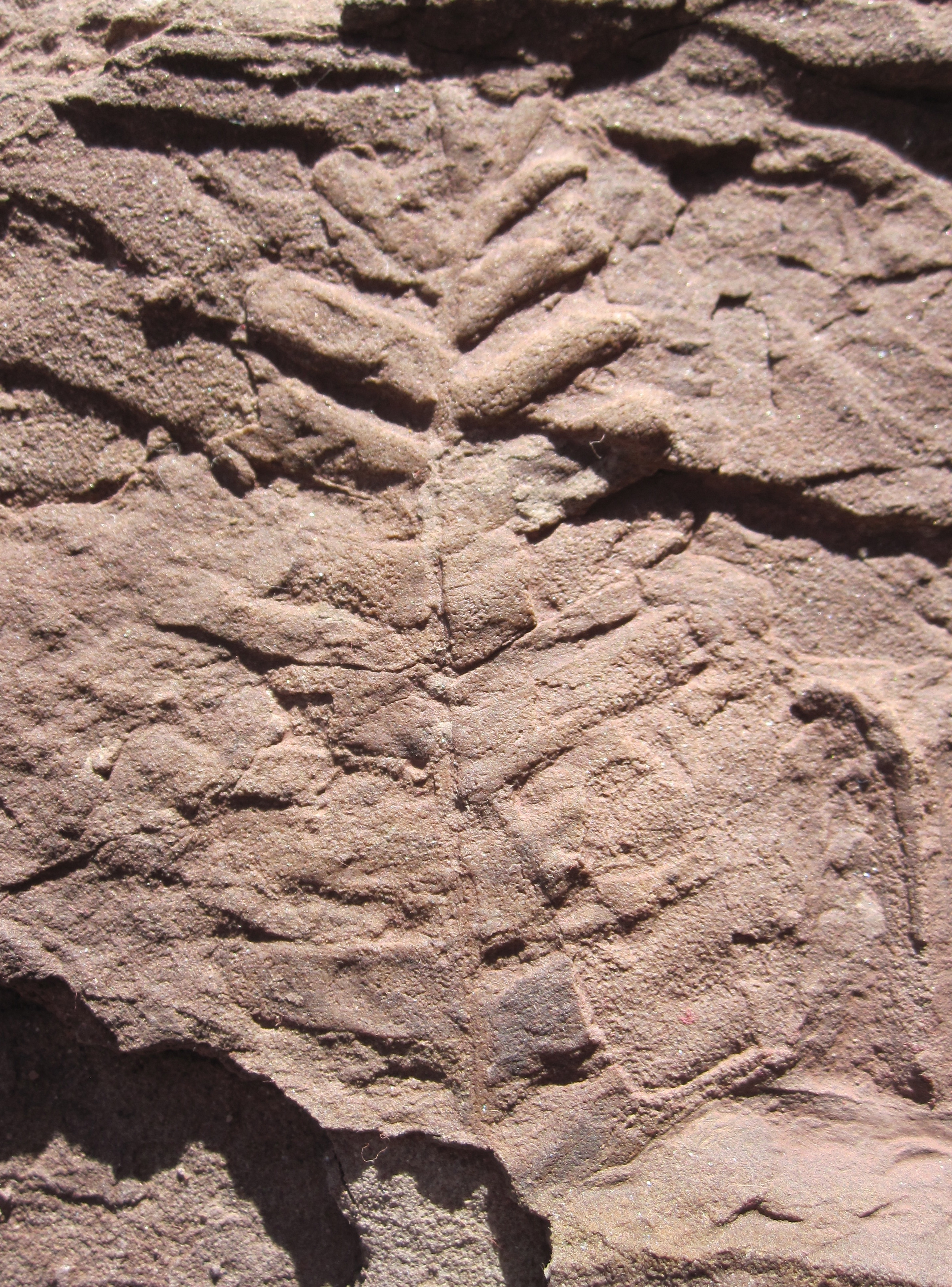
As we scrambled a rocky side canyon I came upon a desert-varnished boulder with the impression of three ferns, tidy as a museum exhibit. Probably Triassic: more than two million years. Later I went back to look for it. I found the ravens’ nest, but the ferns were lost among the trillion stones of the canyonside.

Unforced

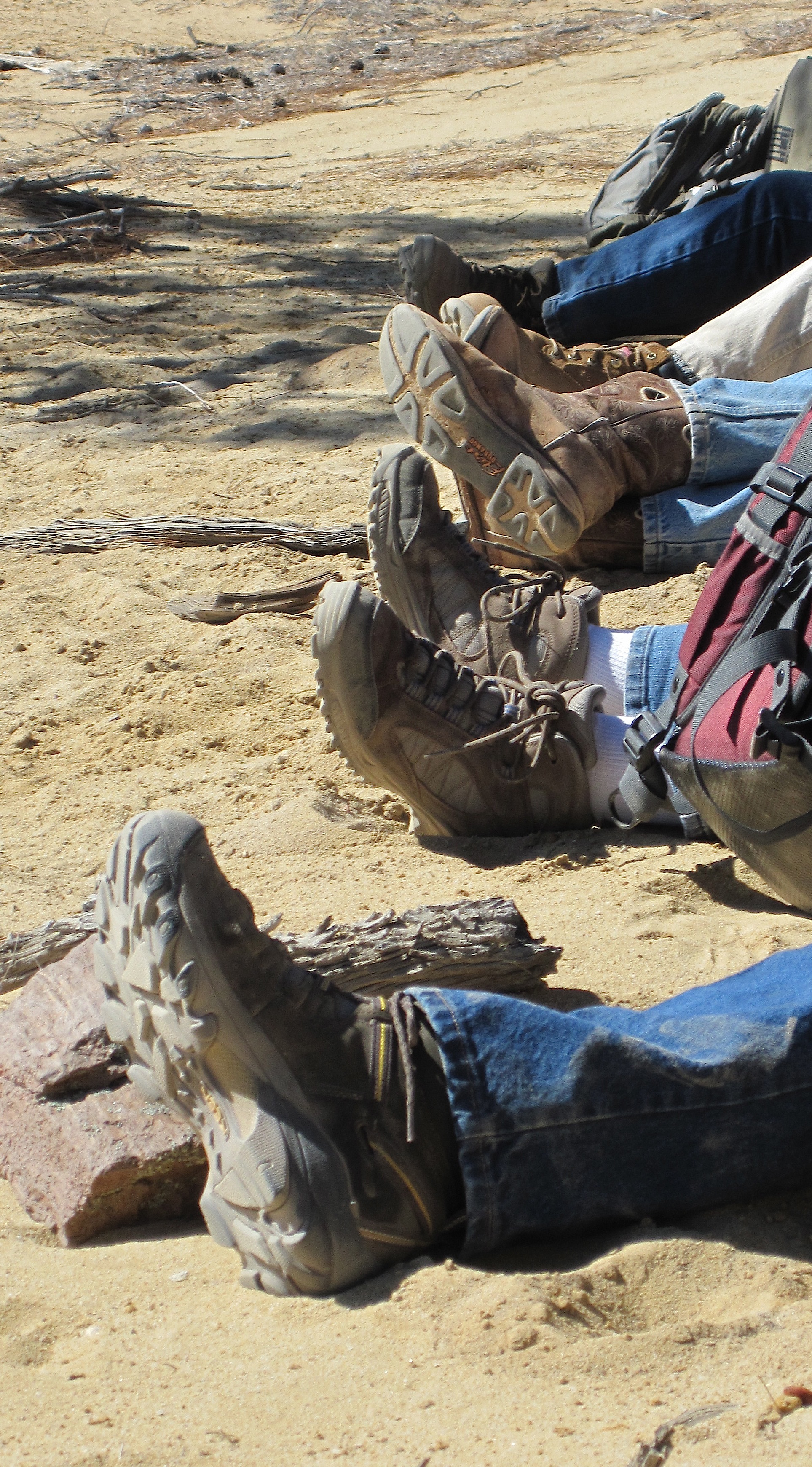
Boots 2014-02-24 cropPenistaja Mesa, tohellandgone west of Cuba. Cabezón dim and blue on the horizon. Tertiary strata, sometimes black with almost-coal. Everywhere petrified wood: enormous whole logs weathering into chips, as though we walked through slash left by a mad stone woodcutter.

Penistaja is probably a corruption of the Navajo binishdaahi’, “I forced him to sit.” So we sat.

Mud and Invisibility

MountainArroyoDB124Hidden Mountain on the Puerco. Crossed the sedgy wash in bare feet because the Chinle red mud stuck like glue and gooshed up between my toes. Tried to clean my feet with snow, sand, paper towels. Useless! Had to use precious water from my canteen. My hiking partner, who tried to cross without taking his boots off, did a Three Stooges pratfall smack in the mud.

All along the hogback there are sulphurous spring deposits.  One is a breast, the nipple a round pool a handspan wide where cold water bubbles up.

All of this is perfectly visible from Amtrak. I’ve ridden Amtrak. Never noticed.

Wilderness First Aid

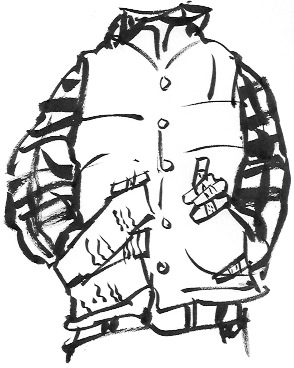
Wilderness first aidTo the Ojito Wilderness with a friend and his big German shepherd,  Chaco. Not thirty yards from the car, Chaco joyfully jumped me. I tried to yank my hands out of the pockets of my $2.50 Goodwill vest to fend him off. It tore, and clouds of duckie down floated away on the wind.

We patched the rips with radiator hose repair tape and Band-aids.

Hard Times

TwoTrackDB124Arroyo de la Caña. A small, gray-tan bobcat caught by its hind leg in a “legal” trap. Not much bigger than a house cat. It growled at us in a singsong. We came as close as we dared.  One of us—not wise to the strength and wildness of bobcats—wanted to throw a coat over it and try to release it, in spite of its broken leg.

As we hiked away a fierce-faced, bearded man drove up in a big pickup. Bobcat skulls, and probably skins, bring a price. I’m not sure how much, but New Mexico is very poor.

Holy Water

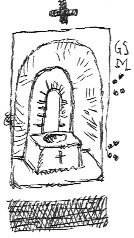
Shrine Cebolla Wilderness 1In the Cebolla Wilderness, an abandoned ranchito with tin shack and corrals. North of it was a steep, stone arroyo with a spring at its head. Filling the gap between two huge stones, a springhouse had been built around the frozen pool. Inside, back in the dark and the smell of water, a tiny shrine was cut in the living rock.

The chisel marks were clear. The santo that had stood there was gone, as was the grille that had protected it, though the scars of the grille’s hinges remained. The empty nicho was touched with blue paint. Carved in front of it was a shallow bowl—for a votive candle, or for water from the spring? There was a stone  to kneel on.

The dim interior, the narrow rock passage and frozen pool, the tiny shrine: it felt like a megalithic tomb, something much older than itself.

*

Rock and a Hard Place

Hiker & mesaBushwhacking near the Continental Divide Trail. Broken land: stone, mud, sand, concretions. Overall colors are dun, but sometimes, bright against the yellow, a deep red or black. Weathered, skeletal, not a land friendly to humans. No water but the distant Puerco River. Sagebrush and juniper—the piñon is dead from drought.

The particular crisp softness of walking on frost-heaved Cretaceous dirt.

A doe and her grown fawn floated away from us, bouncing light as…but nothing bounces light as a deer.
*

Room with a View

Sheepherder shelterWarm sun, nippy wind. Socks full of stickers, had to stop every quarter mile to pick them out.

North of Stud Stallion Wash we crossed the pitted sandstone to the ridge. Tucked in a cliff face below a little ponderosa and above a cluster of dry tinajas—natural rain catchment tanks—we came upon what was probably a nineteenth-century sheepherder’s hole-up.

It was a smoke-blackened rock shelter partly enclosed by a stone windbreak. Cozy place. You could spread your skimpy bedroll behind the stone wall and look out over the wide saddle of the syncline with its mysterious stone circles and prehistoric deer-hunter meadows and, at night, a field of stars.

*