…a Giant Sequoia.

…a Giant Sequoia.
See July 5 post. What are they?
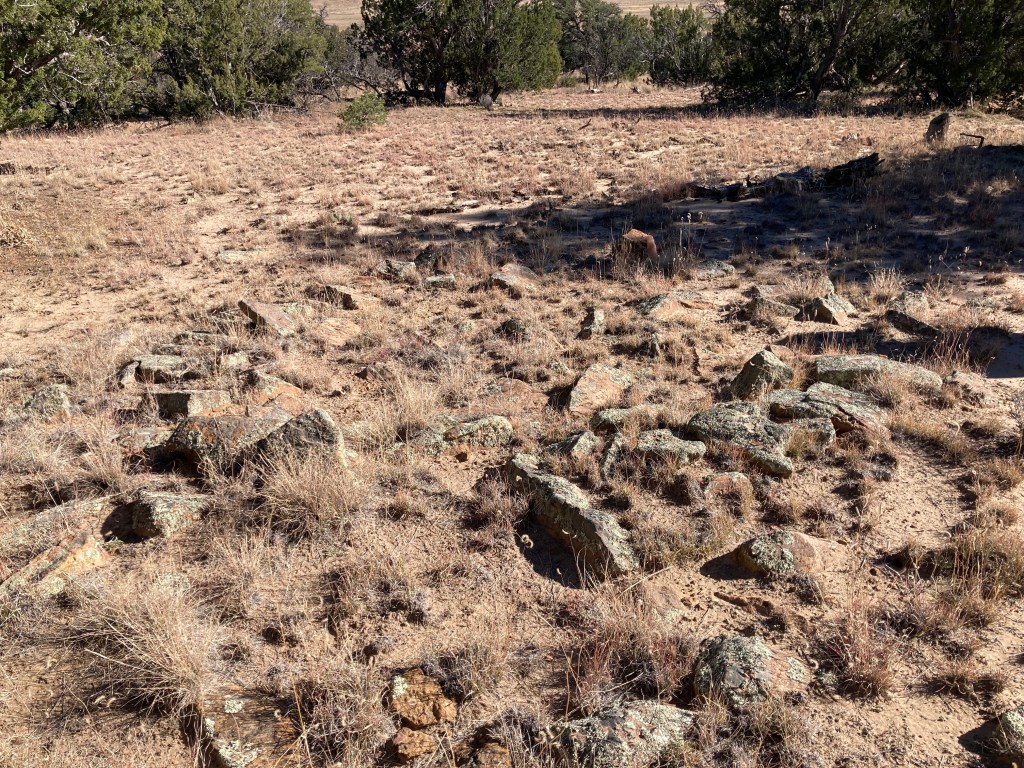
Like the circle in the earlier post, this one was in the wrong place and with the wrong doorway opening to be a hogan ring. Its lichened stones were next to the collapsed foundations of a Puebloan fieldhouse, ca. 1300s (my best guess; post-Chaco). But it didn’t have the sunken center typical of a kiva depression, and seemed too small for that as well.
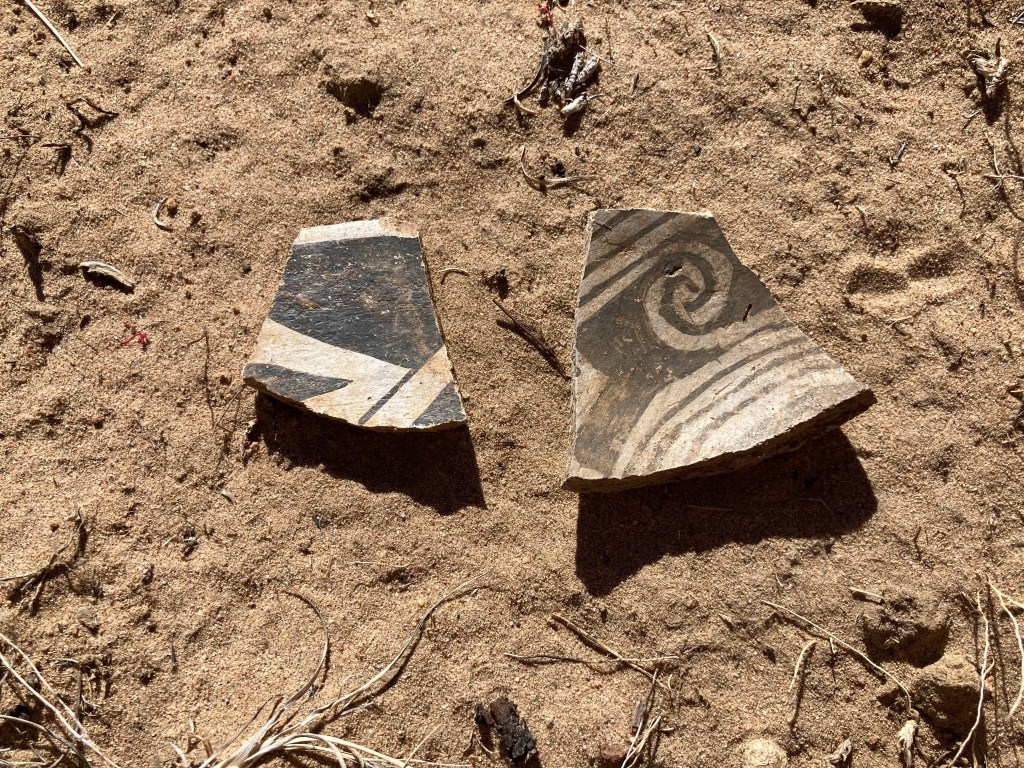
Beautiful potsherds.
Remember to turn potsherds face down again to protect the paint.
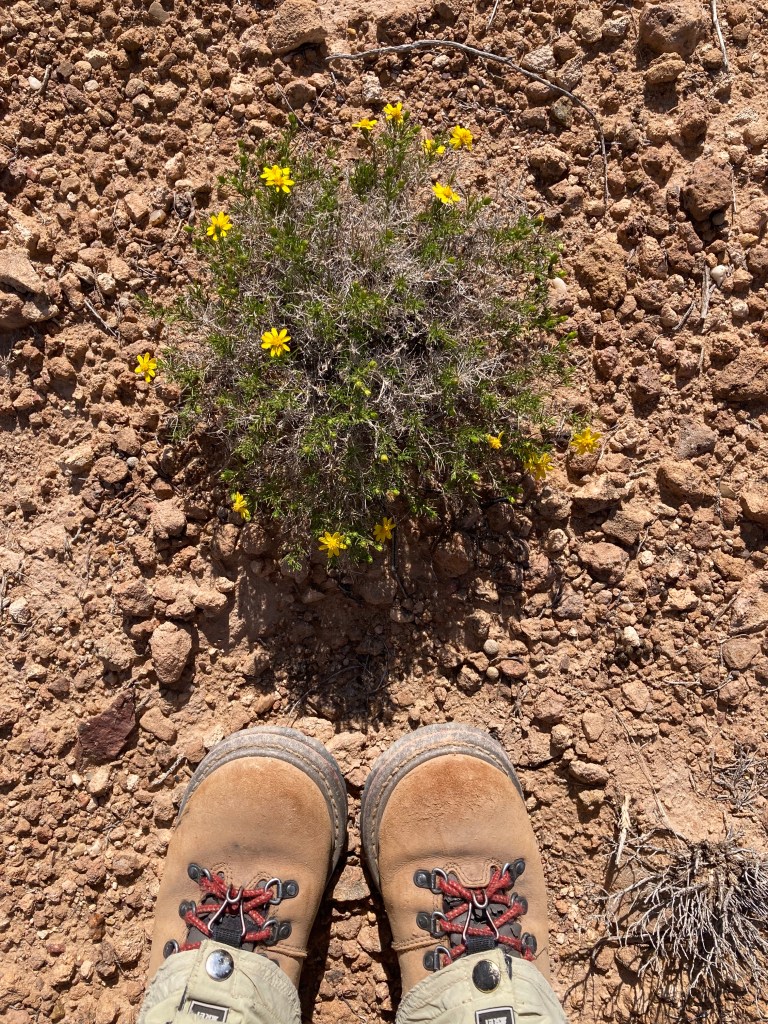
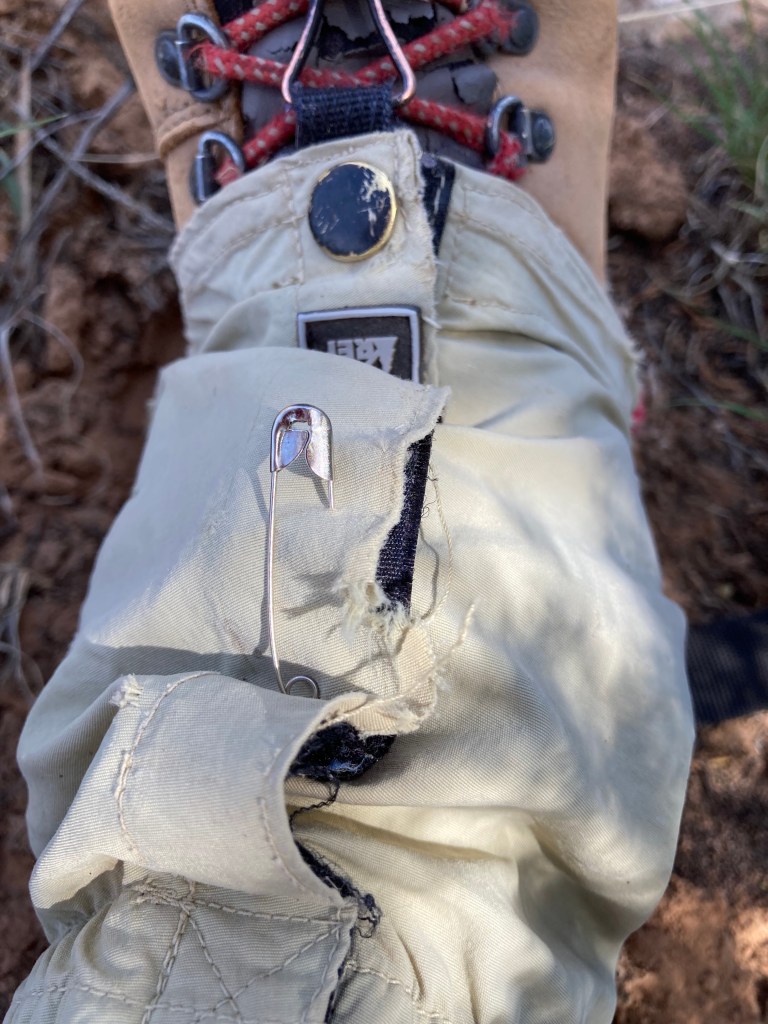
Still too hot for more than a short hike, but there had been rain; there’s hope for a cooler season. The gaiters need mending:
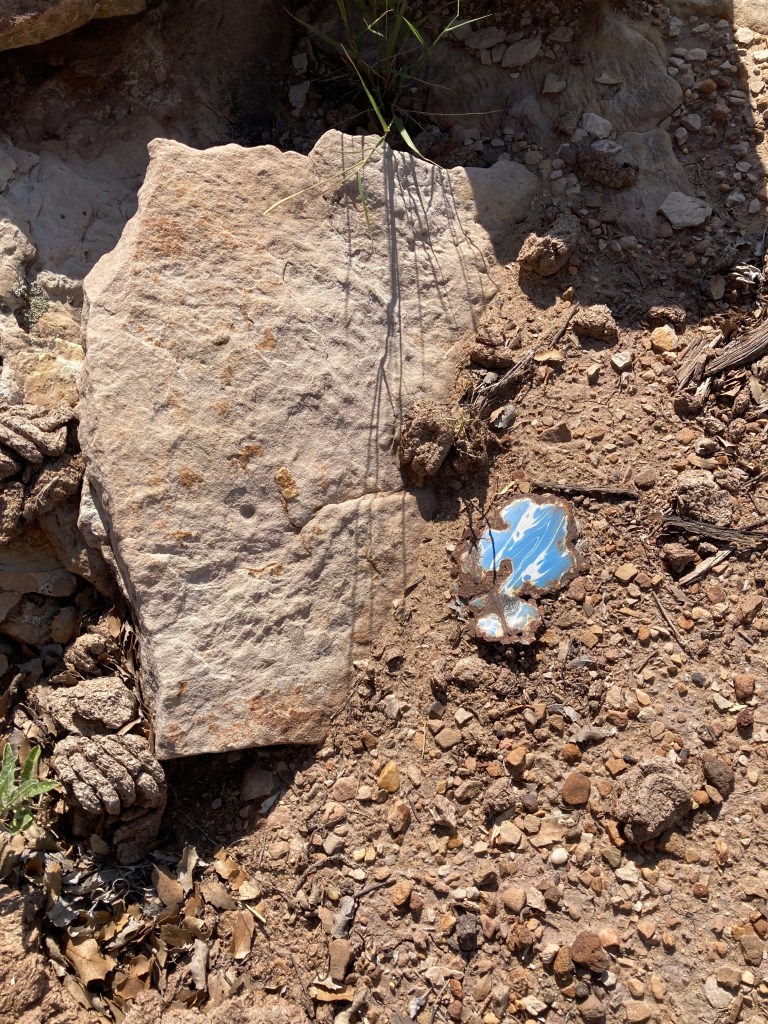
…but—next to the fallen foundation of a Navajo hogan—that old blue enamel coffee pot may be beyond repair.
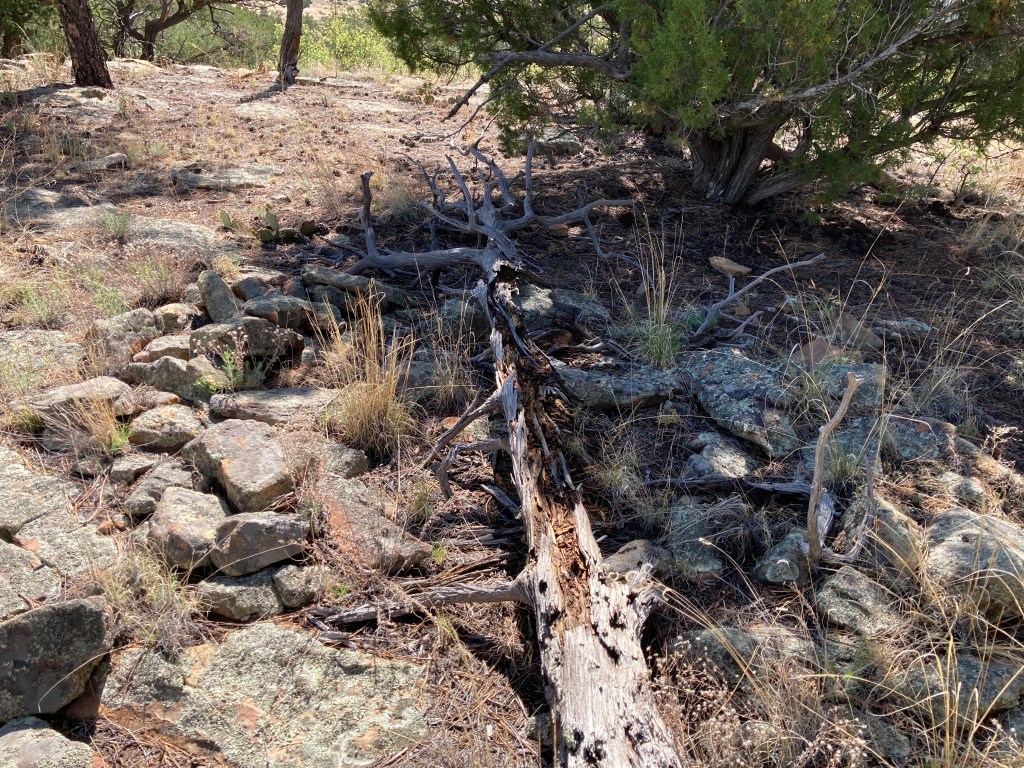
Not Navajo. Often a stone circle is the foundation of a traditional hogan, but this is in the wrong place–over a lava field, no grazing near–and the “doorway” break faces west, not east.
Puebloan? There are tumbled Ancestral Puebloan structures in the neighborhood, but they’re all square-cornered. Nor can it be a kiva, because it was built right on the sandstone slabs.
The fallen ponderosa that divides it neatly in half is old, but thick lichen says the circle is much, much older.
What was it?
In a midden scatter tumbling far down a slope, three pieces of utilitarian pot that have lain so long separated, on different soil types, that each has weathered to its own color.
Perfect fit.
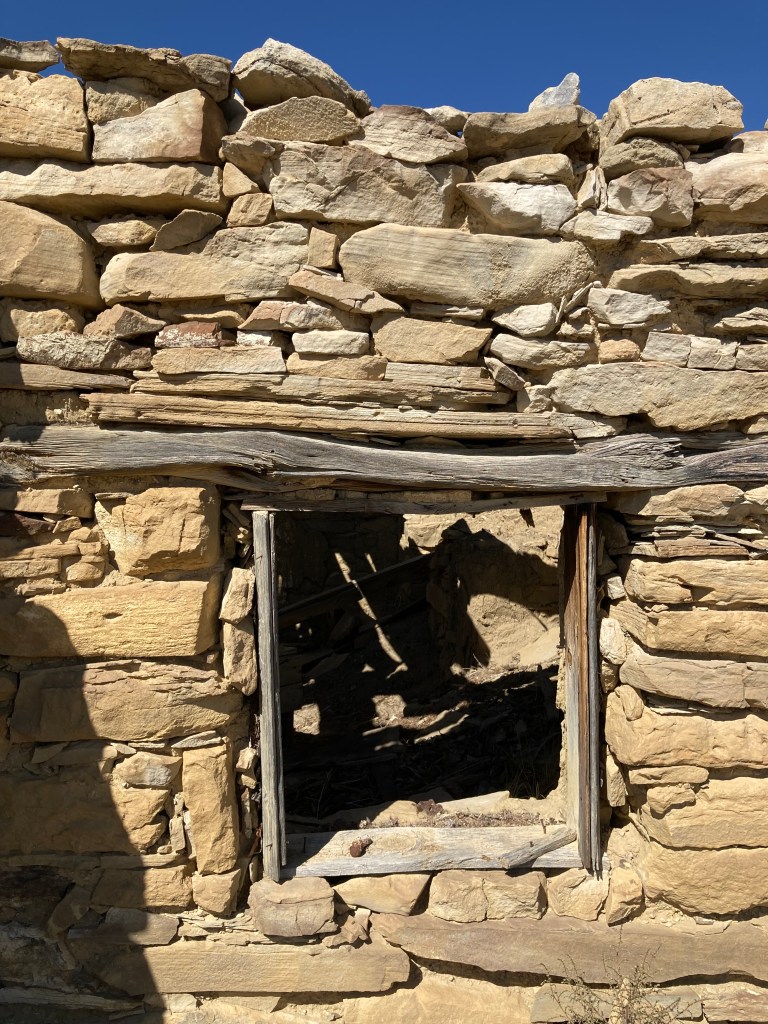
A nineteenth-century Hispanic homestead, long abandoned in its broadcast midden of rusty metal and purple glass. Axe-cut and adze-hewn beams, windows and doors trimmed with dimension lumber.
It was the first day cool enough, morning only, to scramble and side-hill in the mesa’s shadow. By noon the pale Cretaceous clay was too hot for pleasure.
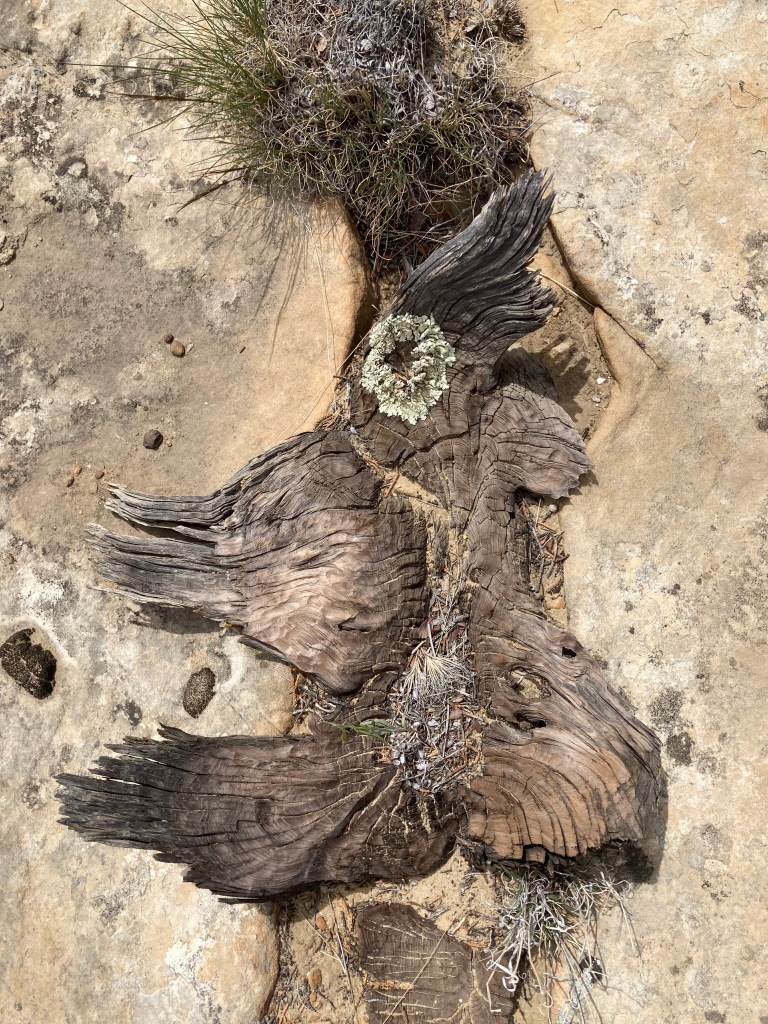
Lightning-struck.
Burned to the stones, then scoured flush by weather and time.
A tiny–1.7 cm–obsidian point, probably Ancestral Puebloan.
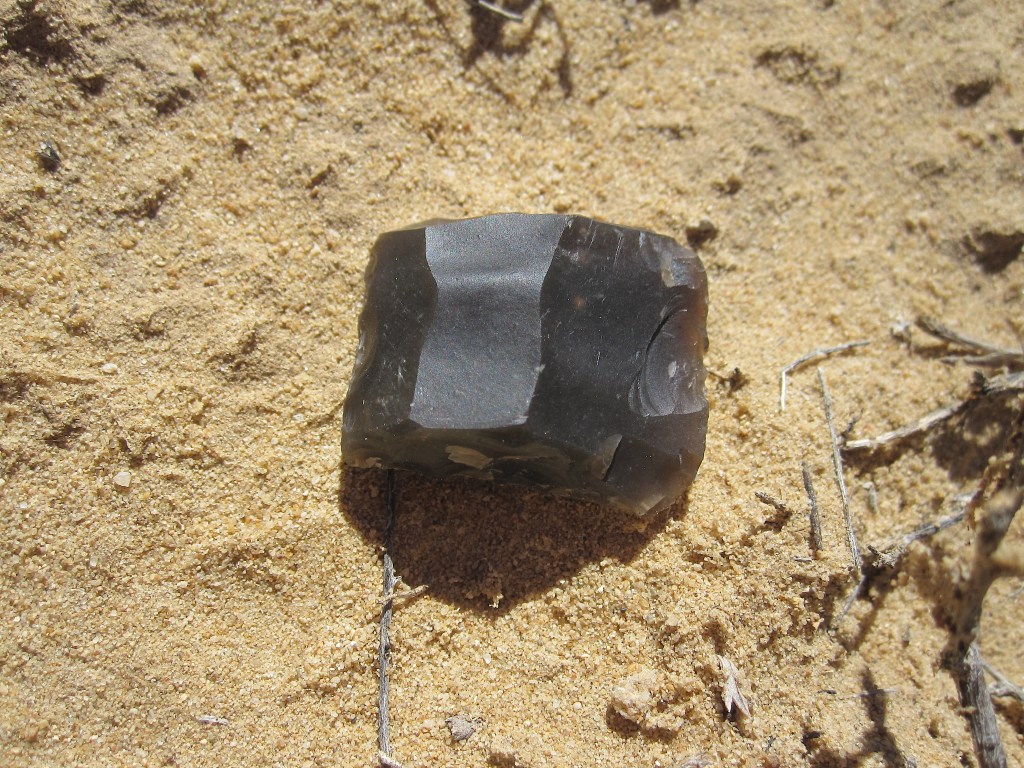
Flint from a flintlock–Navajo, at a guess. The flint itself is probably from the Brandon flint mines in England, knapped there and imported as a finished product.
Remains of a WWII dummy bomb. The brightly-colored sands and clays of the desert were exploited as targets.


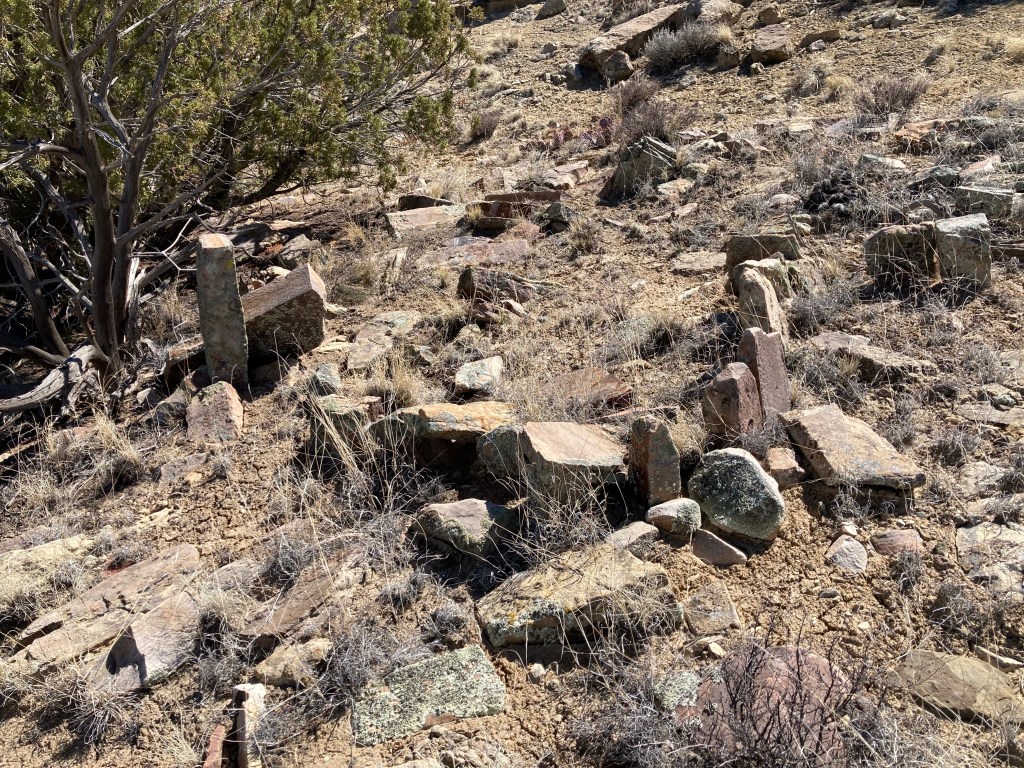
The square-cornered foundation and a couple of scattered sherds say Ancestral Pueblo, but both the vertical orientation and the size of the stones are unusual and impressive. Walls and roof–jacal style, the Southwest version of wattle-and-daub–have long since dissolved into the desert clay.
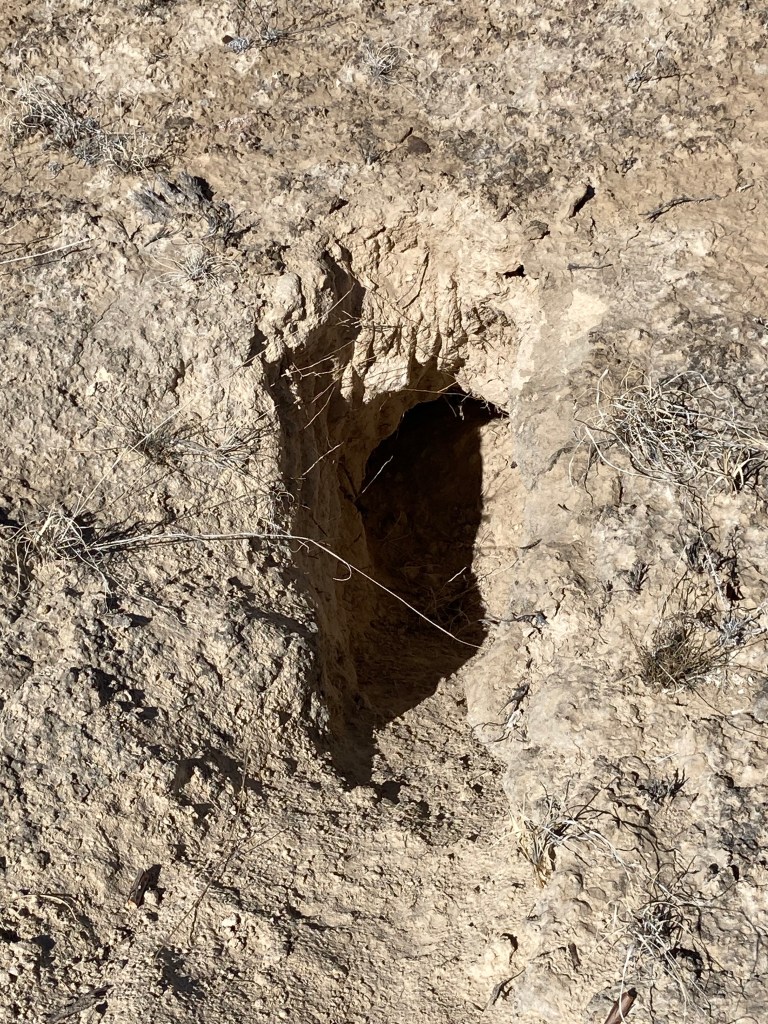
And another house. I have no idea whose, but the excavator left their claw marks above the doorway.
 WORLD-BUILDING and WILDERNESS: