All posts by Betsy James

Wilderness First Aid

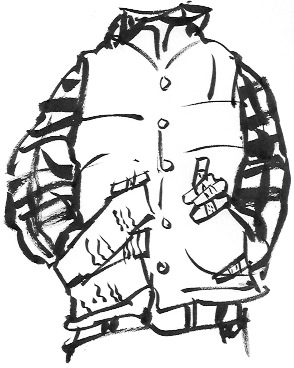
Wilderness first aidTo the Ojito Wilderness with a friend and his big German shepherd,  Chaco. Not thirty yards from the car, Chaco joyfully jumped me. I tried to yank my hands out of the pockets of my $2.50 Goodwill vest to fend him off. It tore, and clouds of duckie down floated away on the wind.

We patched the rips with radiator hose repair tape and Band-aids.

Hard Times

TwoTrackDB124Arroyo de la Caña. A small, gray-tan bobcat caught by its hind leg in a “legal” trap. Not much bigger than a house cat. It growled at us in a singsong. We came as close as we dared.  One of us—not wise to the strength and wildness of bobcats—wanted to throw a coat over it and try to release it, in spite of its broken leg.

As we hiked away a fierce-faced, bearded man drove up in a big pickup. Bobcat skulls, and probably skins, bring a price. I’m not sure how much, but New Mexico is very poor.

Holy Water

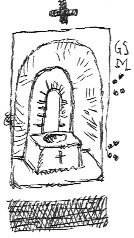
Shrine Cebolla Wilderness 1In the Cebolla Wilderness, an abandoned ranchito with tin shack and corrals. North of it was a steep, stone arroyo with a spring at its head. Filling the gap between two huge stones, a springhouse had been built around the frozen pool. Inside, back in the dark and the smell of water, a tiny shrine was cut in the living rock.

The chisel marks were clear. The santo that had stood there was gone, as was the grille that had protected it, though the scars of the grille’s hinges remained. The empty nicho was touched with blue paint. Carved in front of it was a shallow bowl—for a votive candle, or for water from the spring? There was a stone  to kneel on.

The dim interior, the narrow rock passage and frozen pool, the tiny shrine: it felt like a megalithic tomb, something much older than itself.

*

Rock and a Hard Place

Hiker & mesaBushwhacking near the Continental Divide Trail. Broken land: stone, mud, sand, concretions. Overall colors are dun, but sometimes, bright against the yellow, a deep red or black. Weathered, skeletal, not a land friendly to humans. No water but the distant Puerco River. Sagebrush and juniper—the piñon is dead from drought.

The particular crisp softness of walking on frost-heaved Cretaceous dirt.

A doe and her grown fawn floated away from us, bouncing light as…but nothing bounces light as a deer.
*

Room with a View

Sheepherder shelterWarm sun, nippy wind. Socks full of stickers, had to stop every quarter mile to pick them out.

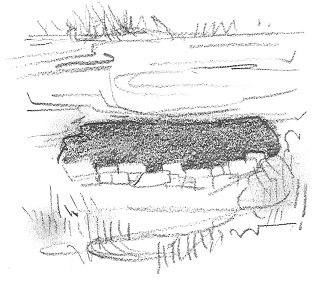
North of Stud Stallion Wash we crossed the pitted sandstone to the ridge. Tucked in a cliff face below a little ponderosa and above a cluster of dry tinajas—natural rain catchment tanks—we came upon what was probably a nineteenth-century sheepherder’s hole-up.

It was a smoke-blackened rock shelter partly enclosed by a stone windbreak. Cozy place. You could spread your skimpy bedroll behind the stone wall and look out over the wide saddle of the syncline with its mysterious stone circles and prehistoric deer-hunter meadows and, at night, a field of stars.

*

Local

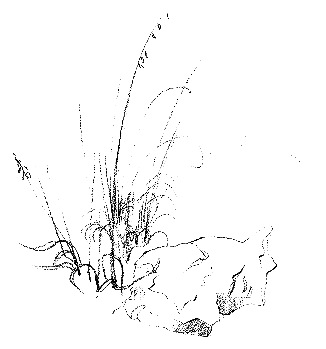
The spareness of the desert: a small hill was home to seven  clumps of terra cotta-pink grass. Beyond it, dark piñones echoed their humped shape. All carefully spaced; plants form a community, yet they’re individuals who live with each other at a social distance.

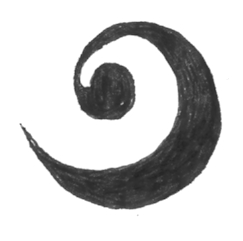
I drew the fossil of a spiral snail shell embedded in a gray limestone boulder.

*

*

Strange Beach

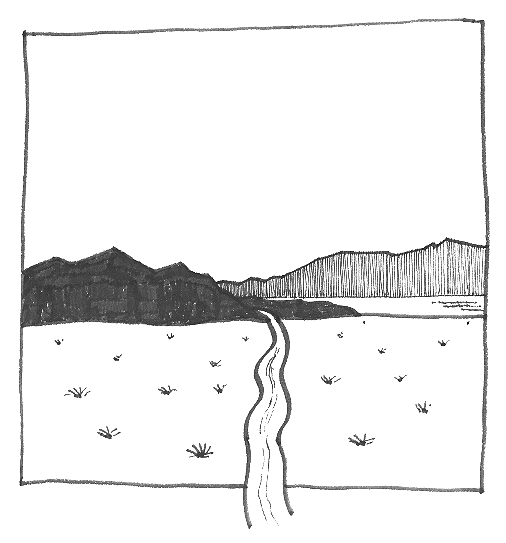
GrassDB131Season of dry grasses.

The road turned to dirt, then to a two-track that petered out and became a trail. Two young buck deer moved away from us quietly, up the far side of the draw. Two-year-old males: Jan calls them “forkéd horns.”

On a pumice outcropping lay, face down, a Surfer Ken doll in board shorts that had once been blue and yellow. I turned him face up, to catch some rays and even out his tan.

*

Time. Time.

SplitMesaDB172Rambling in a rubbly, lunar, black-and-tan landscape where nothing grows but saltbush. Water-scoured sediments, here and there a hunk of dinosaur bone, and hundreds of stones so  polished they might have been tipped from a rock tumbler. John, the geologist, says they’re gastroliths: dinosaur gizzard stones.

“Swallowed by dinosaurs as they traveled their migration routes,” he said. “Maybe hundreds of miles long. None is bigger than a grapefruit; if they were the result of normal deposition they’d be more varied in size, with no upper limit. And they’re all exotics, not from any source near here.”

“Then where are they from?”

He said, “The mountain range they came from has long since worn away.”

*

Ow!

Prickly pear 3-27-10The first cactus: I hopped the fence onto the Malpais, and with my first step ran into a cholla. Guess I haven’t been hiking for a while.

The second cactus: side-hilling down from the sandstone ledges, I slipped on the scree and my right hand, which I put out instinctively to catch myself, landed smack in a prickly pear. Stabbed full of big spines, furred with gloccids. I had to stand where I was and pull the spines out; got most of them, but a few I’ll bear to my grave like shrapnel.

*

Now That’s Steep

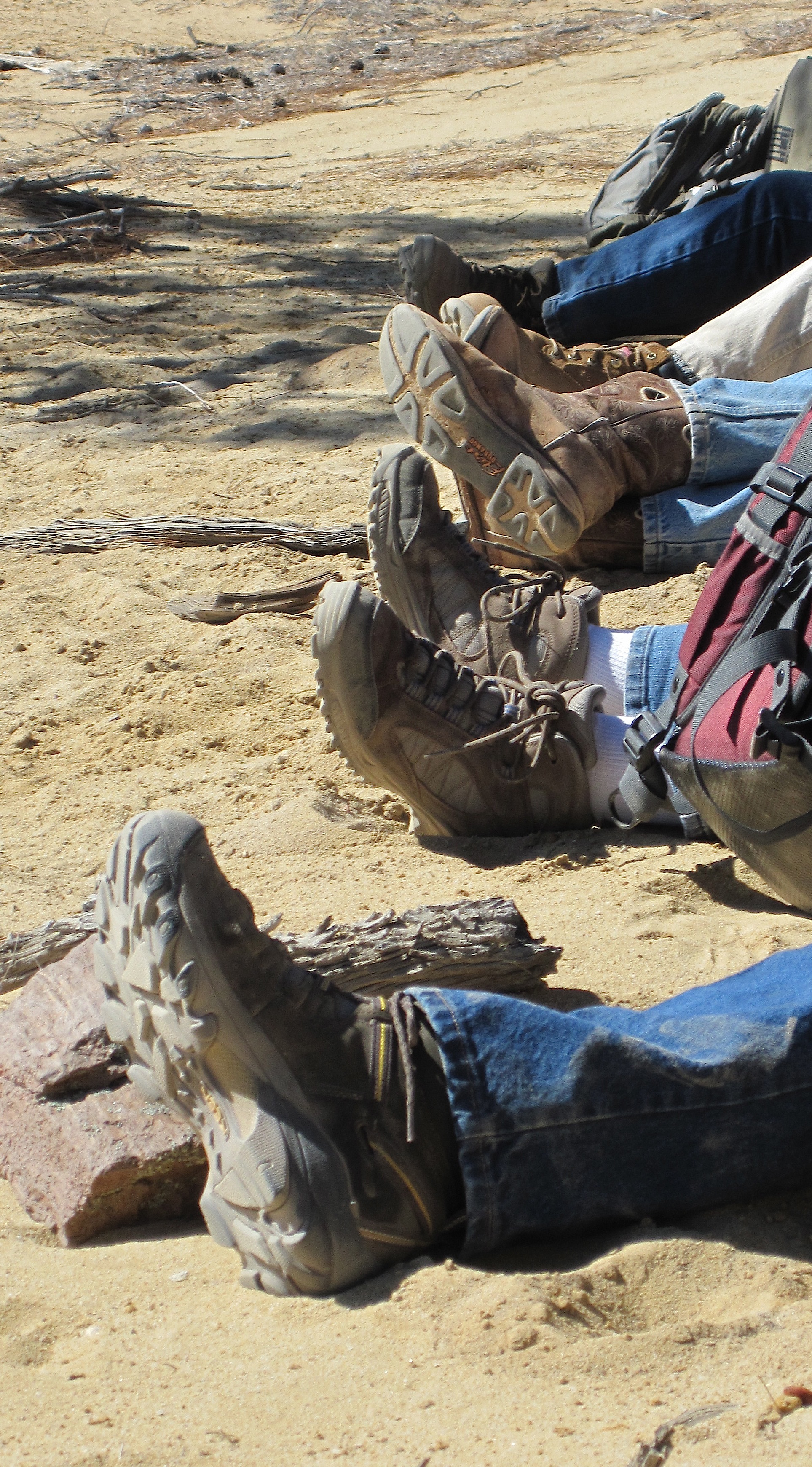
Cow's faceA friend from Oklahoma said, at the end of a daylong hike, “I have wore myself slick.”

I had too. I thought how grateful I am to inherit useful expressions like that, often from old ranchers like Jan’s infamous Uncle Clyde. “Raining like a cow pissing on a flat rock.”  “Hotter than a June bride in a feather bed.”

My favorite Uncle Clydeism, though, is “Steeper than a cow’s face.” Right. On hikes like that I have wore myself slick.

*