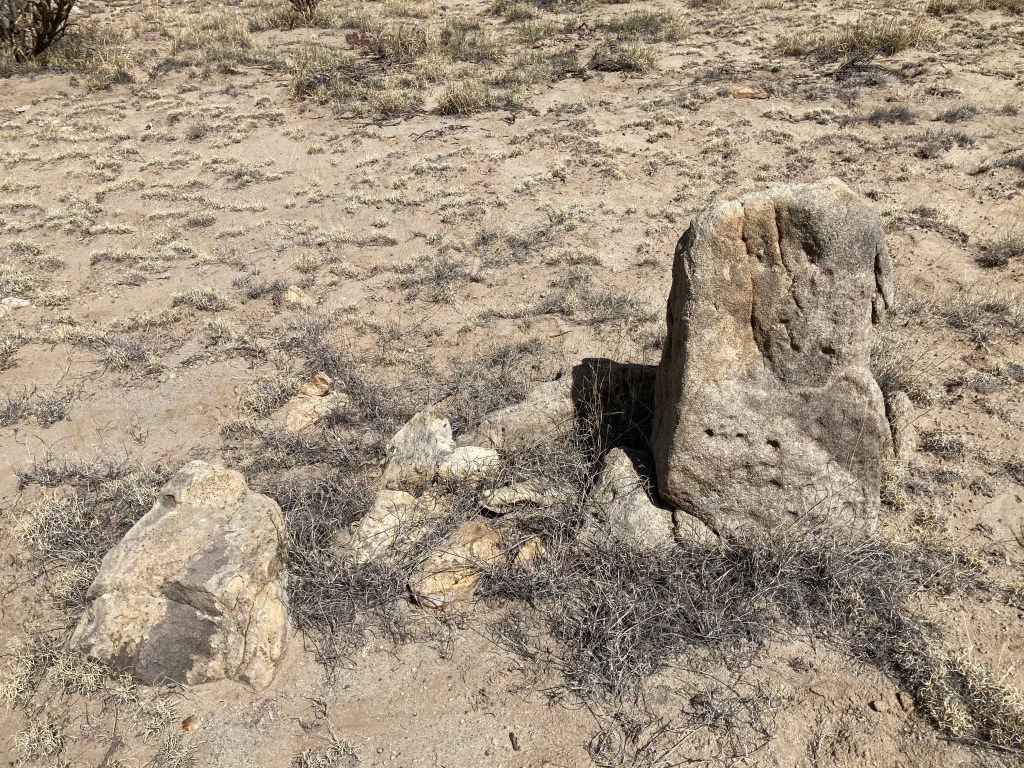
It stands in the middle of one of the linked plazas of a remote, dusty, fallen Pueblo complex that was abandoned, probably because of drought, sometime about 1200 C.E..
It’s not a grave. Ancestral Puebloans didn’t do graves with headstones.
It looks shrine-ish. The unassuming shrines of the Pueblos are often a careful pile of stones.
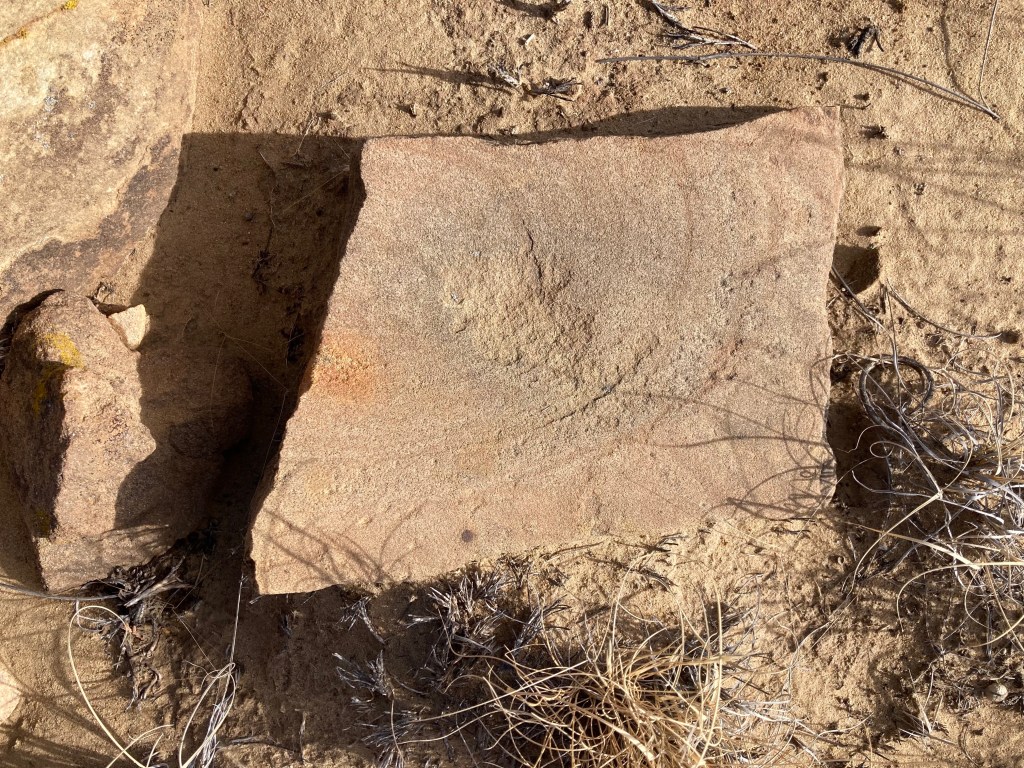
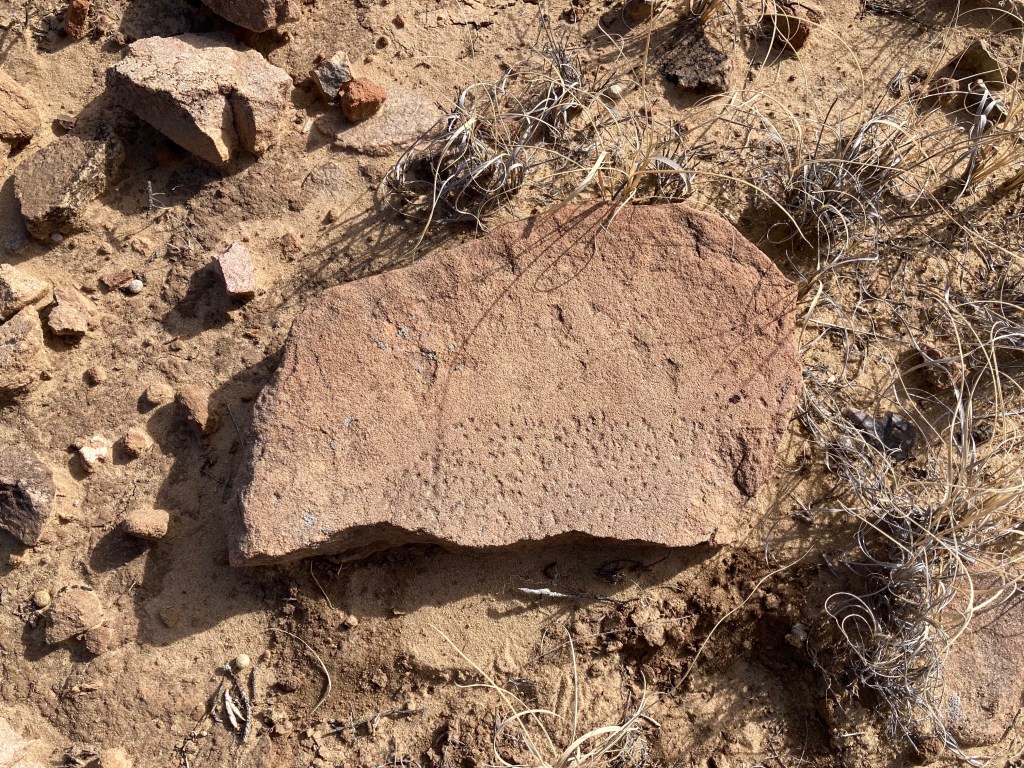
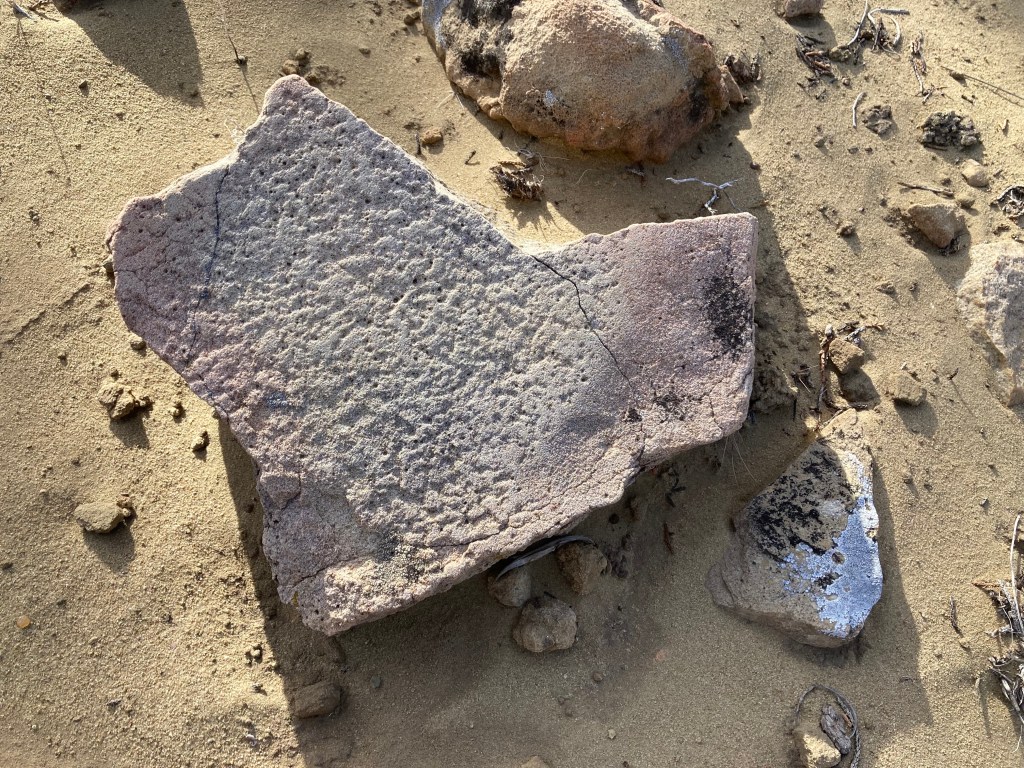
...three metates. Archaic, given their location, on earth once much wetter than it is in these times of drought.
Each is pecked to roughen its grinding surface. Use has rubbed the first into a bowl that exposes the thin strata of its sandstone, now spalled by frost and rain. All are broken.
The third in situ in a messy prehistoric living room, now cross-trodden by cows:
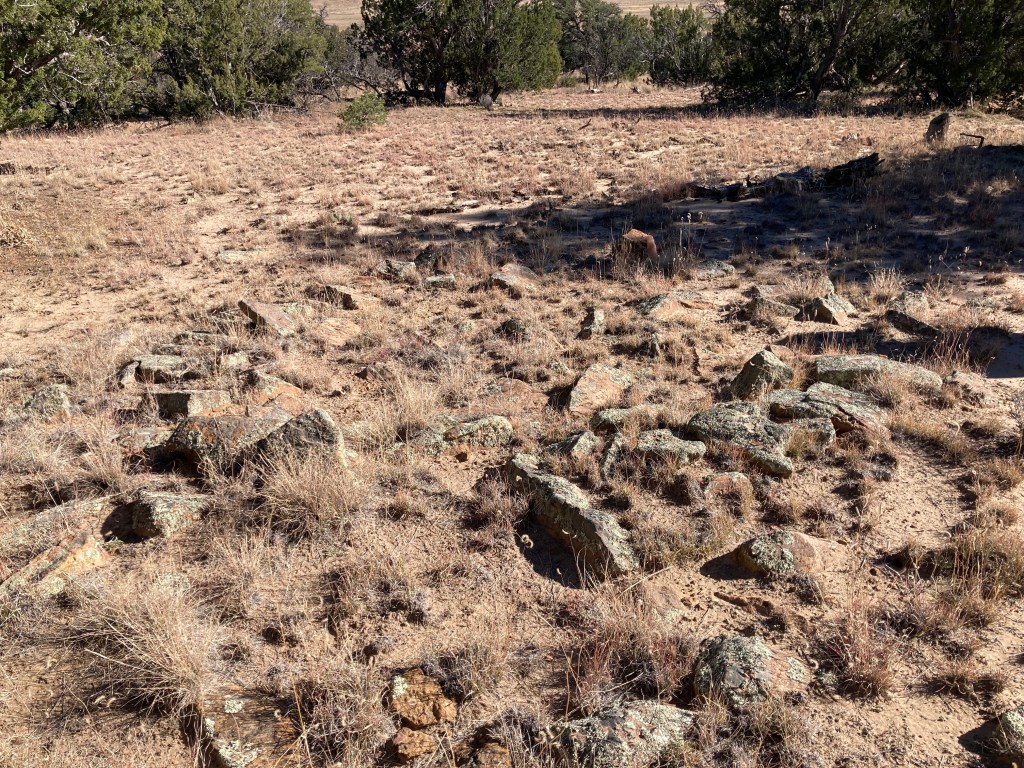
Like the circle in the earlier post, this one was in the wrong place and with the wrong doorway opening to be a hogan ring. Its lichened stones were next to the collapsed foundations of a Puebloan fieldhouse, ca. 1300s (my best guess; post-Chaco). But it didn’t have the sunken center typical of a kiva depression, and seemed too small for that as well.
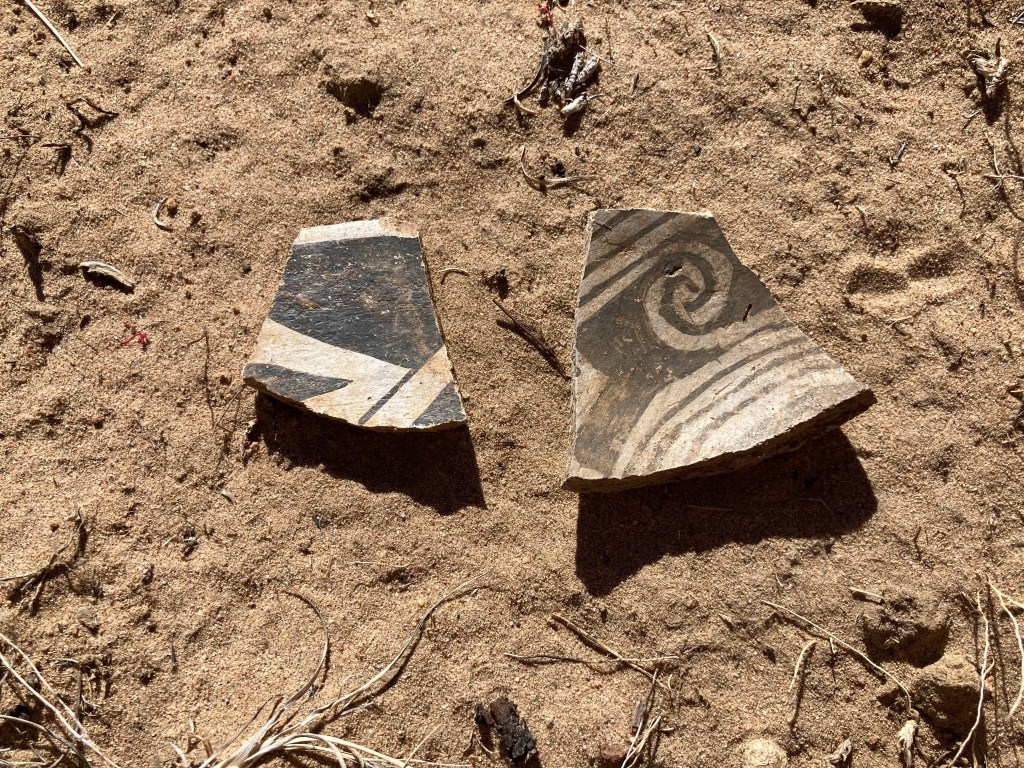
Beautiful potsherds.
Remember to turn potsherds face down again to protect the paint.
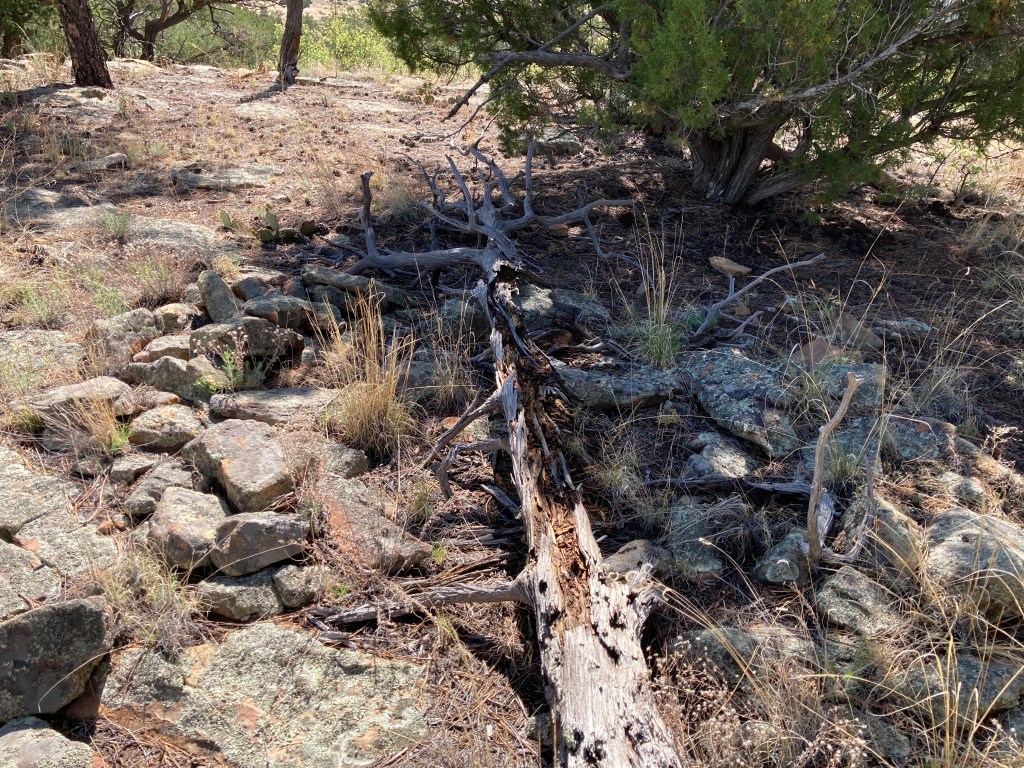
Not Navajo. Often a stone circle is the foundation of a traditional hogan, but this is in the wrong place–over a lava field, no grazing near–and the “doorway” break faces west, not east.
Puebloan? There are tumbled Ancestral Puebloan structures in the neighborhood, but they’re all square-cornered. Nor can it be a kiva, because it was built right on the sandstone slabs.
The fallen ponderosa that divides it neatly in half is old, but thick lichen says the circle is much, much older.
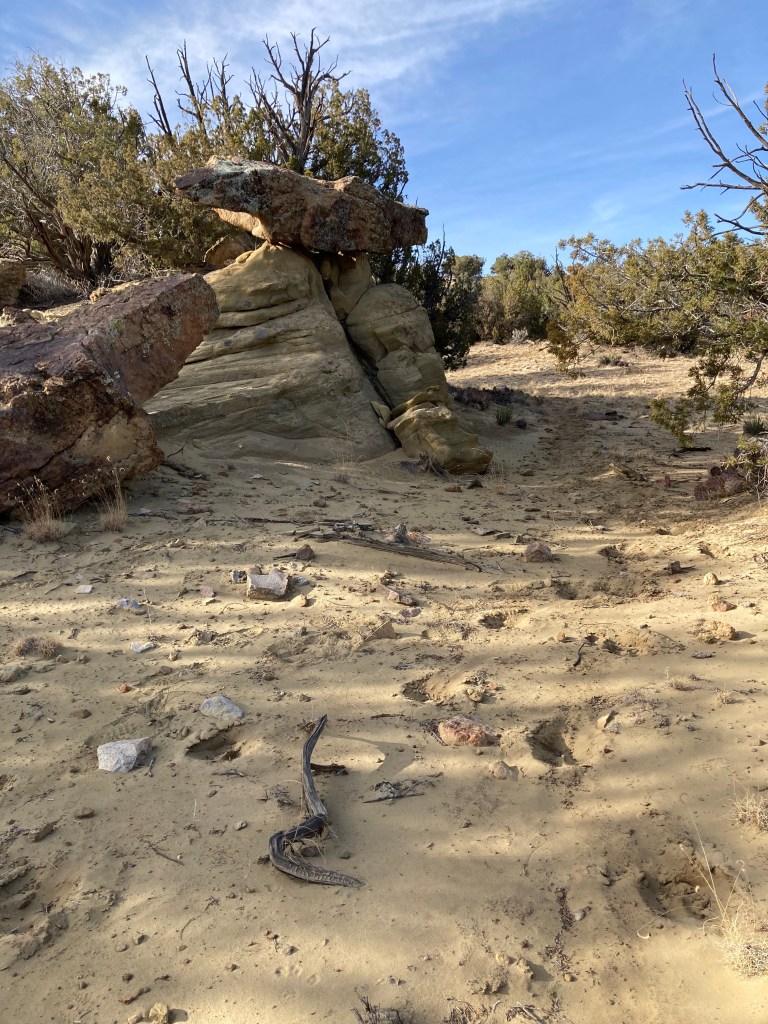
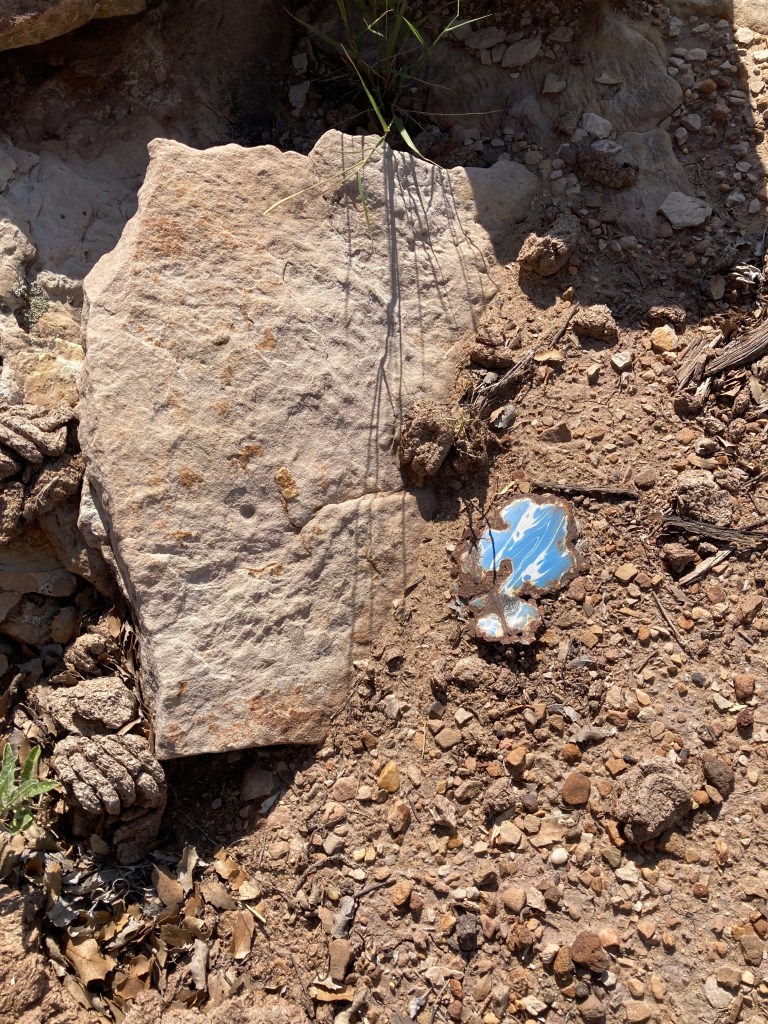
We had come down off the mesa capstone, down a draw onto a hidden level. There were axe-cut junipers, a few chert flakes. Suddenly my companion gave a shout: On an anthill at the mesa edge, he had found a tiny crumb of turquoise.
It was the true-blue thing. Unworked, totally out of place on the sandstone. Who had dropped it, and when? A Navajo trader-silversmith? But we’d seen none of the stone circles that are the foundations of old hogans.
Or was it an offering? Contemporary Zunis mix bits of turquoise into the white cornmeal, k’aweawe, that is used for blessing, That remote mesa edge, now the middle of nowhere, was distant from Zuni in both space and time, but for thousands of years it had been the middle of a lively somewhere. Had someone once stood there on the east-facing mesa rim, sprinkling cornmeal for the morning prayer?
No way to know. We said elakwah—“thank you” in Zuni—and left the turquoise with its ants.
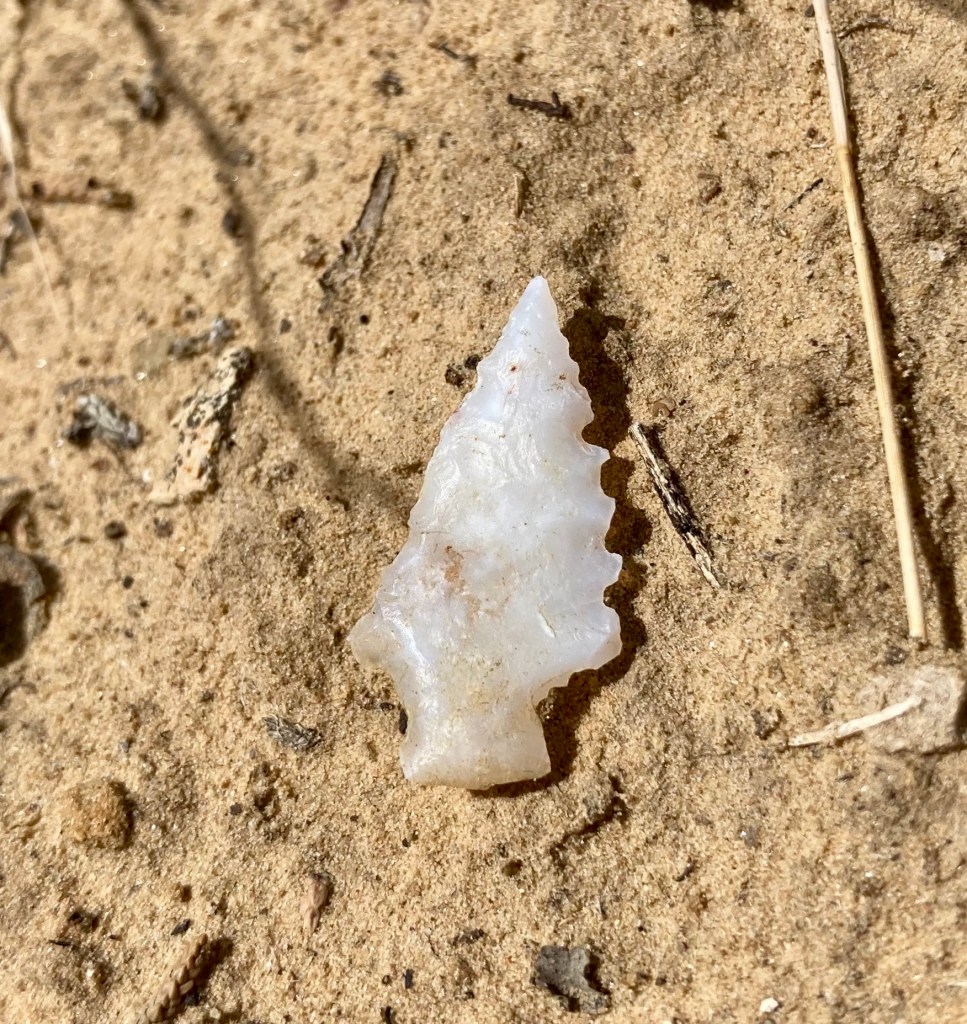
I’m not great at identifying projectile points, but my best guess is that this is an Armijo point (Late Archaic, about 2,000 B.C.) and an atlatl point rather than an arrowhead. It was about an inch long, and, interestingly, had had a “field repair.” The original delicate serration had broken along one edge, spoiling its symmetry, and someone–the original owner? a later finder?– had resharpened the broken side with plain bifacial knapping. Like a slightly tippy Christmas tree, it looks wonky but serviceable.
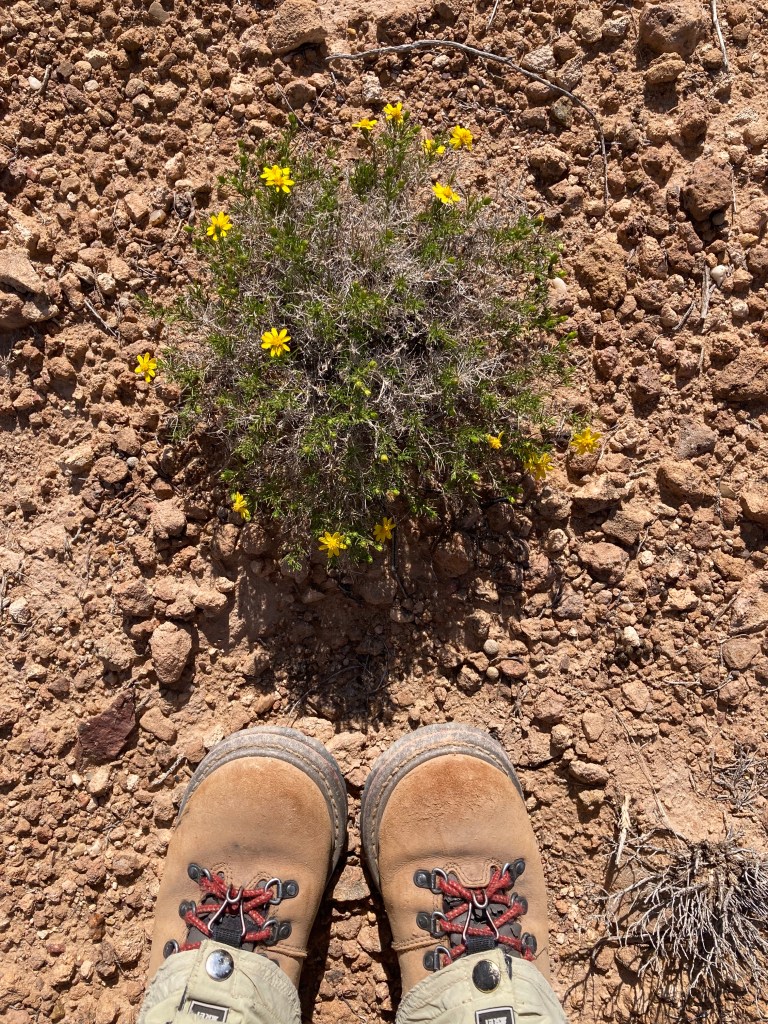
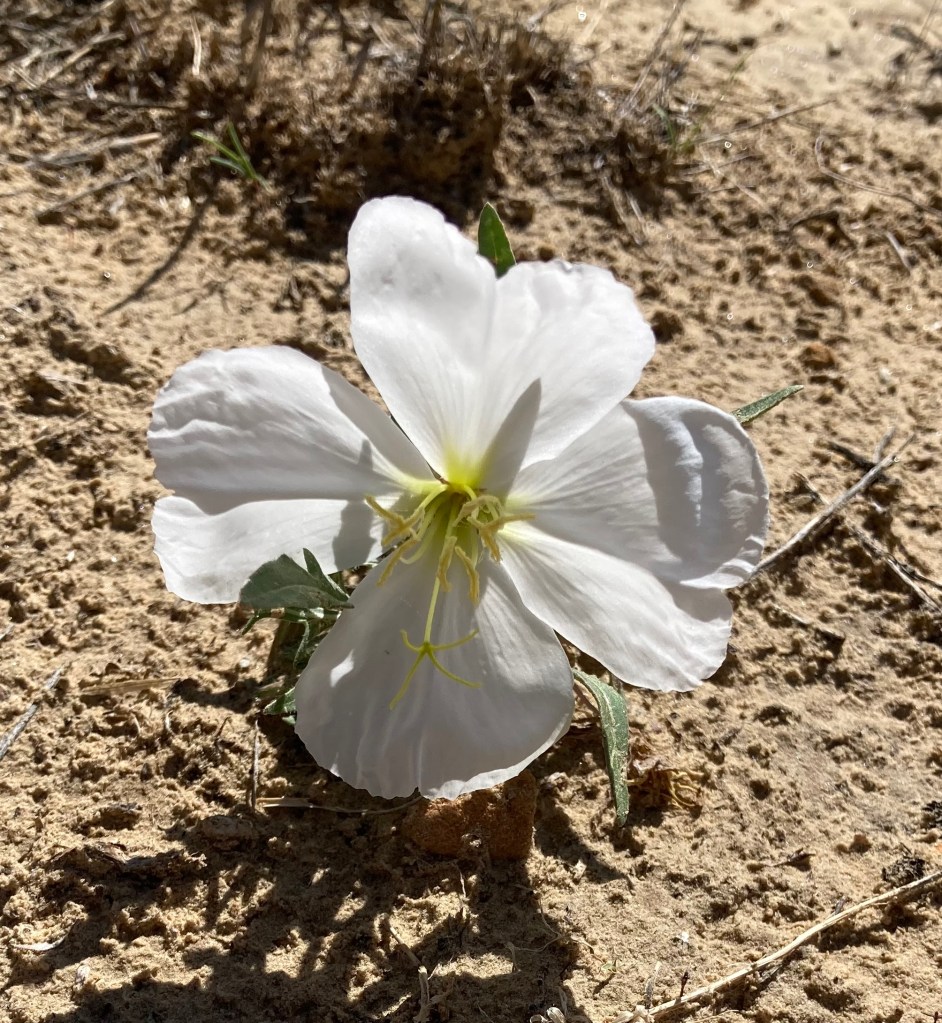
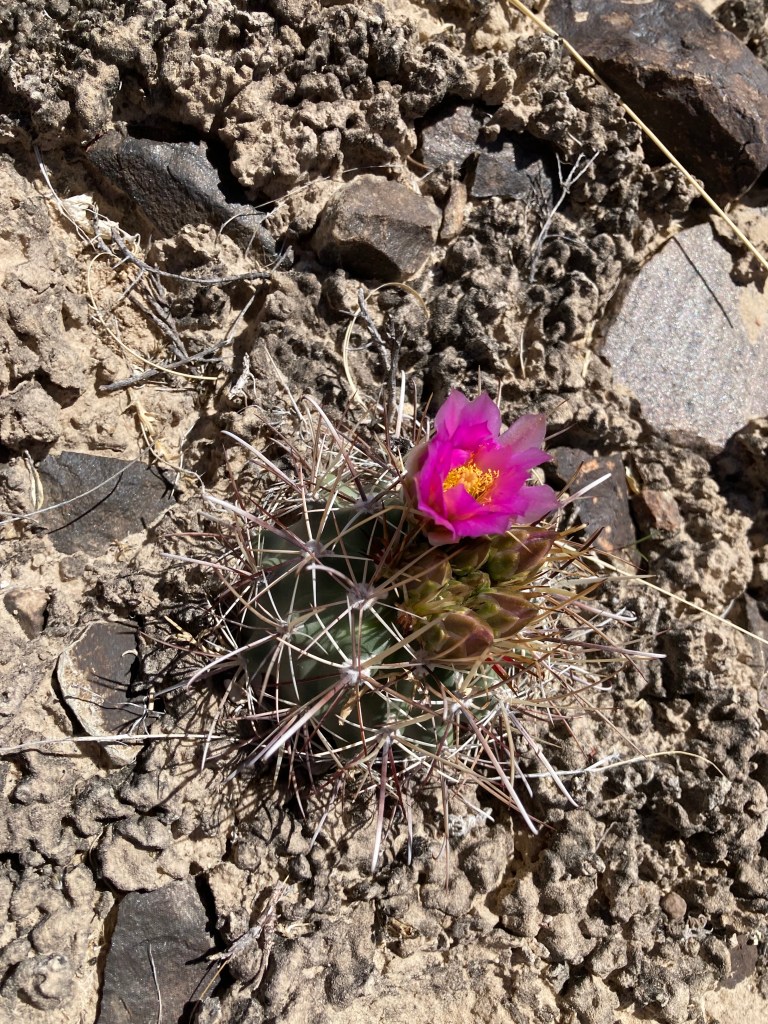
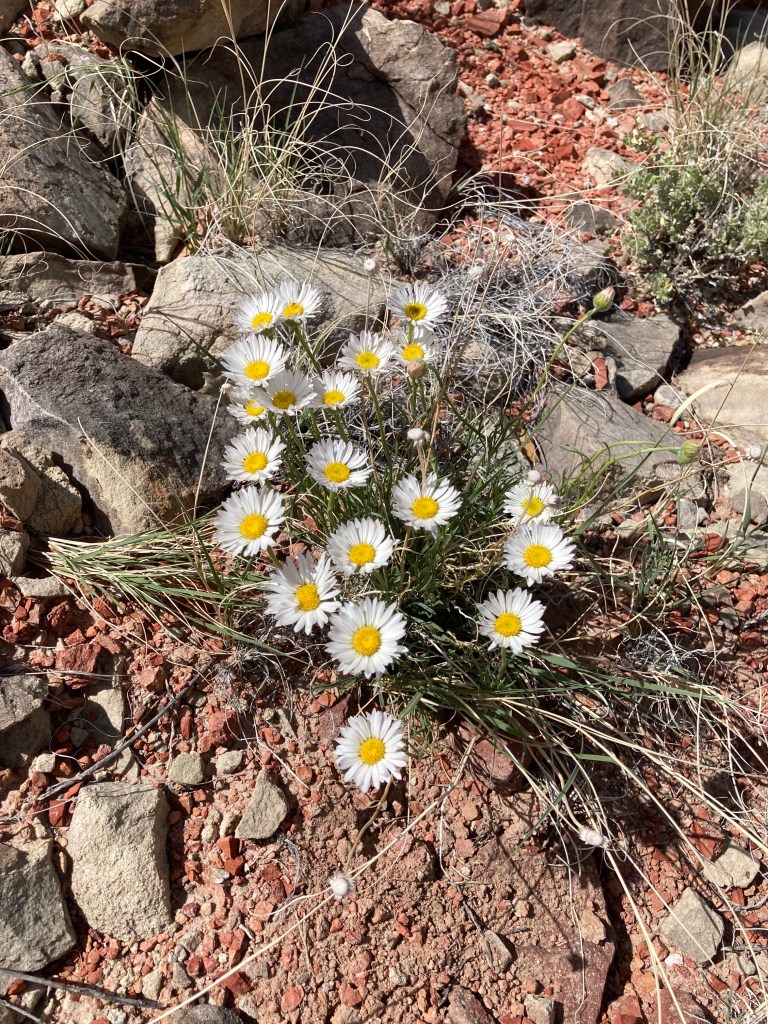
I’m not great at identifying flowers, either. But the desert was blooming.
New Mexico has been deep in drought, but about a week ago we had a day of rain. Unusual, because April is wind month; our rains arrive in the summer monsoon.
A few flowers are April bloomers regardless. Like this cactus with its incipient blooms, and twenty desert daisies.
Betsy James on Writing, Art, and Walking in the Desert


 WORLD-BUILDING and WILDERNESS: