Below the stone ring of a nineteenth-century Navajo hogan: a piece of sun-purpled glass—pre-1914, when a process was discovered that prevented clear glass from purpling in sunlight—between two snake vertebrae.

Perhaps you’d like to write that one?

Below the stone ring of a nineteenth-century Navajo hogan: a piece of sun-purpled glass—pre-1914, when a process was discovered that prevented clear glass from purpling in sunlight—between two snake vertebrae.
Perhaps you’d like to write that one?
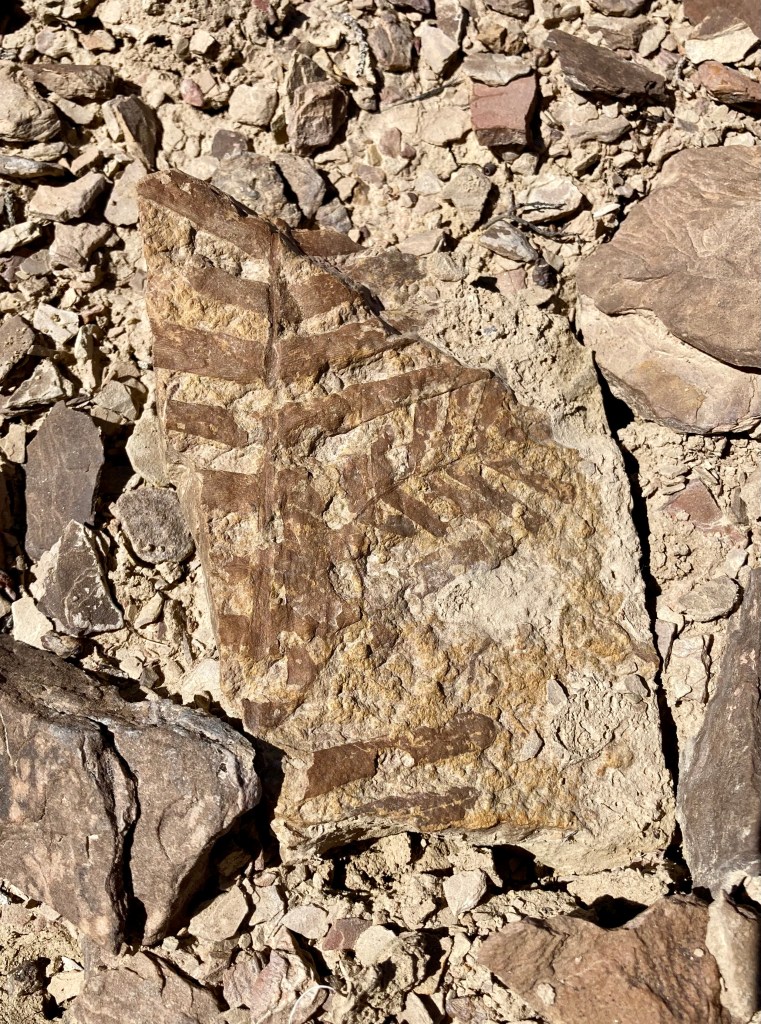
Stone in the outwash of the Morrison Formation…
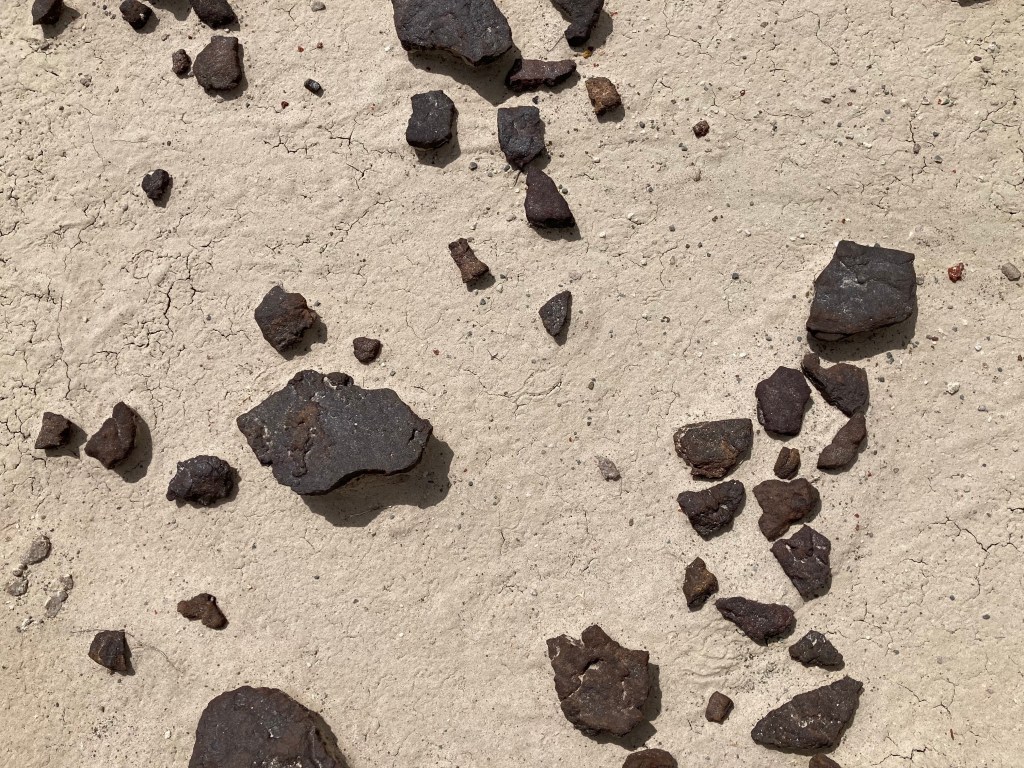
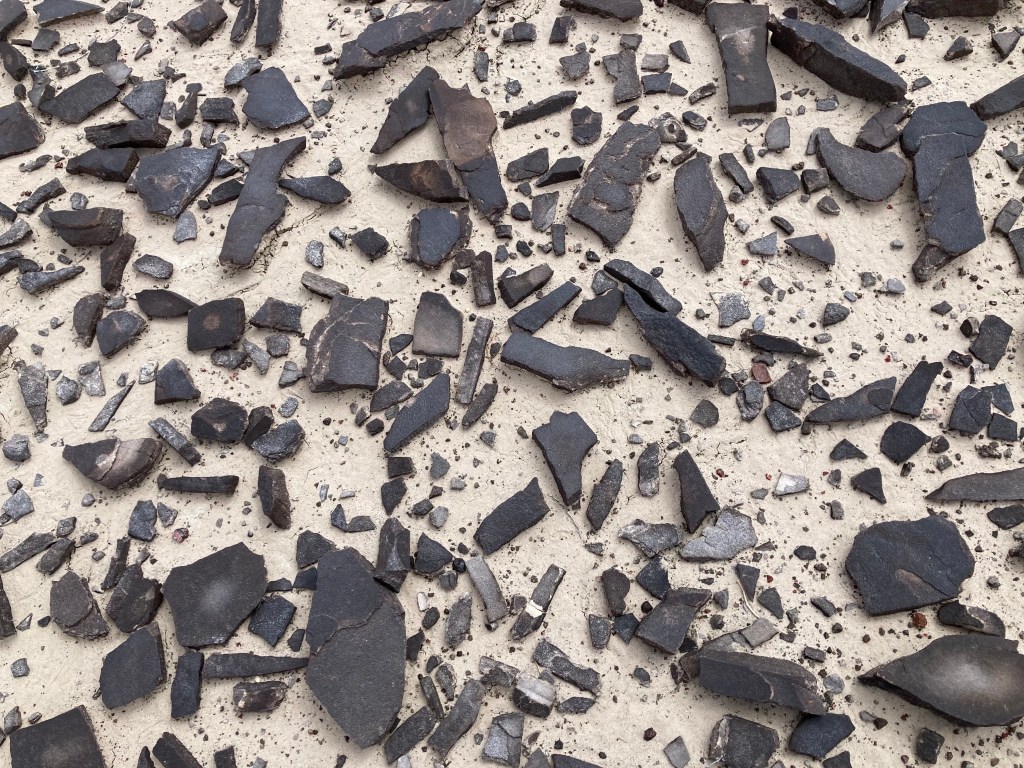
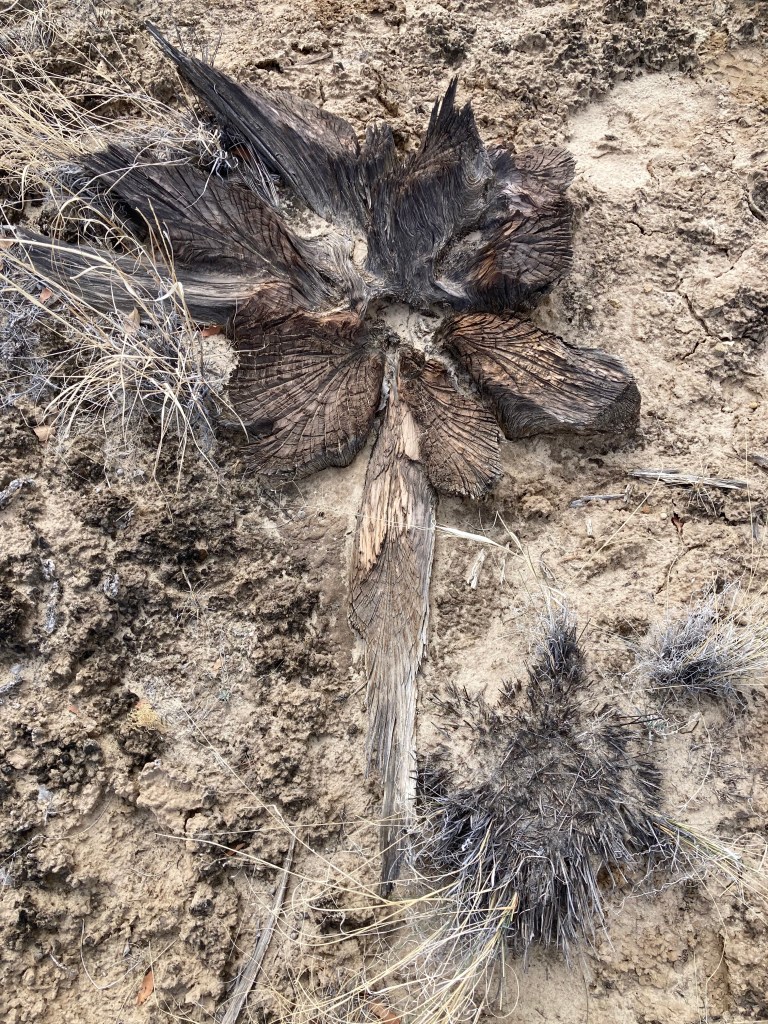
…and, near the stone circle that is all that remains of an early Navajo hogan, a juniper stump, axe-cut a couple of centuries ago and scoured to the ground by wildfire:
…something like 200 million years ago. Morrison Formation. Waiting in delta clay since the Jurassic.

Cascading down the side of an arroyo, the mortal (and purple) remains of a Mesozoic beast. The faintly purple tinge of the bone fragments may be due to manganese, says a local paleontologist who refuses to stake his life on that.
And speaking of stakes, we were not the first discovers. Above and below the scatter were short lengths of rebar with aluminum tags–now illegible, leaving the bones once again to their quiet unmaking.
…without a drop of water in it.
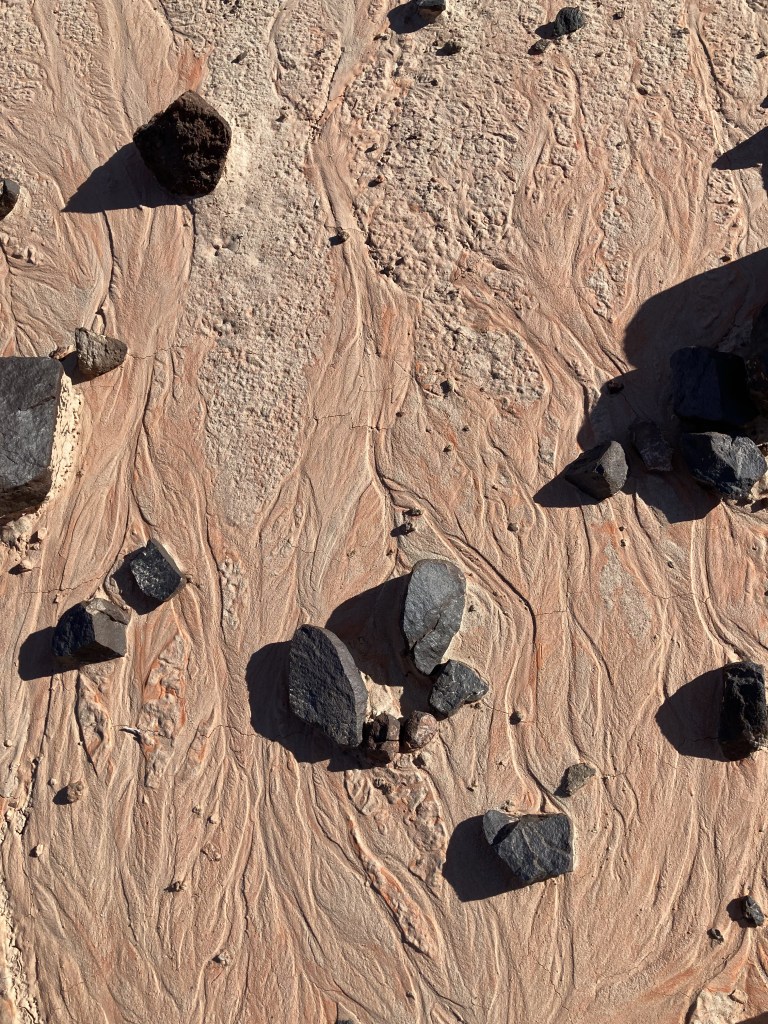
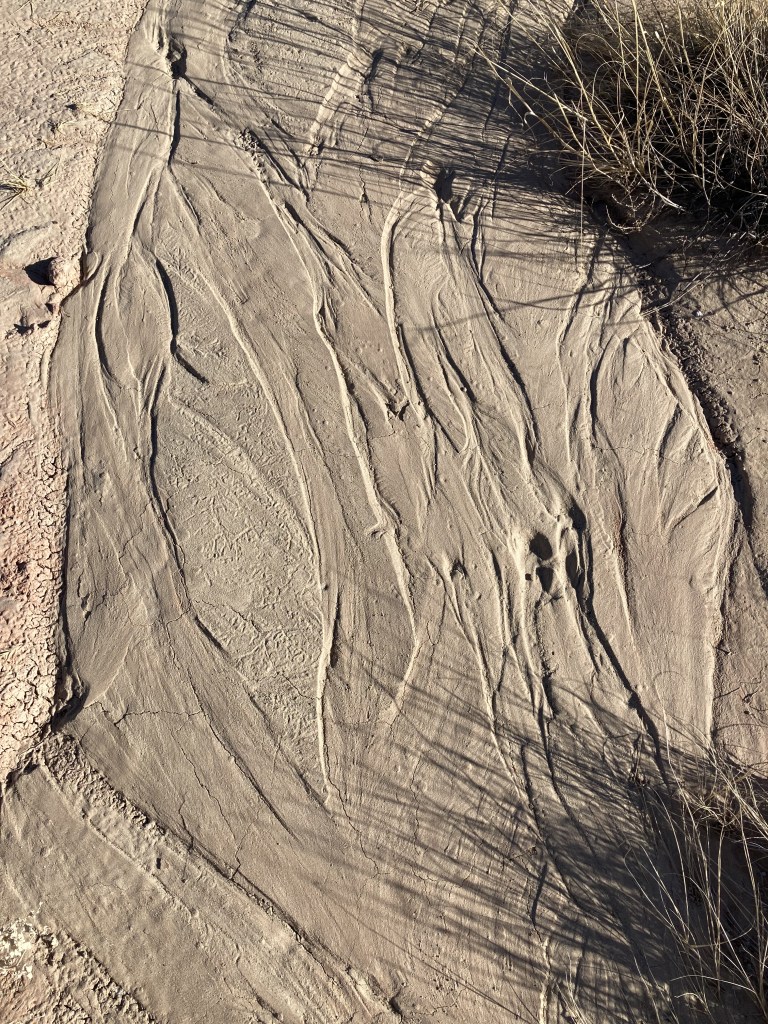
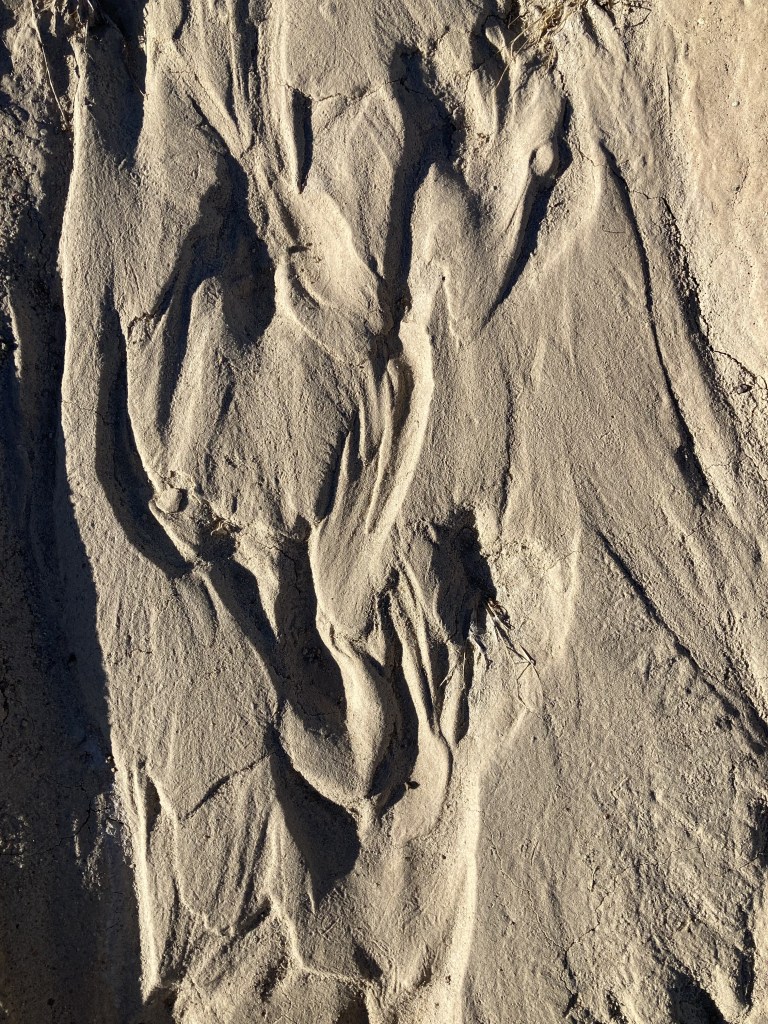
One of them has a tail.

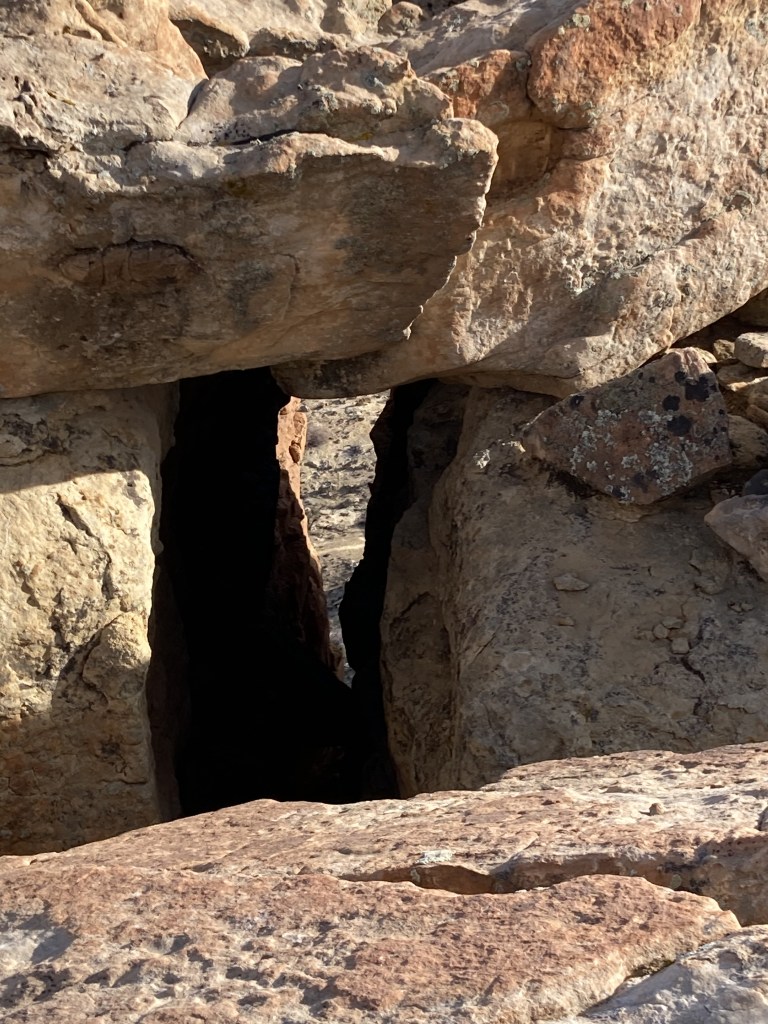
Through the sandstone blocks that form the slowly-eroding edge of a mesa, a view of the desert hundreds of feet below.
I am reminded of a Neolithic dolmen, or tomb. But compared to the slow, quiet age of this erosion, the human Neolithic is the flick of a bird’s wing.
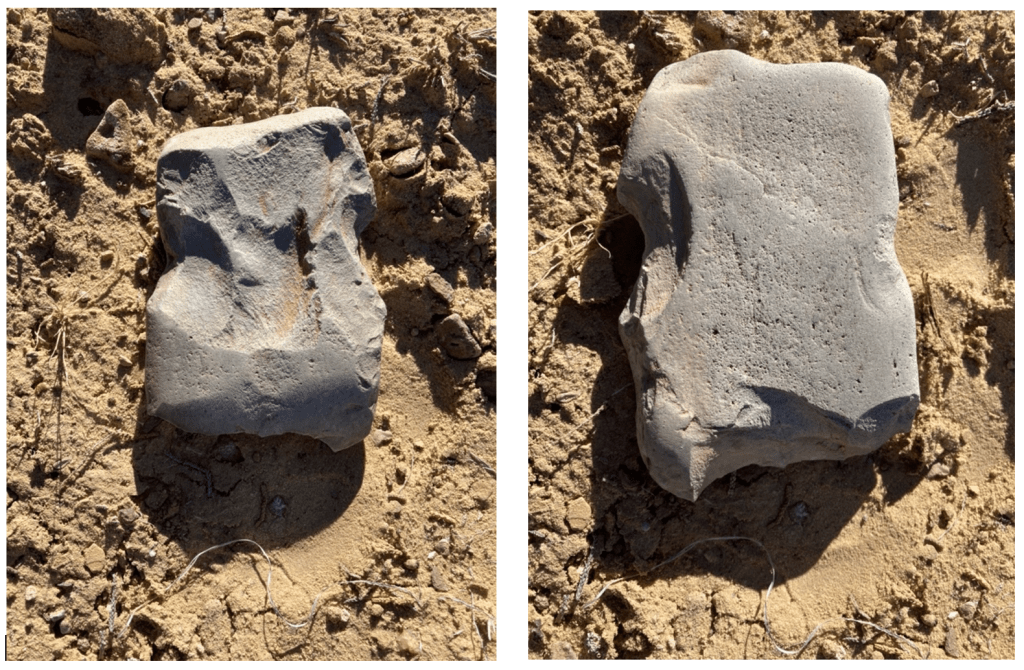
Just in time for the season: a rough hoe, but a hoe. The land itself was rough, a sandy little site in the lee of a pile of boulders.
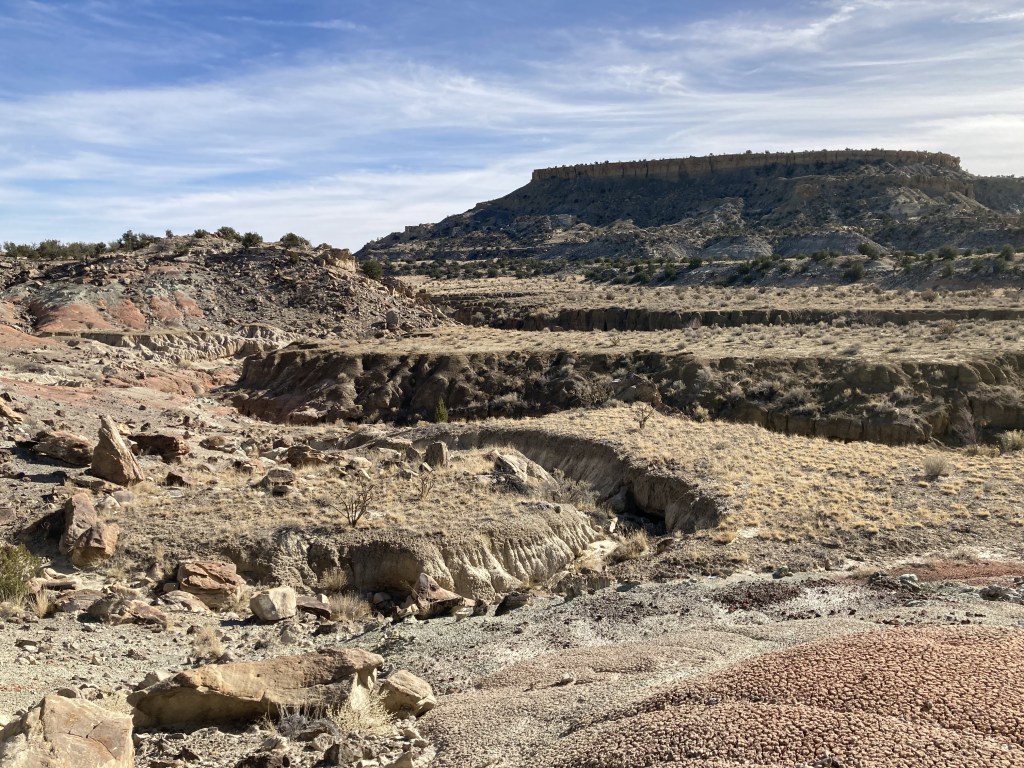
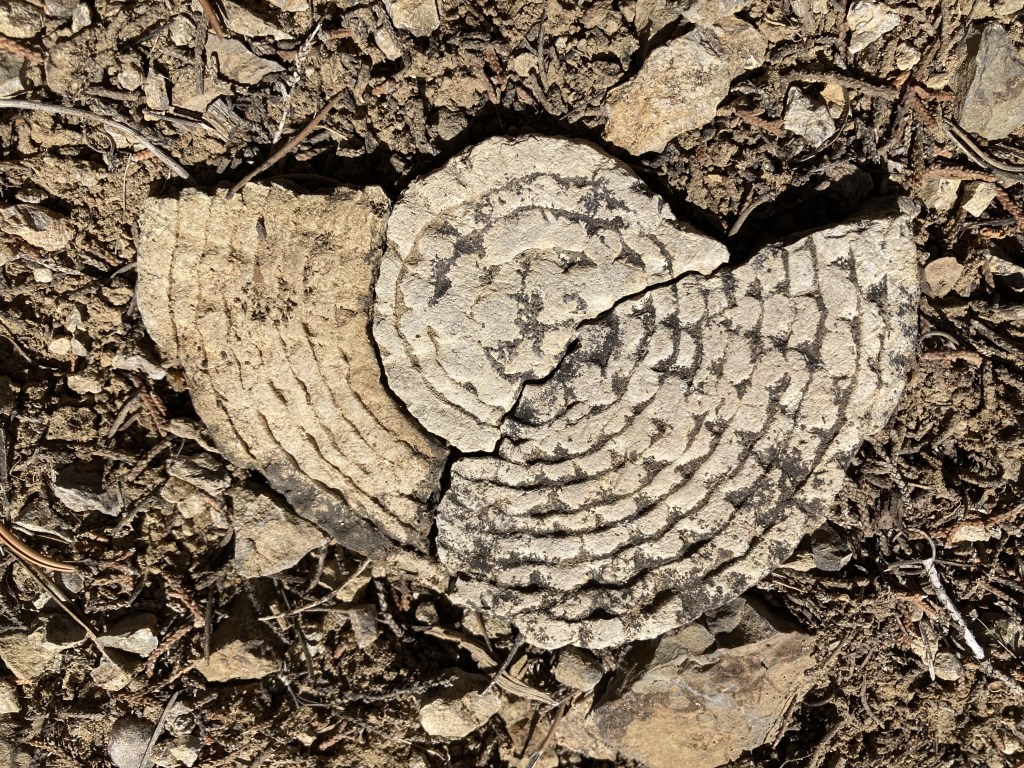
On a ridge above the crumbled, pink-and-black Morrison Formation was a decaying axe-cut juniper stump, signal to watch for the circular stone base of a hogan.
Sure enough:
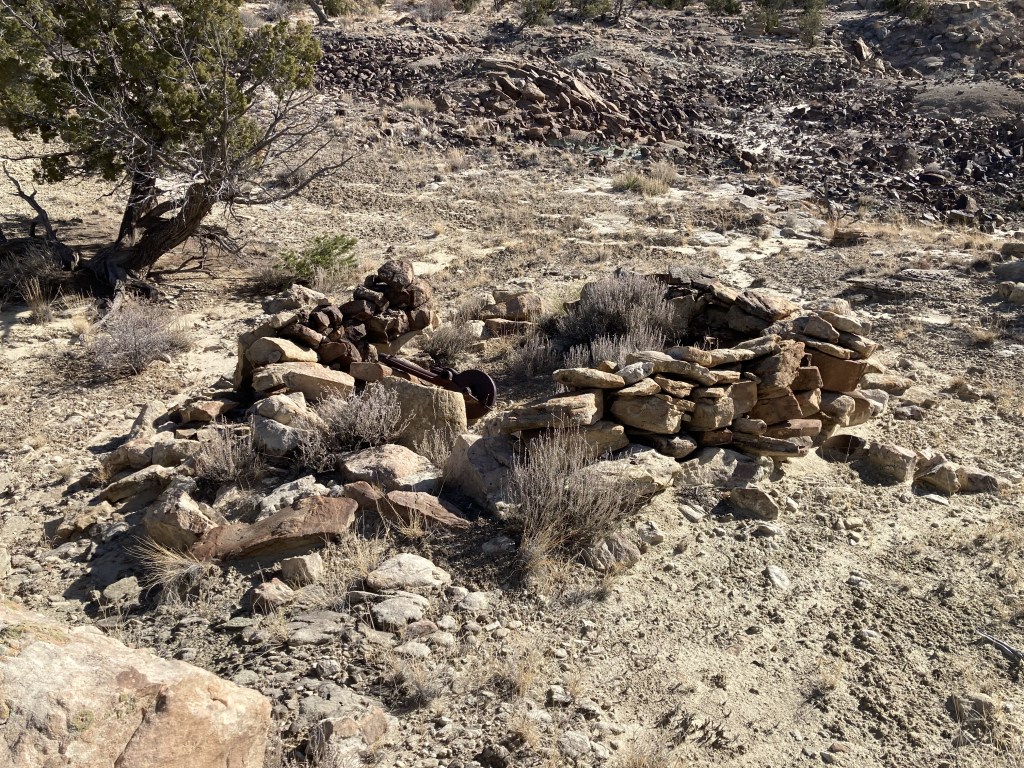
It was probably nineteenth-century, because the juniper cribbing had decayed or been taken for firewood. Into it had been dumped the rusted remains of a McCormick wind pump dating to, say, the ranching thirties:

Outside the circle, laid carefully on a rock–“curated” by some previous visitor–was a 3″ chert hand axe. The Navajo had metal trade axes, so presumably this one was Archaic. Thousands of years older than both hogan and pump.

In a midden scatter tumbling far down a slope, three pieces of utilitarian pot that have lain so long separated, on different soil types, that each has weathered to its own color.
Perfect fit.