 To the Ojito Wilderness with a motley crew of desert-rat friends.
Windy. Took shorts, but it was too cold to wear them. We drove way far out in the Ojito and hiked down to the place where there’s scattered white-yellow-green petrified wood, below hoodoos among the ponderosas.
Archaic firepits. The crew kept getting ahead of me; I was dogging back and forth, trying to keep them in sight, now and then frantic as the others got farther and farther away and I had to run after them.
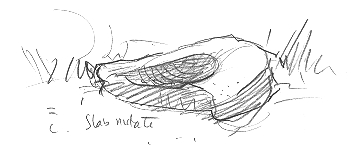
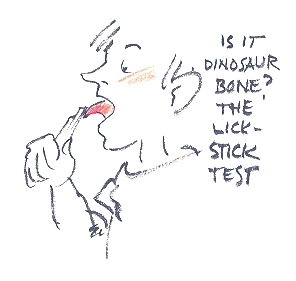
Found a large dinosaur bone on the ridge by following its fragments up a wash. It was falling apart; we dug some of the sand away from it, then covered it back up without ever having located both ends. Jan taught us the lick-stick test: If it’s bone, rather than another type of rock like agate or petrified wood, it will stick to your tongue when you lick it. (The porous vesicles left by cells and capillaries wick up the moisture of your tongue.)
Windblown grass draws circles in sand, as in snow.
Oak bushes have brown leaves around their bases, bare grey twigs on top.
Back in Bernalillo we went to Silva’s Saloon, which was full of bikers in leathers, a billiards game in progress. We shared two pitchers, ate Kentucky Flocked chicken and came home happy.
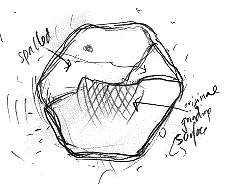
I forgot to say that on an Archaic site on the ridgetop was a broken mano, a hand-grinding stone: pretty, crystalline, red and white and yellow, with a slanted natural edge of white quartzite along one side. The edge made a perfect place for the user of the stone, probably a teenager, to hook her fingers. So I hooked my own fingers there, thinking: After five thousand years–fifty centuries–this stone remembers the grip of a hand.
*
For more walks on stone and sand, click here.

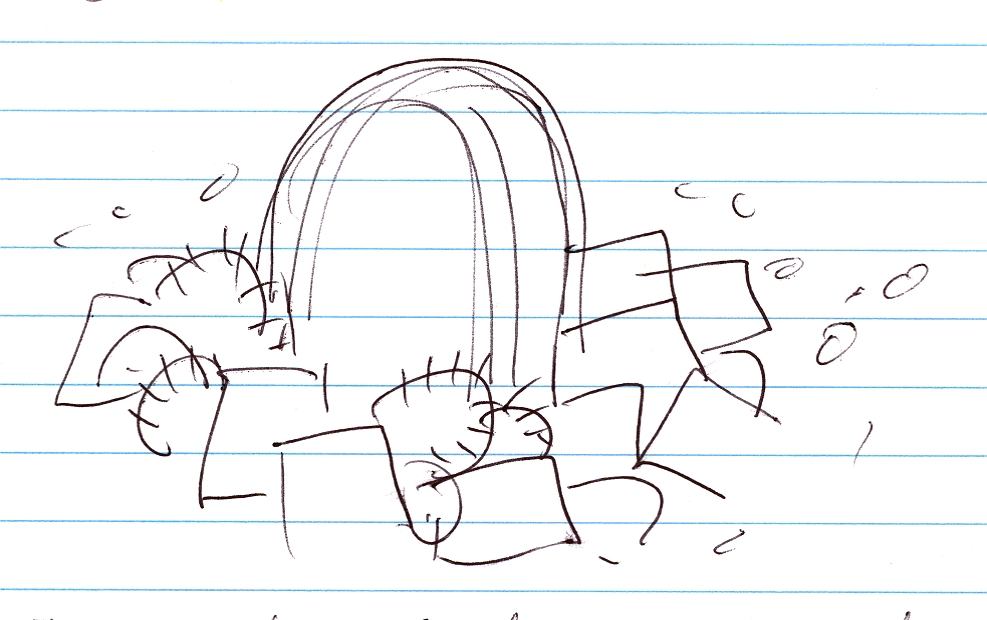 Throughout the desert West, the backcountry hiker finds “sheepherders’ monuments”: cairns or slabs of stone raised by turn-of-the-century herdsmen while their sheep grazed, day after day, in the wide silence.